


Strategies: Coping With a Tough Economy
Leadership summit panelists offer operators candid advice and feedback on fuel costs, labor challenges, and green issues

MIAMI BEACH — Leading executives in the chauffeured transportation industry told LCT’s Leadership Summit recently that economic doldrums require operators to work smarter and learn more about issues plaguing chauffeured vehicles.

The straight-talk panel at the Ritz Carlton South Beach in Miami Beach offered some blunt advice on managing fuel costs and labor issues while being skeptical of some green alternatives.
Led by Scott Solombrino, president/CEO of Boston-based Dav El Chauffeured Transportation Network and a former NLA president, the June panel discussion included: Dawson Rutter, president and founder of Boston-based Commonwealth Worldwide Chauffeured Transportation; Mark Munoz, president of BostonCoach; Ron Sorci, chief financial officer of Miami-based Aventura Worldwide Transportation; and Craig McCutcheon, president of Rosedale Livery Ltd. of Toronto.
Fury Over Fuel
The most pressing issue facing operators nationwide is the price of gasoline, which has zoomed past $4 per gallon and likely will peak at $5 or beyond this summer.
Munoz gave a quick checklist on handling gas costs:
1) audit fuel purchases
2) find cheaper locations
3) avoid full-service stations
4) use lower octane fuels
Rutter reiterated a growing industry practice in response to higher fuel costs: fuel surcharges. Operators should levy fuel surcharges based on a sliding scale tied to the price of a gallon of gas, he said. Rutter also advised operators to maintain steady tire pressure since it saves on average two miles per gallon and keeps tires from being replaced as often.
Sorci favors some high-tech approaches:
1) Minimize idling.
2) Don’t overuse air conditioners.
3) Install controls to monitor fuel consumption.
4) Hire someone to handle detailed fuel monitoring per vehicle.
McCutcheon mentioned that GPS data can save money through accurate, pinpointed information that identifies waste, determines usage patterns, and tracks maintenance.
“Most GPS systems monitor idling times,” Rutter said. “You’ll be stunned at how much idling time your cars have in one week.” He also recommends the use of fuel purchase cards for chauffeurs, so each gas buy can be tracked and recorded.
Rutter supports giving pay bonuses to chauffeurs who minimize their idling times, and advocates firing speeders. “Anything over 80 mph is a critical point,” he said.
Munoz stressed that substantially less fuel is burned at 55-60 mph than 75-80 mph.
To keep vehicle costs down overall, Rutter and Sorci advised operators to look closely at what each vehicle earns in revenues each month, and adjust fleets accordingly.
Propane vs. Ethanol vs. Hybrids
Looking toward future relief from fuel costs, the panel addressed some of the most used alternative-fuel vehicles often touted as the route to more efficient chauffeured transportation: propane, ethanol, and hybrid.
Rutter cited several advantages of propane:
1) There are tax incentives for installation.
2) It costs about half the amount for gasoline.
3) Propane burns much cleaner than fossil fuels.
4) There is a proven technology for implementing it.
5) A propane tank provides a steady supply and is safe.
“Propane is an answer that many will look for in the future,” Rutter said.
McCutcheon, however, cautioned that his company sold its propane vehicles because customers feared them. “They were afraid they would blow up in an accident,” McCutcheon said.
Ethanol shows less promise than propane, Solombrino said. His company, Dav El, is cycling out and selling off its flex-fuel vehicles as a matter of social conscience. Ethanol has gobbled up more croplands and squeezed food supplies worldwide, contributing to rioting and worldwide food inflation, Solombrino said. [PAGEBREAK]
“You can’t take food out of people’s mouths and put it into gas tanks,” Solombrino said. “E-85 is radioactive for me.”
Sorci said the nation’s energy network lacks enough E-85 fueling stations, causing most flexfuel vehicles to run on gas anyway. “You’re not really green just because you have a few green cars,” he said.
The panelists also pinpointed several draw-backs of hybrid vehicles, which so far have ranked as the preferred green vehicle among operators. Hybrids cost more to buy and maintain; many models lack all of the comforts of larger gas vehicles; and while corporations may insist on doing business with companies offering greener fleets, other customers don’t want them.
“The hybrid is permanently changing our industry,” said Solombrino, whose company owns some GMC hybrid SUVs. “More customers tell us they want us to provide hybrid and efficient cars. They want it in New York, Los Angeles, and Des Moines. Our business is driven by what customers demand.”
McCutcheon’s Rosedale Livery offers a Lexus 400h, but he said “customers are not overly thrilled with it.”
Solombrino mentioned that some body shops won’t take apart the hybrids because of the extensive battery packs and electrical currents inside the vehicles. He also referred to the question of whether Jaws-of-Life cutting equipment can be used to extract trapped motorists from crashed hybrid vehicles. “Until someone dies because they couldn’t get out of a hybrid, nothing will happen,” he said.
Final Green Tip
A growing number of operators are trying to gain green certifications to attract corporate business that insists on green standards. To that end, several consulting companies are offering operators green makeovers and advice on becoming more environmentally friendly.

Not so fast, Solombrino said.
Solombrino cautioned that green programs and consultants are “not ready for prime time” since the entire carbon credits and trade-off structure is a “flim flam.” The carbon cap-and-trade and emissions measuring effort lack any discernible, consistent criteria, he warned.
“Who calculates? How do you tell who’s right or wrong? It’s nonsense.”
[SIDEBAR]

LABOR COSTS
WHILE UNEMPLOYMENT has reached at least 5.5%, the panelists agreed that retaining good long-term employees is critical regardless of the unemployment rate. A higher rate, however, enables companies to be more selective in hiring from a larger pool of qualified candidates.
Munoz cautioned that operators need to weigh the costs of letting people go versus the costs of bringing them back. “You have to make sure everyone is getting as many hours as they can; you have to make sure there is no mass exodus,” Munoz said. “When the economy picks up, you’ll need them.”
Munoz said each operator has to make an individual strategic decision in evaluating the trade off between “holding on versus cutting loose.” “Hope is not a strategy,” he said.
The specter of unionization looms over the industry, and could seriously hurt its future financial health, several panelists said. Rutter said Congress wants to pass a law making it easier for unions to organize a workplace through card check instead of secret ballot. With a Democratic president and Congress, such legislation likely would pass, he said.
“Union issues are some of the ugly ones,” Sorci added. Coupled with a tough economy and stricter overtime rules, operators have to “buck up, be smart, and get educated,” he said.
Operators also need to consider having more part-time employees and possible outsourcing, said Munoz, whose company recently outsourced a call center to a contractor in Nova Scotia. “But you do not outsource your core competencies.”
[END SIDEBAR]
More Operations

The EV Breakdown Nobody's Talking About: Why Most Electric Vehicle Roadside Calls Aren't Mechanical Failures
Here's why EV breakdowns are widely misunderstood.
Read More →
Xos White Paper Asserts LA Olympics Will Lack Enough EV Chargers
The commercial EV fleet company recommends some faster and more flexible remedies to relieve the anticipated shortfall.
Read More →
ChargePoint, Optimus Expand Fast-Charging Network Across Southeastern U.S.
ChargePoint will serve as the exclusive solutions provider, delivering hardware, software, and services to support Optimus’ growing charging network.
Read More →
Running A Profitable Electric Rental Fleet
How do you successfully operate an all-electric rental car fleet? Whether you manage a rental fleet or another commercial fleet, this conversation offers practical lessons on deploying, operating, and scaling electric vehicles.
Read More →
Registration Opens for 2026 Fleet Forward Conference
Held on the East Coast for the first time, the Washington, D.C.-area event features expert-led education, a new IIHS Crash Test Experience, and collocation with the NAFA’s Fleet Safety Symposium.
Read More →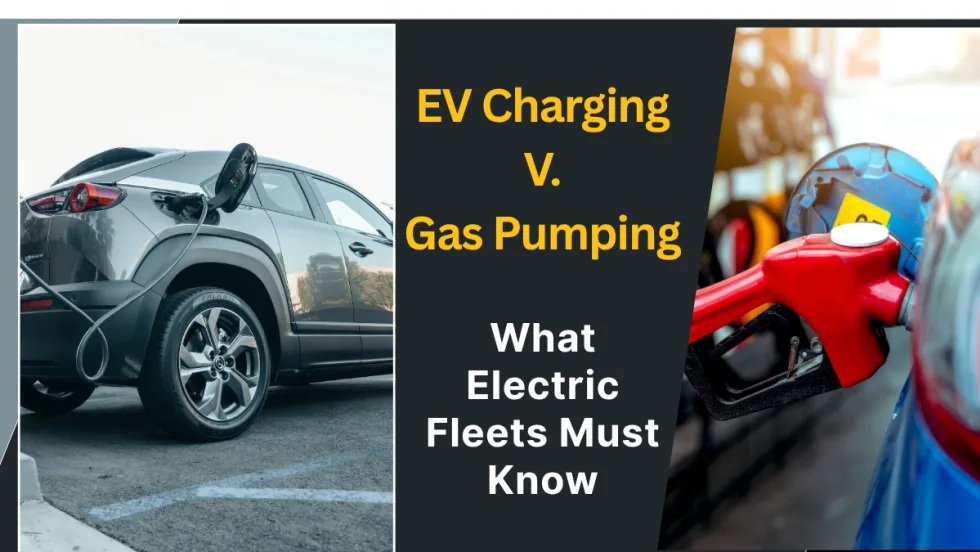
Why Charging May Never Be As Easy As Filling Up Gas
A seamless charge depends on a string of independent companies getting it right together, every time. How can electric fleets navigate the challenges to create a successful charging plan?
Read More →
Slate Debuts Colorful, Unique EV Models
A recent media and client event, studded with electric vehicles dressed up on platforms, planted a new position for the manufacturer in the wider EV market. Fleets will find cost-saving advantages.
Read More →
Slate Electric SUV, Pickup Switchable Model Aims For Light-Duty Fleets
Everything about this EV is counterintuitive and understated, making it stand out from the crowd.
Read More →
Polestar Barred from U.S. Market Under Connected Vehicle Rule
The automaker loses its authorization to sell new vehicles in the U.S., starting with the 2027 model year. Polestar owners will retain access to the brand's service network.
Read More →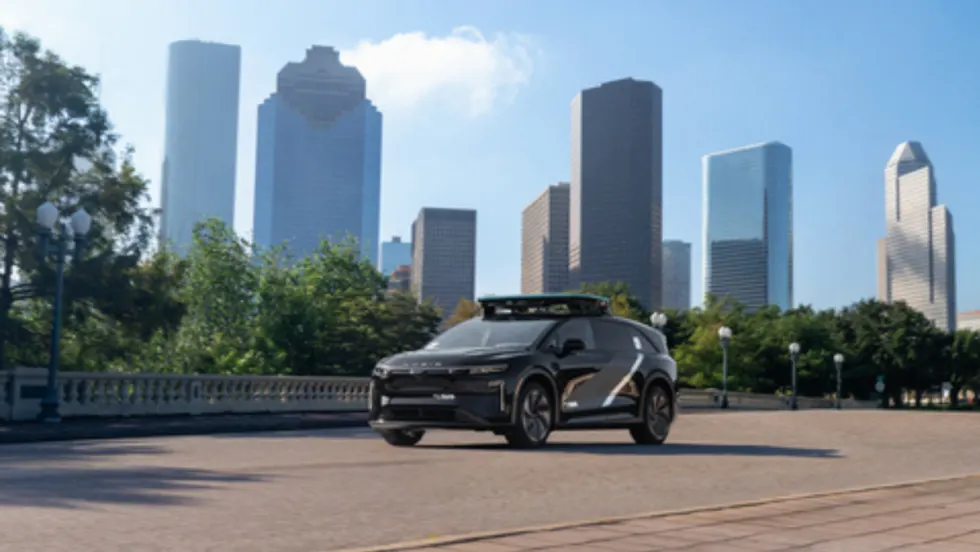
Uber, Nuro and Lucid Plan Houston Robotaxi Service in 2027
The tripartite venture brings out the combined advantages of electric vehicles, mobility, and autonomy into ground transportation.
Read More →