


Background Article: True Costs and Hidden Considerations of Maintaining EVs
Push Toward EVs Is Electric, But the Future Isn’t Crystal-Clear for Dealers
A maze of unknowns when it comes to the transition away from ICE vehicles calls for soul-searching, careful planning.
by Hannah Mitchell, executive editor, Bobit Dealer Group
March 15, 2023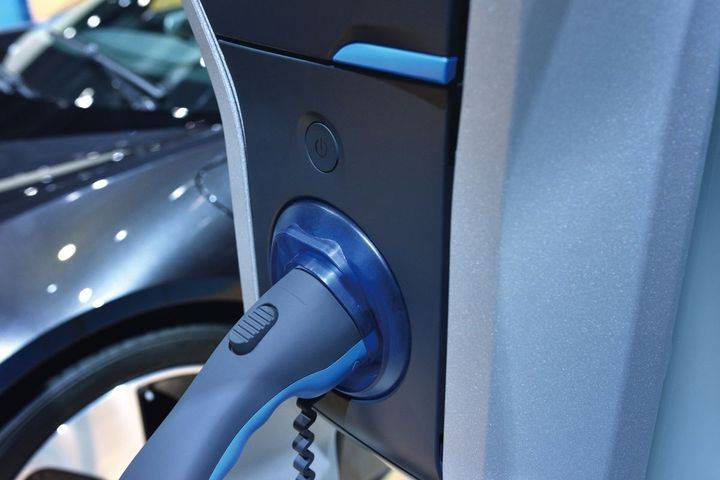
Although there is still reluctance on the part of many buyers – and some dealers – to go electric, more widespread adoption appears to be all but a given over the next decade if you look at building market forces.
Photo: Canva
7 min to read
Michigan car dealer Sam Slaughter says he’s never worked a day in his life.
That is, he doesn’t feel like he has, because he loves the car business.
Part of the secret to his contentment is that, from the time he made spending money washing cars as a boy, to his operation of three dealerships today, he says he’s adapted to change.
Now that electric vehicles seem to be driving the automotive industry into the future, he’s riding that change, too.
“What’s different about selling a turbo-charged car and a non-turbo-charged one?” he says on a break from his southeast Michigan business on a recent Monday afternoon. “To the customer, it’s whatever they want and best fits their needs.”
Slaughter, who sells GMC Hummers, in addition to nonelectric brands, thinks electric is an investment worth making, but he cautions fellow dealers that there’s a learning curve, so he advises making that investment earlier rather than later.
Although there is still reluctance on the part of many buyers – and some dealers – to go electric, more widespread adoption appears to be all but a given over the next decade if you look at building market forces.
Electric Charge
With an eye to reducing climate-warming pollution, California helped lead the U.S. EV journey when its Air Resources Board voted in late August to require that by 2035, all new cars and light trucks sold in the state be zero-emission vehicles. Seventeen other states whose vehicle emission standards are tied to California’s will now decide whether to follow suit. A growing number of states are also offering tax incentives for EV purchases.
Meanwhile, the U.S. government has also climbed into the EV bandwagon, with the Biden administration targeting a goal that half of U.S. new-vehicles sales be zero-emission cars by 2030.
To that end, measures in the Inflation Reduction Act passed in August include a new tax credit for EVs, whose batteries must be made in North America, with battery materials made or recycled here. 2021 infrastructure legislation includes $5 billion to help states develop a network of EV chargers. And the U.S. and Mexico plan to integrate their EV supply chains and expand production.
Carmakers have enthusiastically joined the push as regulations change, with many targeting all-EV lineups by 2030 or 2035. Cadillac and Buick have even offered buyouts to dealers who don’t want to make the switch, and Ford will require its more than 3,000 dealers to be in one of three tiers of EV offerings. The 27-country European Union has also banned new gas-powered vehicles by 2035.
Market statistics show buyers are warming to EVs after years of limited adoption. Combined sales of EVs, hybrids and plug-in hybrids reached 10.4% of all U.S. vehicle sales in the third quarter, surging nearly 60% year-over-year, according to Kelley Blue Book. A recent report by management consultant McKinsey & Co. projects that EV sales will comprise about 53% of all U.S. passenger-car sales by 2030, though gas-powered cars will continue to be the most common on the road through the decade. In rural areas with sparse charging infrastructure, adoption will lag more densely populated regions.
Dealers in North Carolina, where EV adoption trails more urban states – 2.5% of all vehicles sold there in September were EVs -- nevertheless want to be ready for a surge in demand, says Bob Glaser, president of the North Carolina Automobile Dealers Association. Dealers there have added chargers and service equipment and funded a community college training program for service people.
The dealers association even got Gov. Roy Cooper in on promoting EVs with photo ops for its All In for EVs campaign, though at least on social media posts for the campaign, the issue has been “very political,” Glaser says, pitting Democrats against Republicans.
“And that’s very sad,” he says. “Car dealers will sell whatever the consumer wants, and we’re seeing more demand for electric vehicles.”
Murky Route
All of the momentum doesn’t mean that the road to EV motoring will be straight. In fact, many shifting roadblocks could slow both buyers and dealers’ embrace of electric. A complex mix of market forces -- pandemic-fueled and otherwise -- present many unknowns that breed hesitation.
On the dealer side, the complexities include continued supply-chain bottlenecks that have limited new-car inventories since the early days of Covid. Semiconductor shortages in particular have slowed EV production.
There’s also the cost dealers incur to accommodate EV business, from training sales and service staff to adding electrical capacity and chargers for customers, costs that can run more than $1 million for large dealers. And since EVs tend to require less maintenance, dealership service income could decrease as electric overtakes gas-powered cars.
Many dealers also fear that the Tesla model of selling vehicles online-only will stick with non-Tesla buyers and threaten the dealer franchise structure. The National Automobile Dealers Association, or NADA, says that structure is essential to mass EV adoption, citing an Escalent study that showed 57% of future EV shoppers would prefer buying at a dealership instead of directly from the maker. That preference points up why dealers who decide to go electric should invest in training sales staff to guide EV shoppers.
And many dealers wonder how long they’d need to support both gas-powered cars and EVs, including whether they’d need to expand their stores.
“I empathize with dealers,” says Steve Greenfield, founder and CEO of Automotive Ventures who wrote the recently released book “The Future of Automotive Retail” about the dramatic changes sweeping the industry, including EVs. “In the midst of all this, there’s a lot of moving pieces they need to be tracking and no clear playbook on how to make these decisions.”
Greenfield says that given 300 million cars are currently on the road, it will be a long time before even half of those in operation are EVs. Therefore, dealerships will be servicing both EVs and gas-powered cars for the foreseeable future, meaning they can gradually convert more shop infrastructure to service EVs over time instead of necessarily expanding store footprint right away.
Skittish Market
For buyers, there are the continuing higher price tags on EVs, which, as of last November, had an average sale price of $56,437, according to Kelley Blue Book, about $10,000 more than the combined gas-powered car and EV average.
A bigger source of buyer hesitation, though, appears to be “range anxiety,” or worries about running out of power due to limited charger availability in many areas.
“A bunch on people got stuck a few years ago on I-95 between D.C. and Richmond -- all the traffic was stopped overnight” because of a winter storm, recalls Virginia Honda and Hyundai dealer Gary Duncan. “What do you do if you’ve got an electric car and it’s all stopped? You can’t just call somebody to brings you some juice.”
Duncan, whose father sold cars and whose two brothers and a sister also run dealerships, thinks hybrid models would be a wise transition for manufacturers.
“I think everybody went way head over heels spending too much money and did not think it through,” says the dealer, who believes carmakers are using EVs to “take back control of the dealer body.”
“They all want to be Tesla, now they’re all scared to death, thinking somebody else mastered it and now they want to do it better.”
Still, Duncan says he’s so far spent $150,000 for more electric capacity at his dealership for customer chargers and spent an additional $150,000 equipping an Acra/Audi/BMW store that he recently sold. “If you’re going to have the models, you have to have the electricity. What are you going to do, say, ‘I’m not going to sell electric cars’?”
Others question whether the country’s electric grid can handle exponentially more EV charging. A September article in Scientific American citing grid operators, utilities and clean-energy advocates say utilities will make adjustments to accommodate widespread EV adoption, avoiding an overtaxed grid.
Charting Your Itinerary
Given the complexity and uncertainty around the future of EVs in the U.S., it’s no wonder if a dealer wavers on whether to take the plunge. But it makes sense to weigh all of the available information before deciding.
A recent report by assurance, tax and financial advisory BDO recommends that dealers create a plan. That involves developing a business strategy, shifting their operating model, and determining priorities to guide them for the rest of the decade. The plan should include a business case for any investment made.
If a dealer decides to go with EV sales, they’ll need to invest in training of sales and service staff; consider new finance and insurance products tailored to EVs; and invest in service equipment, chargers and in some cases, additional electrical capacity, along with other considerations, says the McKinsey & Co. report.
In the end, it comes down to individual choice, says Slaughter, the Michigan dealer.
“We kind of feel like who knows what the trajectory is really going to be. There are naysayers and over-the-top supporters, but a significant portion of our vehicles will be electric, so we’re ready. We all make decisions every day based on what we think is the outlook that feels right. Just follow your gut and do what you feel is right for your own store.”
Subscribe to Our Newsletter
More Electric Vehicles

EV Charging Use Is Outpacing Infrastructure Growth
ChargePoint’s 2026 Charging Forward Report points to rising charger use, higher-powered charging, commercial vehicle electrification, and energy-management technology. Here’s what fleets should know.
Read More →
EV Realty Names Henrik Holland President as Charging Platform Expands
The former Prologis Mobility and Shell executive will help expand EV Realty’s truck charging business and move its power-first infrastructure model into autonomous vehicle depots and other fleet sectors.
Read More →
GreenPower Expands New Mexico EV Pilot With Larger Buses, V2G Testing
After logging more than 17,000 electric miles in the first year, New Mexico’s statewide pilot is moving into its second phase with larger vehicles, continued charging evaluations, and more.
Read More →
Can EV-as-a-Service Help Fleets Scale Electrification?
Sustainability Partners CEO Adam Cain explains how matching EVs, charging infrastructure, and duty cycles can help fleets scale electrification.
Read More →
How EV-as-a-Service Is Moving Fleets Beyond Pilots
Adam Cain, president and CEO of Sustainability Partners, explains how EV-as-a-service can help fleets scale deployments by addressing duty-cycle requirements and charging challenges.
Read More →
PowerFlex, The Mobility House Join Forces to Advance Fleet Electrification
Two EV charging providers are joining forces to deliver a broader portfolio of energy management and fleet electrification solutions.
Read More →
Ford Retools Louisville Plant for Fathom Electric Truck Production
Ford's $2 billion Louisville Assembly Plant overhaul introduces a three-part assembly process for the Fathom midsize electric truck, with production scheduled to begin in 2027.
Read More →
Merchants Fleet Reports 290M EV Miles as Fleets Navigate Changing Electrification Market
From millions in operating savings to hundreds of millions of EV miles, Merchants Fleet’s latest report reveals what’s working and what’s changing in fleet electrification.
Read More →
California District Commits to Electrify 25% of School Bus Fleet by 2028
One of the nation's largest school bus electrification projects to date demonstrates how grants, charging infrastructure, and public-private partnerships can help fleets transition to EVs at scale.
Read More →
Aptera Orders Bodies and Chassis for Its First 40 Production Vehicles
Aptera Motors Corp. has issued purchase orders for the major structural components of its first 40 vehicles, and body and chassis components are expected to begin arriving in October.
Read More →