



Read More: Top Winter Driving Safety Tips
How to Prepare Your EV for Winter
Getting your EV ready for winter is crucial to maximize its safety, performance, and longevity.
January 3, 2024
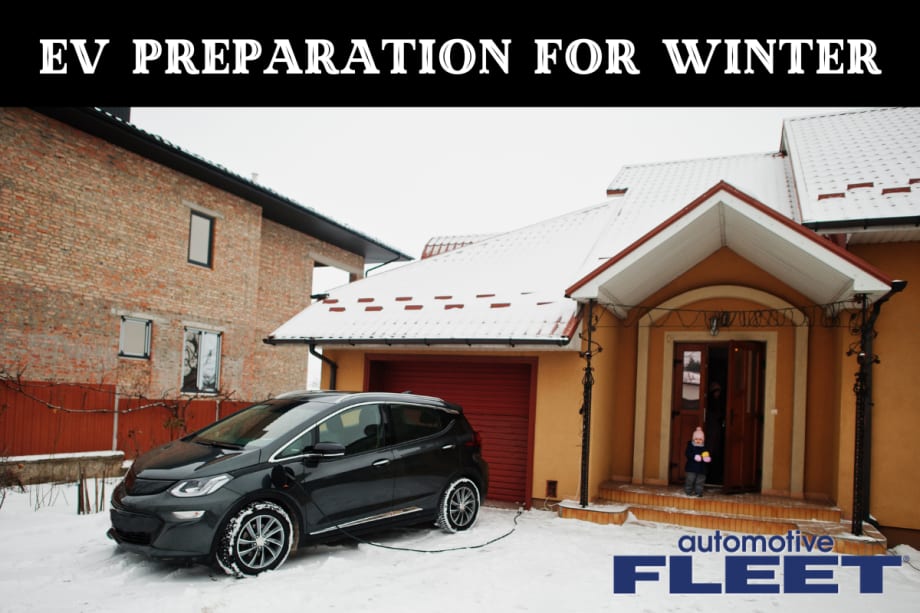
Although seasonal maintenance is a similar concept, the actual steps to winterize your electric vehicle may differ from an ICE in ways you didn’t expect.
Photo: Automotive Fleet
4 min to read
The winter months can be challenging for electric vehicles (EVs).
EV range is not an absolute metric, and winter can have the shortest range. Weather, hills, climate temperature, cargo, passenger, aerodynamics, and speed traffic have dramatic impacts on EV range.
Today, increasing demand has resulted in a wider range of options that are becoming more common on the road.
Getting your EV ready for winter is crucial to maximize its safety, performance, and longevity. Just like an internal combustion engine (ICE) vehicle, taking a proactive approach to prepare your vehicle for harsh weather makes all the difference.
Although seasonal maintenance is a similar concept, the actual steps to winterize your electric vehicle may differ from an ICE in ways you didn’t expect.
Winter Driving Tips for an Electric Vehicle
An EV battery has an ideal operating temperature, preferably around 20-40 degrees Celsius depending on the car model, which can be difficult to achieve in winter. If the temperature is lower than this, it will affect both charging speed and range, and your vehicle won’t go as far. Daily driving and charging behaviors must be adjusted in winter months.
Disable folding side mirrors: Water from melting snow and ice can work into mirrors, freezing up, and mirrors can break. In freezing temperatures, it’s possible for your mirrors to be frozen in their closed position. When they’re trying their best to break free (unsuccessfully), it’s possible to burn out the motors.
In harsh climates, ensure that the wiper blades are not frozen or adhered to the windshield. Remove ice from the windshield before using the wipers. Ice has sharp edges that can damage the rubber on the blades. Install quality windshield wipers to aid in snow and ice removal.
Remove all snow and ice from the rear window and trunk: Do not keep your ice scraper or brush in the trunk, when the trunk is opened, the snow and ice may fall into the trunk where the battery is located and add moisture when melted. Clear the trunk area before opening.
Installing winter tires: Winter tires with an aggressive compound and tread design may result in temporarily reduced regenerative braking power. Most EVs are designed to continuously recalibrate themselves, and after changing tires, it will increasingly restore regenerative braking power after some moderate-torque straight-line accelerations. For most drivers, this occurs after a short period of normal driving, but drivers who normally accelerate lightly may need to use slightly harder accelerations while the recalibration is in progress. Investing in snow tires will improve the way the EV handles and increase safety.
Monitoring the tire pressure will help extend an EV’s vehicle range: Colder temperatures cause the air level in the tires to contract and the pressure to fall, which decreases the car’s efficiency. Proper air pressure can extend the battery life by 3 to 7%.
Maximizing and EV’s Cold-Weather Capabilities: Range Tips
Winter can drain your car’s battery and reduce your typical mileage range. To maintain cost savings and ensure your electric vehicle performs well this winter, it’s important to take a few simple steps during the cold months ahead.
Limit Acceleration
Since EVs use regenerative braking, you might want to consider setting your regenerative brake strength to the lowest setting available. When you let off the accelerator pedal the car starts to decelerate immediately.
The strength of regenerative systems can usually be adjusted so they either slow the car very little when the accelerator pedal is released or so much that you need hardly use the brake pedal at all.
Strong regenerative braking could potentially be too aggressive in icy conditions and might cause an EV to lose traction and slide. Regenerative braking may also be limited by your battery management system if the battery is cold since a cold battery cannot charge as fast as a warm one.
Precondition
Preconditioning allows the interior of the car to heat up without draining the battery. Some electric cars can be programmed to begin preconditioning at a set time to make sure your car is ready when you need to leave.
You can extend your car’s range by remote starting the vehicle for approximately 30 minutes before unplugging it from the power source. Some vehicles also offer a “winter weather” package that is specially designed to keep battery temperatures in an ideal zone, so they are always ready when you start to drive.
Economy Mode
Eco Mode, or Chill Mode option, limits the amount of power to the motor and other parts of the car that deplete battery life, like the heater. Operating in this low-energy mode can be a benefit during icy weather conditions because the car will accelerate more slowly and prevent your tires from spinning.
Plan to use seat warmers, a heated steering wheel, and turn down the cabin heater. These features use less energy and provide targeted heat, giving you more battery to travel.
Winter Range Loss
Expect longer charge times. To protect the high voltage battery, many cars limit the charging voltage when the battery is cold. Regular charge speed will return when the battery has warmed up. Cold temperatures will both negatively affect a battery’s performance and limit its ability to accept a charge.
At the end of the day, follow just a few of these simple steps and you can really level up your experience driving electric this winter.
Originally posted on Automotive Fleet
Subscribe to Our Newsletter
More Electric Vehicles

EV Charging Use Is Outpacing Infrastructure Growth
ChargePoint’s 2026 Charging Forward Report points to rising charger use, higher-powered charging, commercial vehicle electrification, and energy-management technology. Here’s what fleets should know.
Read More →
EV Realty Names Henrik Holland President as Charging Platform Expands
The former Prologis Mobility and Shell executive will help expand EV Realty’s truck charging business and move its power-first infrastructure model into autonomous vehicle depots and other fleet sectors.
Read More →
GreenPower Expands New Mexico EV Pilot With Larger Buses, V2G Testing
After logging more than 17,000 electric miles in the first year, New Mexico’s statewide pilot is moving into its second phase with larger vehicles, continued charging evaluations, and more.
Read More →
Can EV-as-a-Service Help Fleets Scale Electrification?
Sustainability Partners CEO Adam Cain explains how matching EVs, charging infrastructure, and duty cycles can help fleets scale electrification.
Read More →
How EV-as-a-Service Is Moving Fleets Beyond Pilots
Adam Cain, president and CEO of Sustainability Partners, explains how EV-as-a-service can help fleets scale deployments by addressing duty-cycle requirements and charging challenges.
Read More →
PowerFlex, The Mobility House Join Forces to Advance Fleet Electrification
Two EV charging providers are joining forces to deliver a broader portfolio of energy management and fleet electrification solutions.
Read More →
Ford Retools Louisville Plant for Fathom Electric Truck Production
Ford's $2 billion Louisville Assembly Plant overhaul introduces a three-part assembly process for the Fathom midsize electric truck, with production scheduled to begin in 2027.
Read More →
Merchants Fleet Reports 290M EV Miles as Fleets Navigate Changing Electrification Market
From millions in operating savings to hundreds of millions of EV miles, Merchants Fleet’s latest report reveals what’s working and what’s changing in fleet electrification.
Read More →
California District Commits to Electrify 25% of School Bus Fleet by 2028
One of the nation's largest school bus electrification projects to date demonstrates how grants, charging infrastructure, and public-private partnerships can help fleets transition to EVs at scale.
Read More →
Aptera Orders Bodies and Chassis for Its First 40 Production Vehicles
Aptera Motors Corp. has issued purchase orders for the major structural components of its first 40 vehicles, and body and chassis components are expected to begin arriving in October.
Read More →