



Learn More: The Future Of Battery Electric Vehicles For Fleets
How To Plan For And Embrace Electric Vehicles
Corporate fleet managers walking through the steps of electrifying their workaday vehicles give the straight scoop on adoption.
January 4, 2021
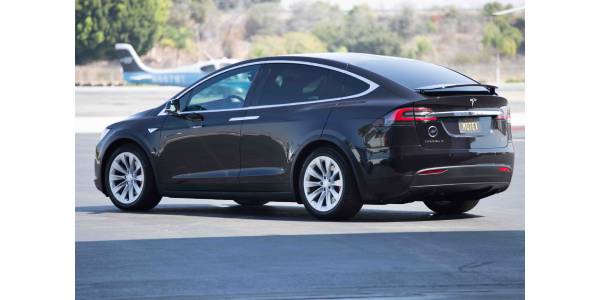
Photo: MOTEV Los Angeles
10 min to read
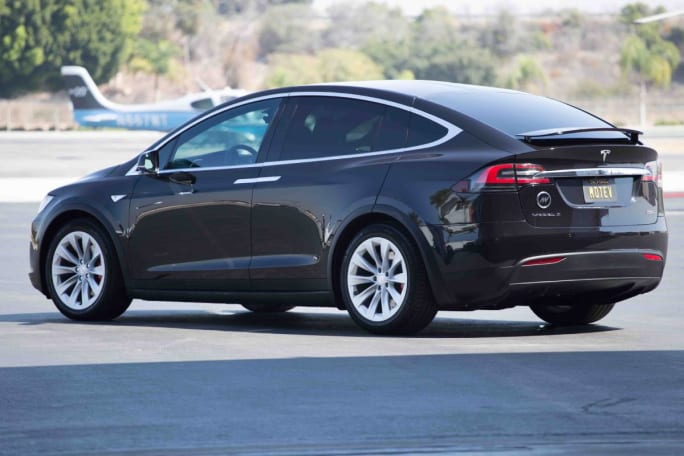
EVs are gaining traction in all types of corporate and commercial fleets with a variety of vehicles. Car share programs, chauffeured transportation, and ridehail services are proving the worth of EVs as well.
Photo: MOTEV Los Angeles
Electric vehicles may look easy to drive, maintain and charge, but they come with a set of procedures and even a psychology that takes time to understand and adopt, according to fleet experts who’ve been through the experience.
The fleet leaders offer some real-life-been-there-doing-it insights that can help any fleet manager considering a leap from the fossil fueled vehicles to the electrified future. They spoke on Nov. 11 during the annual 2020 Fleet Forward Experience Conference, held virtually by Bobit Business Media.
Moderated by Sila Kiliccote, CEO of eIQ Mobility of Oakland, Calif., which builds data analytics and software to support the migration to and operation of electric fleets, the panelists included:
Adam Berger, president of Doering Fleet Management and TesLease by Doering, a 30-year- old national fleet management company based in Brookfield, Wisc., with four offices across the U.S. specializing in fleets of 20-500 vehicles; Jordan Baynard, procurement manager of Ecolab, based in Minnesota, which provides cleaning and sanitation services across a variety of industries worldwide with a fleet of about 12,000 vehicles in North America split between its sales and service teams; and Ryan Richards, strategic sourcing manager in the facilities and engineering procurement division of South San Francisco, Calif., based Genentech, who oversees about 3,000 to 3,400 sales vehicles around the U.S., including ones for parent company, Roche. The company is converting its 60 employee buses to electric, with 20 in the fleet as of November.
Making the EV Case
Starting with the big picture, the primary motive for taking on electric vehicles are energy and environmental.
“Joining the fight against climate change is really no longer optional, for the growth of our business and the protection of our people and assets across the world,” Baynard said. “Now it's do we have the wherewithal and at what speed do we want to make that transition? It’s not difficult to convince (people) it’s the right thing to do based on the science. The challenge lies in how quickly disparate businesses and departments are able to adapt to EVs based on how they will use and manage them.”
The criteria previously focused on cost benefits, or green premium, but now the discussions about EVs center on the advantages of downtime, being an early adopter, joining the future, protecting the environment, and providing the funds, Berger said. Then it’s a matter of communicating those priorities to staff and customers.
More people now in and out of work are talking about EVs, which normalizes the prospect of adopting them, he added. EVs are gaining traction in all types of corporate and commercial fleets with a variety of vehicles. Car share programs, chauffeured transportation, and ridehail services are proving the worth of EVs as well.
While today’s EV assets are mostly consumer grade, the future will bring commercial vans, all sizes of trucks, and semis. “Many of our discussions are about what does today look like?” Berger said. “How do we make the EV transition? And there's a long term, a five-year and a 10-year perspective to those conversations. This industry is evolving faster than it's ever evolved.”

Adam Berger, president of Doering Fleet Management and TesLease by Doering, a 30-year- old national fleet management company based in Brookfield, Wisc., with four offices across the U.S. specializing in fleets of 20-500 vehicles.
Photo: Doering Fleet Management
Challenges On The Way
While each company adopting EVs can learn from others, many lessons come from acquiring and running the vehicles.
“There are certain trust steps that we took as the industry evolved,” Richards said. “The biggest catch we've always had is how do we get chargers in the salespeople's homes? How do we reimburse for that electricity? How do we make sure that electricity is green? So there's been a gap in this loop for quite some time. Quite frankly, the way we solve that is going out and asking anyone and everyone who’s involved in this industry to look for the people who can help figure this out.” He suggested fleet managers partner with the people who could help resolve these challenges.
Genentech was testing 100 vehicles in November, installing the first charger in a salesperson’s home that month.
“Our fleet has evolved from internal combustion to hybrids and plug-in hybrids,” Richards said. “We're taking a leap of faith and we will see how the 100 cars go. Because we've brought it along in baby steps, our salespeople are ready. Would they have been ready three years ago? No. I think range anxiety is still a big factor. But people are seeing them and they're seeing their friends use them. And it's not as big of a concern.”
Baynard said his company jumped in learning the new technology and how it applies to their operation. “While it still is four wheels to get our sales and service people from point A to B, there are a variety of things to consider.” He mentioned driver policy, managing chargers, employee reimbursement, safety, service, and measuring drive time for sales and service people visiting customers. “It’s been a lot of education to understand the capabilities of electric vehicles, the timelines of when they'll be available, and relying on many people outside of our organization to do that.”
Baynard advises getting comfortable with the technology and looking further into it. A fleet operation should have a strong business case based on how the vehicles are fit for usage now and in the future. That means making sure they have the hauling and range capacities, needed space, and the technical feasibility to do the job. “And what does that math look like? We’re running a business, and at the end of the day we have to make sure we account for it and budget for it appropriately.” The business effects relate to maintenance, the resale value, and all the variables that contribute to total cost per mile.
One helpful approach is to move from assumptions to gathering hard data. Educating employees and the businesses they serve can ease the transition to EVs. While plenty of data exists on consumer use of EVs, collecting data on how fleets are deploying the vehicles will help companies refine their business models even further.

Jordan Baynard, procurement manager of Ecolab, based in Minnesota, which provides cleaning and sanitation services across a variety of industries worldwide with a fleet of about 12,000 vehicles in North America split between its sales and service teams.
Photo: Ecolab
Adoption Programs & Timelines
Ecolab is looking at pilots to test EVs applicable to fleets, Baynard said. “We'd like to get them in the hands of our drivers to understand the cold weather impacts, compare major metro areas that might have more infrastructure with places further behind, see if they are altering driving behavior, and understand range commitments.”
EV pilots can provide information that help all companies, Richards added. “We're going to share our mistakes and our successes, and we hope that everyone can follow along. We're open to learning from other people as well.”
Safety, reliability and uptime are major factors driving decisions along with how well EVs align with corporate values and missions, which ultimately drive EV adoption, Berger said.
The best way to manage change in organizations is to build consensus and experiment. Through that approach, companies can see which regions and territories are best for EV fleet usage. Recurring barriers include range anxiety, naysayers, lack of adequate infrastructure, and fear of costs.
But while U.S. companies may face such challenges, they can take inspiration from how EVs run in more mature fleet markets worldwide.
“It’s great that we're moving the needle, and we're making huge inroads in the U.S, but we just need to keep our eyes on the globe,” Berger said. “Because China and Europe are kicking our butts. And they have for years as new technology and vehicles has been introduced. We're usually lagging.”
The U.S. simply needs more fleets to expand the electric vehicle market. “Fear of mistakes is what prevents companies from making change,” Berger said. “By sharing data, by open sourcing it to the extent we can, it will really help with adoption, comfort and change management in individual companies by creating buy-in at the top that can then grow among the layers of management and show up on the roads.”

Sila Kiliccote, CEO of eIQ Mobility of Oakland, Calif., which builds data analytics and software to support the migration to and operation of electric fleets.
Photo: eIQ Mobility
Electric Education
A fleet operation should leverage knowledge from other companies using EVs to help counter skepticism, Baynard said. Sharing and learning among electric fleets can create the critical mass to educate with hard facts and real insights.
“We’ve got to get out there and prove it,” he said. “That means getting some of these vehicles in our drivers’ hands to operate in the way they would and manage specific challenges.” This way, an operation can prove out the assumptions instead of just jumping in and hoping for the best, he added. Armed with data and experience, a fleet operation can more successfully pursue a phased rollout.
“Everybody’s not in the same situation; not everyone owns their home or returns home every day. Everybody sees a different set of customers. We have to make sure we have a solution and response to all of those unique needs.”
The salespeople driving the vehicles are part of the trial-and-errors journey to figure out how best to use EVs, Richards said. “Let them voice their concerns and we can address it. Proof of concept goes a long way. If they see it’s working for one of their co-workers, that spreads like wildfire. We're doing everything we can to make it seamless for them with the caveat that nobody has this figured out, and we're doing the best that we can. We take the most eager 100 and see where the infrastructure and everything else fits.”
Berger relies on shared experiences. “The idea is nobody likes to be sold, but everybody likes to buy. So we need to give the success stories to our clients that other clients are having, and we put them in touch. The idea is that we share this information as much as possible to validate it, which really helps with the comfort level associated with change.”
Berger cited the example of top CEOs first buying Teslas six years ago and then realizing their salespeople could benefit from them as well. That starts a validation process which then spreads to other company fleets and users.
Good experiences can spark more participation. “Our company is thinking tomorrow, not yesterday. It’s been so much more about leading people, not selling them but getting them to buy into this corporate strategy.”
Adjusting To New Realities
Based on usage in sales and service divisions, the idea is to use EVs that enable you to learn, adapt and pivot, since the market overall is headed to electric, Berger said. “There are companies that are building the answers for tomorrow. They're building the shuttles, trucks, pickups, vans, etc. The reality is change what you can today so you have experience and understanding for tomorrow as future products become available to match future use cases.”
Eventually it falls on the salesperson to know where they're at and know their audience and if it makes sense financially, or if it may not make sense for them to pull up to the customer's office and maybe send the wrong image, Richards said. “They can't start every conversation explaining how this vehicle is discounted and cheaper than XYZ.”
Companies that want to transition and phase in electric vehicles over time should look at their budgets, the costs of batteries, fuel costs, infrastructure, driving behavior, and electricity in choosing which EV makes and models to phase in at what time in which place, the panelists agreed.
Gauge feedback from drivers as you evaluate the vehicles in road tests and trials, Richards advised. Early adopters tend to be salespeople who are covering 500 miles at a time in areas with enough charging stations. Companies will encounter drivers who are enthusiastic and some who are skeptical.
Buying, Selling, & Keeping EVs
Panelists wrapped up their insights with some practical pointers:
Fleet managers should maintain their lease terms for EVs but extend them if the vehicles prove to be reliable enough for longer use potential. Some battery warranties can outlast initial leasing terms.
Brand equity is the number one indicator of resale value. So far Tesla has shown the strongest resale values, especially Model 3, but Tesla prices have been falling which defeats talk of accurate resale values. The market will determine if it can sustain the dynamic of price contractions but strong resale values.
It’s best to compare EVs against (ICE) vehicles. For example, seeing how an EV performs for 65,000 miles over three years could be an accurate guide as to whether a fleet should pivot to electric.
There are a combination of private sales and auctions for most EVs, and it’s not difficult to find used ones. Plenty of EVs go to auction, but most since auctions still tend to undervalue EVs.
Fleet management companies still need to resolve charging access. It should be integrated into fleet management in the same way as fuel charge cards.
Subscribe to Our Newsletter
More Operations
The EV Breakdown Nobody's Talking About: Why Most Electric Vehicle Roadside Calls Aren't Mechanical Failures
Here's why EV breakdowns are widely misunderstood.
Read More →
Xos White Paper Asserts LA Olympics Will Lack Enough EV Chargers
The commercial EV fleet company recommends some faster and more flexible remedies to relieve the anticipated shortfall.
Read More →
ChargePoint, Optimus Expand Fast-Charging Network Across Southeastern U.S.
ChargePoint will serve as the exclusive solutions provider, delivering hardware, software, and services to support Optimus’ growing charging network.
Read More →
Running A Profitable Electric Rental Fleet
How do you successfully operate an all-electric rental car fleet? Whether you manage a rental fleet or another commercial fleet, this conversation offers practical lessons on deploying, operating, and scaling electric vehicles.
Read More →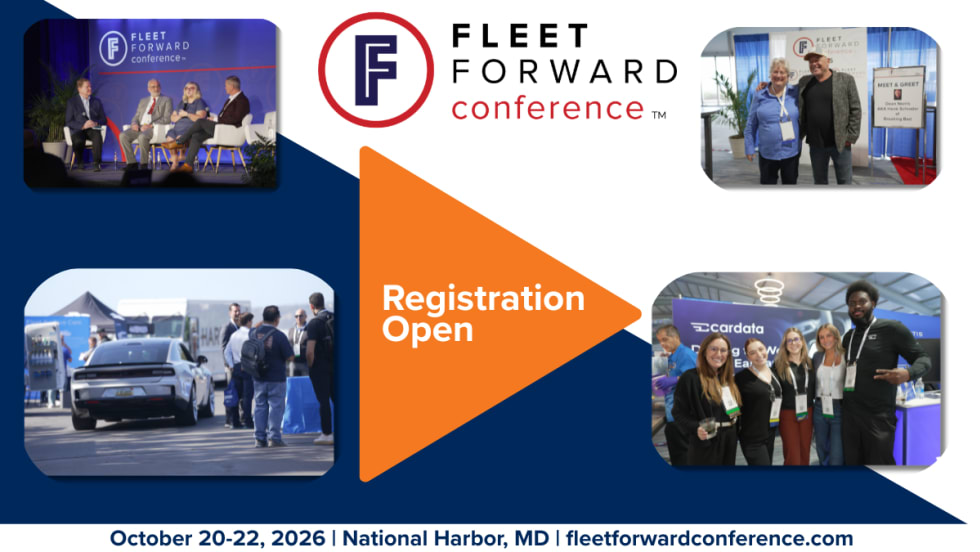
Registration Opens for 2026 Fleet Forward Conference
Held on the East Coast for the first time, the Washington, D.C.-area event features expert-led education, a new IIHS Crash Test Experience, and collocation with the NAFA’s Fleet Safety Symposium.
Read More →
Why Charging May Never Be As Easy As Filling Up Gas
A seamless charge depends on a string of independent companies getting it right together, every time. How can electric fleets navigate the challenges to create a successful charging plan?
Read More →
Slate Debuts Colorful, Unique EV Models
A recent media and client event, studded with electric vehicles dressed up on platforms, planted a new position for the manufacturer in the wider EV market. Fleets will find cost-saving advantages.
Read More →
Slate Electric SUV, Pickup Switchable Model Aims For Light-Duty Fleets
Everything about this EV is counterintuitive and understated, making it stand out from the crowd.
Read More →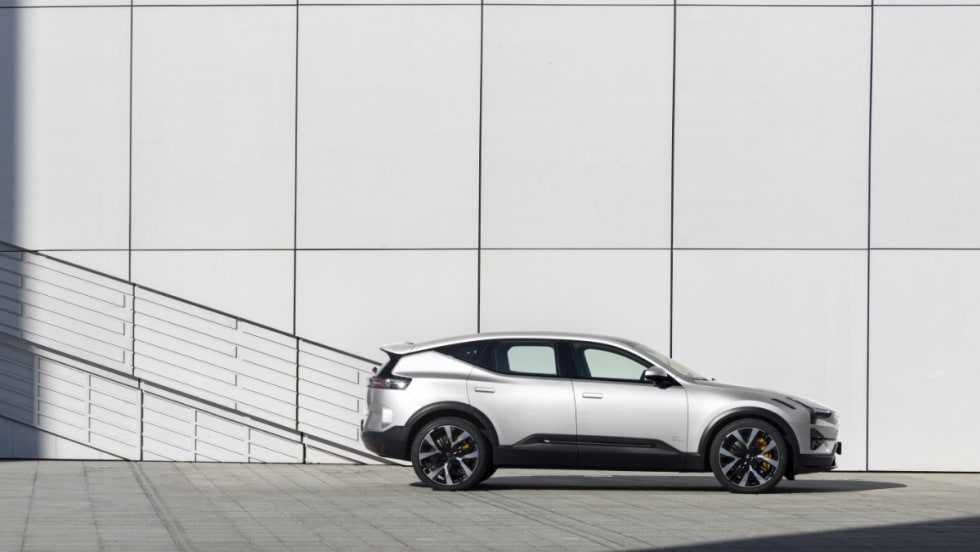
Polestar Barred from U.S. Market Under Connected Vehicle Rule
The automaker loses its authorization to sell new vehicles in the U.S., starting with the 2027 model year. Polestar owners will retain access to the brand's service network.
Read More →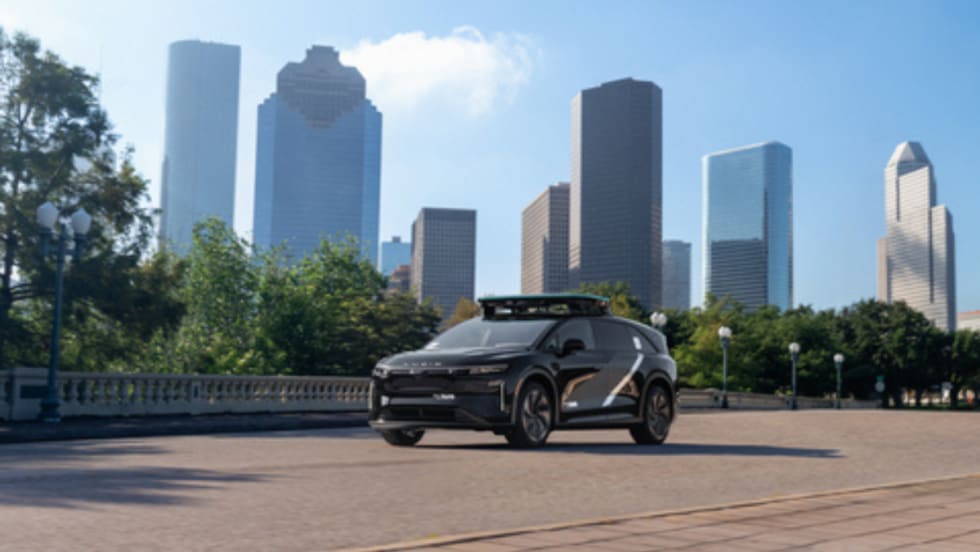
Uber, Nuro and Lucid Plan Houston Robotaxi Service in 2027
The tripartite venture brings out the combined advantages of electric vehicles, mobility, and autonomy into ground transportation.
Read More →