


Forget About 1983 Vs. 2008 — What About 2033?
In the next 25 years, look for upheavals and transformations throughout the chauffeured industry. But man and woman will still wed.

If Marty McFly could use the limo-version of a silver DeLorean as a time-travel machine, what would he find in the future world of chauffeured vehicles? In all likelihood, an advanced array of cleaner, techno-enhanced vehicles with innovations and robotics thought impossible today.
And plenty of weddings.
Just as the teen-age character McFly got his parents to wed in the original “Back to the Future,” which became a signature film of the 1980s as the limousine industry was coming into its own, the industry will be able to rely on wedding demand well into the future.
That’s an easy prediction. Overall, the ride from 2008 to 2033 should be about as unexpected, unpredictable, and exciting as the one from 1983 to 2008, according to recent interviews with limousine and chauffeured transportation industry heavyweights.
“In my mind, there will always be a need for chauffeured ground transportation; the safest transportation is limousines and livery vehicles,” says Jeff Greene, most recent past president of the NLA and owner of Greene Classic Limousines in Atlanta. “Most people don’t like taxis,” he adds. “Overall, the future looks good, and as the economy gets better, so will disposable income.”
Transformative Engines and Vehicles
Dawson Rutter, CEO and founder of Commonwealth Worldwide Chauffeured Transportation, half-jokes about whether cars will drive themselves based on advanced robotics, thereby eliminating the need for chauffeurs. “I’m nervous about whether cars will drive themselves,” he says. “What will be the impact on our business if the car drives around the block by itself?”
While such a clever scenario can enchant yet frighten any operator, some certainties do arise: oil, bad; alternative energy, good.
“A lot of technologies and R&D are becoming less dependent on oil,” says Jason Kaplan, owner and founder of The Driver Provider, an 87-vehicle chauffeured transportation company based in Phoenix with locations in Scottsdale and Tuscon, Ariz., and Jackson Hole, Wy. “Technology will have jumped out as efficient and enviro-friendly, and will allow us to be less dependent on oil.” The sizes of chauffeured vehicles will be similar, but they will be made of lighter materials, Kaplan adds.
The vehicle industry is only seeing the start of technological progress in engines becoming leaner on fuel and greener in function, says Scott Solombrino, president and CEO of Boston-based Dav El Transportation. “The technology will only get better,” he says. “You’re seeing the beginnings of an industry, like the Commodore computer compared to the latest iPhone; like everything else that goes through development stages.”
Detroit is making a big push to advance the technology, Solombrino says. “Auto (makers) have huge incentives to come up with alternatives to gasoline engines,” he says. “People are taking this seriously. Chauffeured cars will have to adapt as quickly as everyone else.”
Halos for Hybrids?
While Solombrino and Rutter welcome the era of money-saving engines and energies, both remain skeptical of first-generation hybrids being adapted to the demands and tastes of chauffeured transportation.
“The Prius is a joke; it’s a terrible car for chauffeurs to drive,” Solombrino says.
“You will never replace size.”
While conversions to alternative energy engines are a foregone conclusion, says Rutter, citing New York Mayor Michael Bloomberg’s goal of having all city taxis go hybrid by 2010, he questions whether hybrid vehicles are a viable solution. He foresees other alternatives emerging as the industry standard, such as hydrogen engines.
“Hybrid is a ruse,” Rutter says. “Most don’t get better gas mileage than a regular car. A Lexus hybrid gets two miles per gallon better than a standard fuel-engine model.” Hybrids are not the wave of the future and they will not save the environment, he says. “I think as more and more models come out, we’ll get over that. The Prius is a small car. Most non-SUV hybrids are small cars. They are uncomfortable with limited back seats and trunk space.”
Customers favor green cars as long as it doesn’t sacrifice comfort, Greene says. “For those paying for the luxury of ground transportation, they were fine with green as long as it didn’t touch them and stayed behind the scenes,” he says. “Very few cars have the leg room and engine components yet to turn a limousine into a hybrid. The Mercury Mariner is still small from what clients tell me.”
Yet many operators are already transitioning to hybrids, anticipating at least some lower fuel costs and shifting customer preferences.
Kaplan’s company just ordered 10 GMC Tahoe hybrid SUVs. “We’re feeling the strongest push from the corporate clientele; their voice speaks volumes,” he says. “We’ve had fewer leisure clients that have voiced concerns. If there’s not a huge price difference, most people will take it. There is no difference to the customer in the vehicle.”
Angelo Richichi, CEO and owner of Signature Limousine Services in Linden, N.J., believes hybrids will become an increasing part of the chauffeured car business. “I definitely see a need for hybrid SUVs,” says Richichi, whose fleet includes Town Cars, SUVs, a 22-passenger bus, and various stretch limos. “Now that more companies and executives like the SUVs which are bigger than Town Cars, and with the GMC Hybrids, you definitely see people going that route.”
However, stretch limousines require a lot of batteries and amps, and it is not clear if hybrids can sustain the energy requirements of stretch vehicles, he adds.
Richichi also predicts that once gas prices hit more than $4, you will see many operators converting cars to E-85 ethanol fuel.
The EPA will mandate more fuel economy standards, forcing automakers to develop more efficient engines, Rutter says. “It’s all about what the gas companies and car companies want to do,” he says. For example, Commonwealth owns 50 Suburban flex-fuel SUVS that can use E-85 ethanol-based gas, “but we can’t buy the flex fuel,” he says. “No gas stations that have it. Where is the hook to go find the fuel and put it into the car?”
Look for Fancy Technological Tricks
While chauffeurs will be needed for at least the foreseeable future, they may not need to show up at airports anymore. “Nobody will meet anyone live in an airport,” Solombrino says. “All will be done through technology and a paging system; you’ll alert the driver, enter a code. The whole concept of drivers in the terminal will be a thing of the past.”
Likewise, payments will be done by cell phone through downloaded accounts, he says. Transactions with chauffeurs, including tips, will become cashless, he adds.
While technology can smooth transactions, it also can work against the industry. The use of technology, such as improved videoconferencing, will reduce demand for travel worldwide as workers prefer to stay put instead of leaving home to travel on the road, Solombrino says. Companies may cut back on travel spending as a result, since many workers “are tired because of taking more trips and don’t want to be away from family,” he says.
Solombrino also sees more hurdles for getting into the chauffeured car business, such as increasing rules and regulations, safety requirements, expensive insurance, and overall complexity of running a business. “The old days of being able to jump into chauffeured car business are going away,” he says. “Cities, towns, and states are requiring much more and larger hurdles.” That could lead to more consolidation as larger companies are better equipped to use economies of scale to handle costly regulations and limits.
[PAGEBREAK]
Urban Access Could Get Limited
Among the hurdles Solombrino foresees for chauffeured car companies are traditional cities with increasingly dense downtowns, such as London, Boston, and New York, pursuing rules that may restrict the size of cars on inner city streets and the level of access for chauffeured cars. “Because chauffeured cars often drive multiple passengers, I hope we would seem friendly to big cities,” he says. “We may be exempted from that.”
The industry needs to convince city and state governments that chauffeured transportation is integral to any transportation system because it moves multiple people at once, Solombrino says. “If we don’t do a good job, we could find ourselves on the outside of cities looking in,” he says. “Cities will want to get cleaned up, less congested, and more carbon neutral. The car business will be a huge target. Chauffeured car will have to evolve as more of a necessity, and not as much of a luxury.”
Sophisticated light-rail systems, such as those that connect to the Munich International Airport, also may erode the need for chauffeured cars, Solombrino says. If those systems are fast, clean, safe, and accessible, then even corporate travelers might forgo the chauffeured car and its risk of encountering traffic, he says. “In London recently, people tried to persuade me to take the train and skip the car,” Solombrino says of his recent business trip to multiple European cities. “That type of advancement and improvement will have some effect on how the chauffeured car is used.”
Solombrino cites more efficient subway systems, better connected airports, and expanded mass transit as competitors to chauffeured corporate cars. “I’m not convinced that chauffeured car has an upward spiraling curve,” he says. “The rest of the world is becoming much more sophisticated than we are about ground transportation,” he adds, mentioning Dubai, Singapore, and Shanghai.
Consumer Tastes and Demands to Get Pickier
To survive in this business, operators must offer diverse and varied vehicles to meet the needs of clients, says Greene, adding that customers will become more demanding and particular in the future. “Customers give us less notice and they want more of a variety of vehicles.” Use of sedans and group use of shuttles and mini-buses will keep growing, he says.
“The critical needs for our customers are on-time performance, professionalism, and a seamless ride,” says Rutter, whose company operates 240 vehicles and has grown 45% each year for the past decade. “Late and lost are the two worst offenses you can perpetrate on a customer,” Rutter says. Customers will continue to want a quiet, comfortable ride where they can relax or work on their laptop computers, he says.
Operators also will face more consumer demand to offer ever-improving technologies, gadgets, and conveniences. “There will be more pressure for us over time to have all those capabilities in the back seats of our vehicles,” Kaplan says. One likely expectation will be the addition of teleconferencing screens to vehicles, he says. Things that seem like frills and luxuries today will seem like essentials in 20 years, he adds.
Kaplan also predicts operators will need to become more versatile so they can affiliate and network with re- lated travel and transportation businesses, such as hotels, private aircraft companies, etc. “We have to make it easier for customers to find us either prior to or with other bookings for travel,” Kaplan says. “We need to find other ways to connect to bigger pieces of the consumer travel experience.”
Richichi foresees a trend more toward greater use of buses for parties greater than four people. “There is now more of a demand for buses than there has ever been.”
Business Still Should Be B(l)ooming
The bright spots in the chauffeured car business stretch to two constant trends in life: 1) Most people will eventually marry; 2) The rich will always get richer.
Solombrino sees the wedding market as the mainstay of the limousine industry – not only recession proof, but likely to be a staple of chauffeured business 25 years from now. The prom market, however, is at risk as more school systems crack down on limousine access to school property and school events, he says.
If the wealthier keep getting wealthier, which is likely given the explosive growth in emerging economies that spawns nouveau riche classes worldwide, it will provide a stable demographic of limousine and chauffeured car users for the next 20 years, Solombrino says. “More millionaires and billionaires will need chauffeured transportation,” he says. As the private charter jet industry grows, wealthier travelers will have more access to smaller airports and prefer chauffeured cars to and from those airports, he says.
As for the most recent economic downturn, Solombrino says such economic fluctuations are cyclical. During hard times, limousines get cast in a negative light, but once the economy rebounds, it becomes acceptable to have a limousine again, he says.
Adds Greene, “I still think the limousine has a reputation and mystique about it that makes for an exciting evening.”
[SIDEBAR]
Technology will never change in that it will always change and require constant updating. One of the leading innovators in the chauffeured transportation industry and a 2008 Operator of the Year winner offers some advice to operators positioning for the future.
“For many years, until recently, the limousine business had been a hands-on do-it-yourself industry,” says H.A. Thompson, CEO and founder of Rose Chauffeured Transportation in Charlotte, N.C. “People ran the business, answered the phone, drove the cars, washed the cars, etc. Now, if you are on the cutting edge of the future, ‘systems’ run the business and ‘people’ run the systems.” Thompson advises that operators become more techno-savvy in the following areas:
• The future will require limousine companies to use expanded software capabilities that, for example, enable companies to take online Internet reservations, keep and study detailed client information, and produce “crystal-clear” reports.
• Transportation companies also will need the ability to have print capabilities inside their vehicles, he says. Some cities, such as Charlotte, N.C., require driver manifests and a trip ticket at all times. ”Sending a driver with an over-the-phone assignment won’t cut it in the future,” Thompson says.
• “If your transportation company works with owner-operator/contract drivers, it should be mandatory that all vehicles be equipped with drive cam and GPS. It’s an absolute safety necessity.
• Office phone systems should be equipped with Voice Logger — a tremendous aid in training, screening calls for information, and checking mistakes, such as AM vs. PM; he said, she said, etc.
• The new phone system of the future is VOIP (voice over Internet phone). It uses caller ID with a pop-up screen and is integrated with Fast Track. It’s so sophisticated you can hire part-time stay-at-home reservationists to log in and handle calls and reservations.
• Finally, Thompson reiterates the golden rule of quality chauffeured transportation: “But ‘people’ still come first, and if you can’t give great service and be early, all the technology doesn’t matter.”
[END SIDEBAR]
More Operations

The EV Breakdown Nobody's Talking About: Why Most Electric Vehicle Roadside Calls Aren't Mechanical Failures
Here's why EV breakdowns are widely misunderstood.
Read More →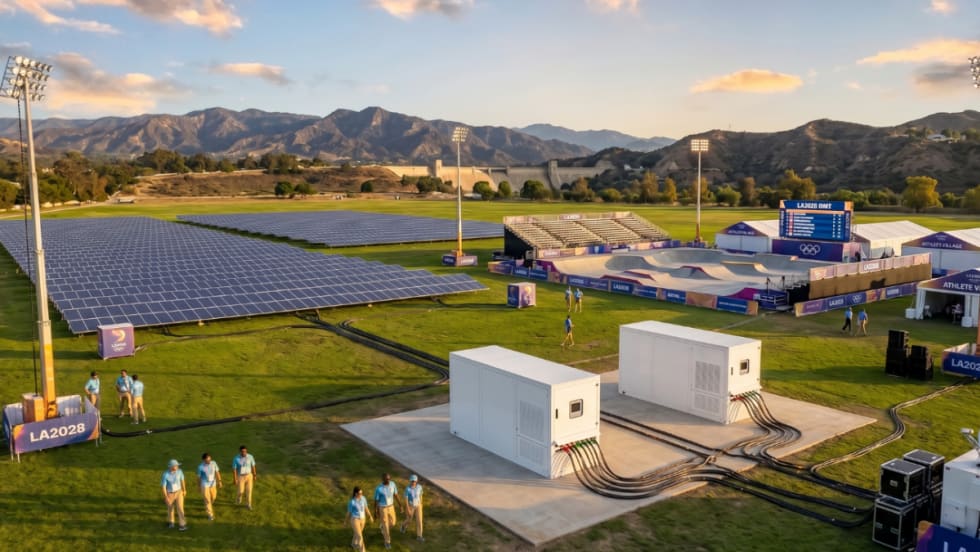
Xos White Paper Asserts LA Olympics Will Lack Enough EV Chargers
The commercial EV fleet company recommends some faster and more flexible remedies to relieve the anticipated shortfall.
Read More →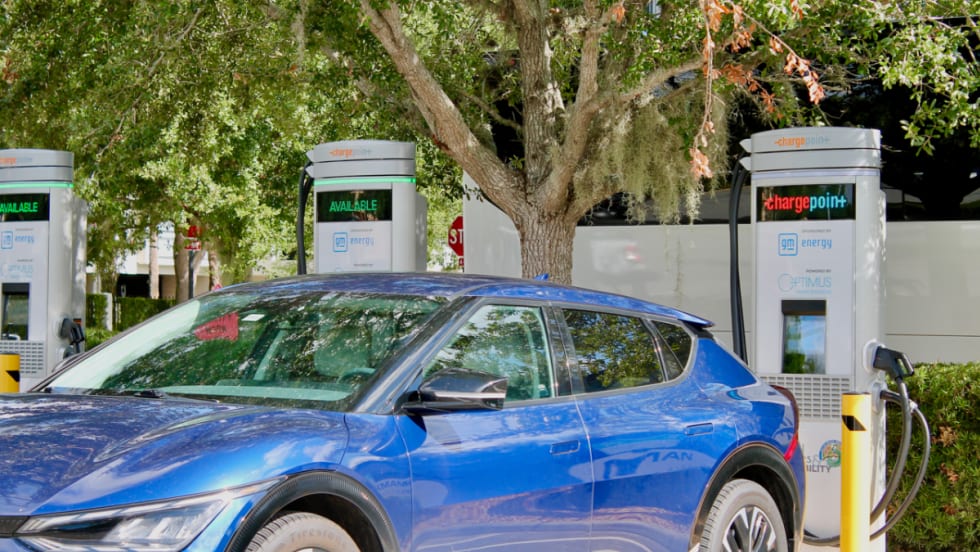
ChargePoint, Optimus Expand Fast-Charging Network Across Southeastern U.S.
ChargePoint will serve as the exclusive solutions provider, delivering hardware, software, and services to support Optimus’ growing charging network.
Read More →
Running A Profitable Electric Rental Fleet
How do you successfully operate an all-electric rental car fleet? Whether you manage a rental fleet or another commercial fleet, this conversation offers practical lessons on deploying, operating, and scaling electric vehicles.
Read More →
Registration Opens for 2026 Fleet Forward Conference
Held on the East Coast for the first time, the Washington, D.C.-area event features expert-led education, a new IIHS Crash Test Experience, and collocation with the NAFA’s Fleet Safety Symposium.
Read More →
Why Charging May Never Be As Easy As Filling Up Gas
A seamless charge depends on a string of independent companies getting it right together, every time. How can electric fleets navigate the challenges to create a successful charging plan?
Read More →
Slate Debuts Colorful, Unique EV Models
A recent media and client event, studded with electric vehicles dressed up on platforms, planted a new position for the manufacturer in the wider EV market. Fleets will find cost-saving advantages.
Read More →
Slate Electric SUV, Pickup Switchable Model Aims For Light-Duty Fleets
Everything about this EV is counterintuitive and understated, making it stand out from the crowd.
Read More →
Polestar Barred from U.S. Market Under Connected Vehicle Rule
The automaker loses its authorization to sell new vehicles in the U.S., starting with the 2027 model year. Polestar owners will retain access to the brand's service network.
Read More →
Uber, Nuro and Lucid Plan Houston Robotaxi Service in 2027
The tripartite venture brings out the combined advantages of electric vehicles, mobility, and autonomy into ground transportation.
Read More →