


Ed Bobit's Publisher's Page
You know those expensive catalytic converters required on all 1975 cars were supposed to eliminate harmful exhaust emissions. Now federal Environmental Protection Agency (EPA) scientists fear the converters may be causing more air pollution problems than they cure.

"Competitive enterprise is the fundamental reason why our nation has risen to greatness and, in my judgment, anyone who tampers or weakens our competitive system is playing both a deadly and dangerous game...The attacks on our industry, conducted under the guise of 'consumerism,' have not been ineffective...We see proof of this in the increased number of regulations that are imposed on manufacturers, new car dealers, used car dealers, and eventually on your industry," William G. Morgan, ex-General Sales Manager of American Motors at a National Auto Auction Convention.
Well, here we go again! You know those expensive catalytic converters required on all 1975 cars were supposed to eliminate harmful exhaust emissions. Now federal Environmental Protection Agency (EPA) scientists fear the converters may be causing more air pollution problems than they cure. The new exhaust systems apparently emit a mist of sulfuric acid in quantities sufficient to cause a possible health hazard in cities where there is high-traffic density. The problem, it is expected, will show up in form two to six years.
Now the EPA is spending more money conducting accelerated research to determine possible health hazards posed by the new pollutants put out by the muffler system which it requires. The head of EPA's Human Studies Division points out that sulfuric acid contamination in the air could aggravate heart and lung diseases and be very tough on older persons and children with allergenic problems, such as asthma. It looks like the environmental protectors are going back to the drawing board, while the driving public pays the bill once again.
EPA is moving ahead and now preparing such standards; and will propose them within two month's time. From before, EPA is on record that they have been concerned about such emissions from catalytic-converter antipollution devices used on many of the 75 model cars and would set standards to control them, beginning with the 1979 model cars.
Reaction from the auto companies leaves no doubt about their position. For months the manufacturers have requested more time to meet stricter emissions limits. They have pledged to the White House that they would improve fuel economy 40-percent by 1980 in return for a relaxation of the emission standards by Congress and as proposed by President Ford. GM, Ford and Chrysler continue to maintain that current emission controls should be kept constant through the 1981 model year in order that the auto makers meet their pledge for the more fuel-efficient cars.
A Ford vice president, Herbert L. Misch, informed the House Commerce subcommittee late in March that if the agency proceeds with its intention (new sulfuric-acid emissions standards from car exhausts) "we will have to rescind the commitment we made in January to the President's goal of 40-percent average improvement in new car fuel economy by 1980; at least until we can determine what is possible without catalysts."
The real question now emerges as to whether we are at an impasse or are we going to be inundated by a tidal wave of more regulations and standards.
GM has identified the amount of time, effort and cost to certify a car (and those costs are necessarily passed on to the purchaser) to meet the current Federal safety and emission standards. A car has to pass more than 800 separate test points at GM. ON emission standards alone for the '75 cars it has meant that at least 100 cars had to be driven as many as 2000 separate emission tests being conducted in their labs.
The question must be in the cost-benefit relationship. Is now the time for every car owner and buyer to determine that we do indeed need a pause in regulation; and whether now is not a time to ask ourselves how much is enough? What is your answer?
Originally posted on Automotive Fleet
More Legal/Legislative
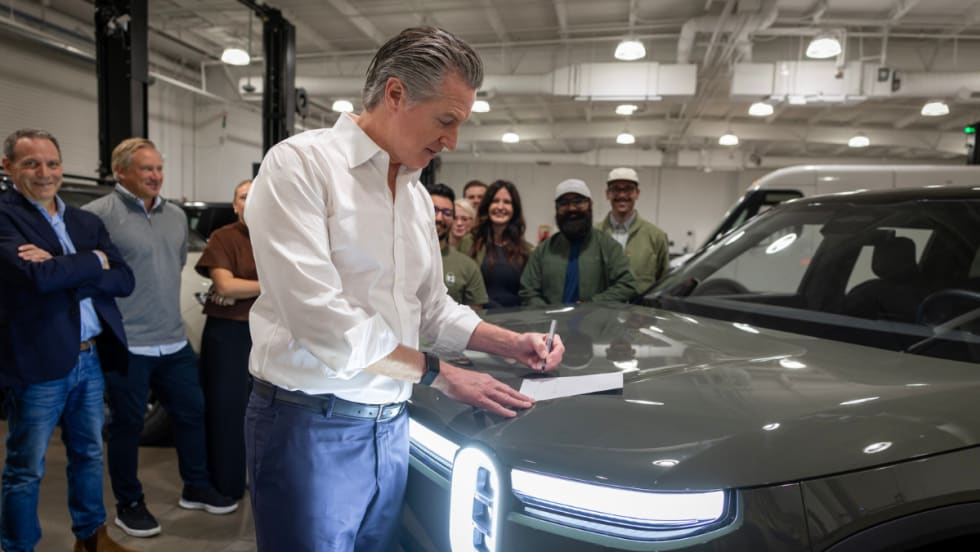
California Governor Approves Instant ZEV Rebates For First-Time Buyers
That instant rebate is the centerpiece of a broader $600 million package Governor Newsom signed into law, keeping California active in the global clean transportation race.
Read More →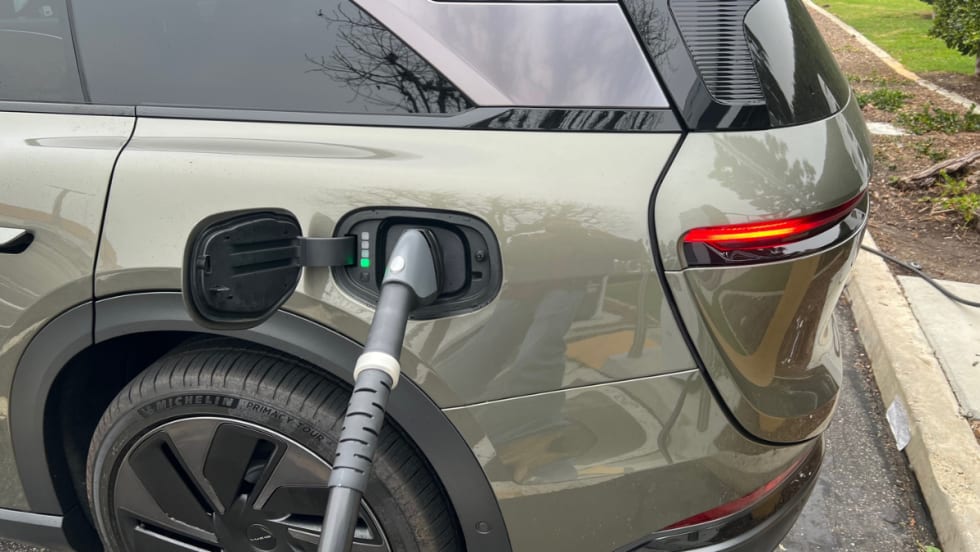
Used EVs Set Wholesale Sales Record In Q1
Rising gas prices may have boosted demand last month, as dealers pursued potential opportunities with more affordable used EVs.
Read More →
OEMS Expose Overdue EV Truths
Recent announcements from two automakers underscore a significant shift in the electric vehicle market, driven by EV losses and changing strategies. [VIDEO}
Read More →
The Freedom Era For Electric Vehicles
Season 2 Episode 1 of The Off-Peak premieres as the electric vehicle market no longer benefits from federal tax credits that expired at the end of Q3 2024. What does this mean for the future appeal of EVs?
Read More →
New Research Shows Renewed Potential And Tolerance For EVs
A new EV consumer survey finds partisan resistance is easing, but concerns around cost, incentives, and charging access still shape buyer interest.
Read More →
2025 Generated Big Headlines In The EV World
The EV industry entered a new more nuanced phase defined by realities and practical outcomes after a few years of grand visions, media hype, and bold investments.
Read More →
John Boesel Recognized at 2025 Fleet Forward Conference
Bobit recognized John Boesel, CEO of Calstart, who is retiring after over three decades of service.
Read More →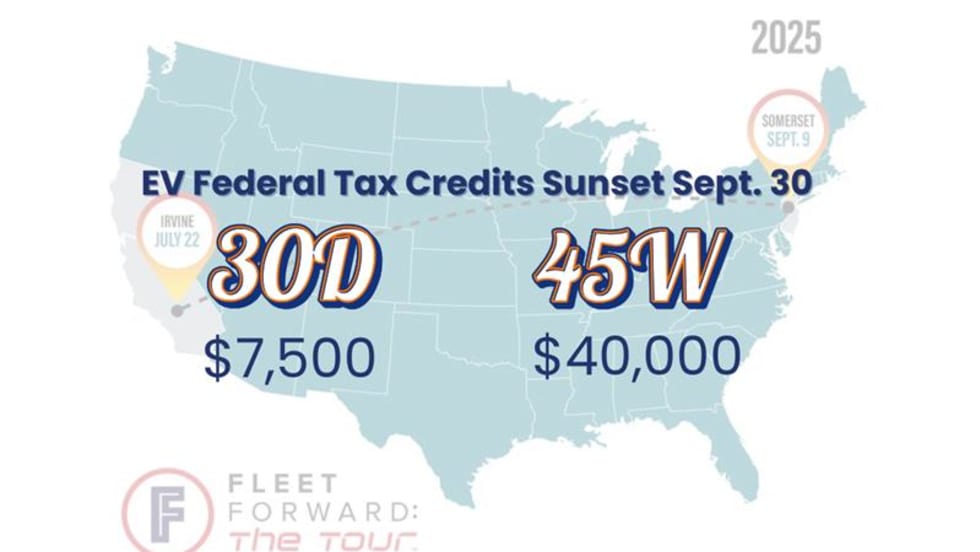
Final Push for Federal EV Incentives Highlighted at Fleet Forward Tour NJ Stop
Fleet managers in the Northeast will have a timely opportunity to take action on electric vehicle purchases at the upcoming Fleet Forward Tour stop in Somerset, NJ, on Sept. 9.
Read More →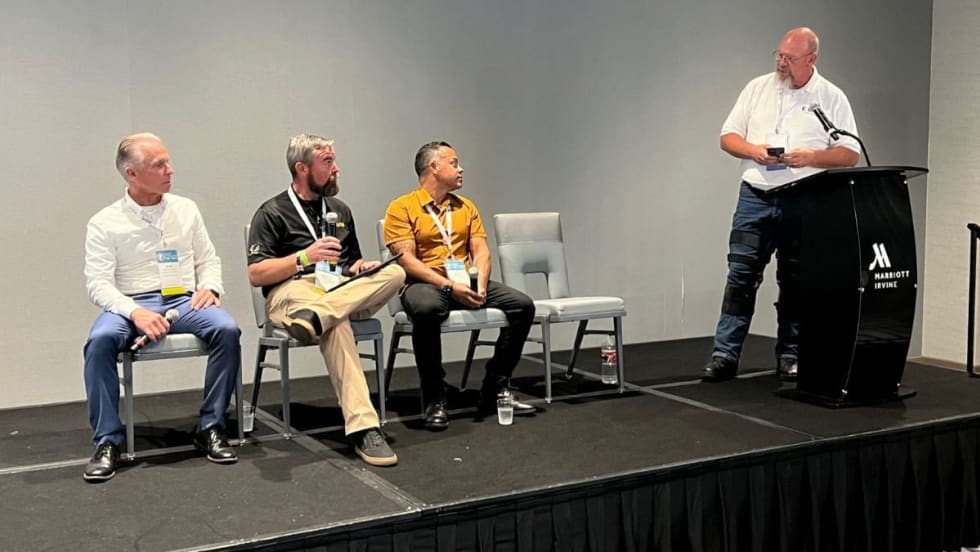
Latest Hard Realities, Top Pressures For Electric Fleets
Speakers and experts at Fleet Forward: The Tour shared hands-on, hard-won insights on how fleet operations are handling tariffs, EV charging, rules and regs, and safety issues.
Read More →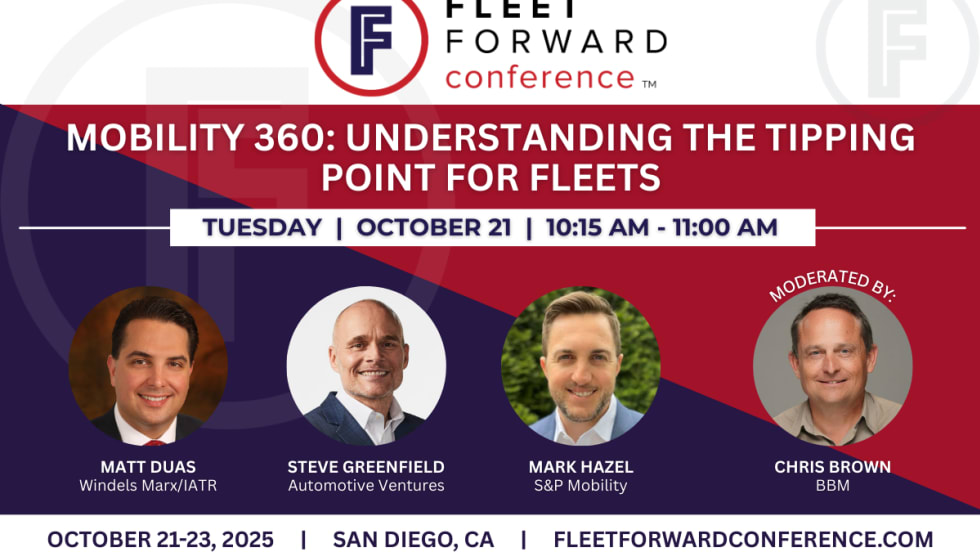
Mobility 360 Panel to Define the Fleet Industry’s Next Tipping Point
At the 2025 Fleet Forward Conference, experts in capital, policy, and data will assess which trends are transforming fleet.
Read More →