


Learn More: The 411 on Leasing or Renting Electric Trucks
DOE Sustainable Transportation Strategy Will Succeed with Innovation, Cooperation
A Department of Energy representative laid out how fleets can thrive in an alternative energy transportation future during a Work Truck Show digital presentation.

Lexi Tucker・Former Senior Editor
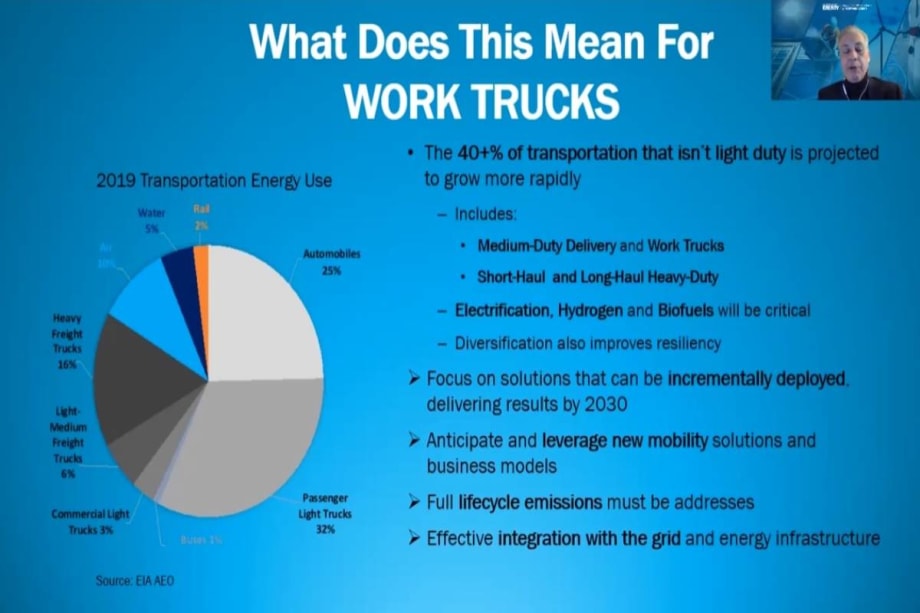
40%+ of transportation that isn’t light duty is projected to grow rapidly, according to Berube.
Photo: DOE
5 min to read
Michael Berube, acting deputy assistant secretary for transportation at the Department of Energy’s (DOE) Office of Energy Efficiency and Renewable Energy, outlined the Biden administration’s plans for a more sustainable transportation future on March 10 during a Work Truck Show digital presentation titled “DOE’s Sustainable Transportation Strategy.”
Facing the climate crisis was the hot topic, as Berube noted, “if we don't address this now, it’s something we can't deal with later. It's not something government can do alone. It's not something any one country can do alone. It’s something we have to do together.”
Berube discussed how transportation is critical to the economy, and is also the second largest expense for typical American households.
“A third of the energy we use goes into transportation, but it's actually 50% for the overall energy expenditures,” he clarified.
Transportation is also the largest source of CO2 emissions within the energy sector.
But what does this mean for work trucks?
40%+ of transportation that isn’t light duty is projected to grow rapidly, according to Berube. That includes medium-duty delivery work trucks and short- and long-haul heavy-duty trucks. To address the full range of vehicles that exist, there needs to be a combination of technology used to achieve more environmentally friendly vehicles. While electrification will play a role in some of these sectors, so will hydrogen and biofuels.
In fact, Berube said they may be the only viable options for some sectors. This type of diversification will help improve the resiliency of the overall transportation system. He also stated there needs to be a focus on solutions that can be incrementally deployed and deliver results now.
“In other words, we have to think about what are solutions where if we deliver it partway, we can get some of the benefits now. There's not an all-or-nothing approach. You can't wait to have it all done, and then just turn it on,” he said.
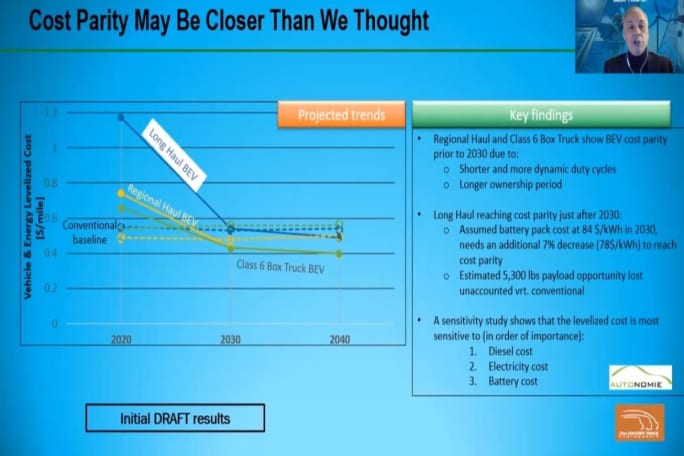
According to a recent study, regional haul and Class 6 box trucks show battery-electric vehicle (BEV) cost parity before 2030 due to shorter and more dynamic duty cycles, as well as longer ownership period. Long haul appears to reach cost parity just after 2030.
Photo: DOE
Anticipating and leveraging new mobility solutions will be vital. Recent surveys have shown the average length of a long-haul trip has dropped by over 300 miles over the last 10 years. Driver shortages are making companies keep trucks closer to home.
“If you have more trucks doing shorter trips, and turning back to a central fueling location, that can enable things like hydrogen powered vehicles to make more sense,” he said.
Full lifecycle emissions must be addressed, from production all the way through to the vehicle’s end of life. Thinking about integration with the grid and overall energy infrastructure will also play a role.
“As we think about that grid changing over, having more renewables, having a distributed energy system, the way we think about it will also be important in planning for this transportation system in the future,” he said. “There's going to be tremendous new loads on the grid, but it becomes easier to handle if we plan ahead and provide enough lead time.”
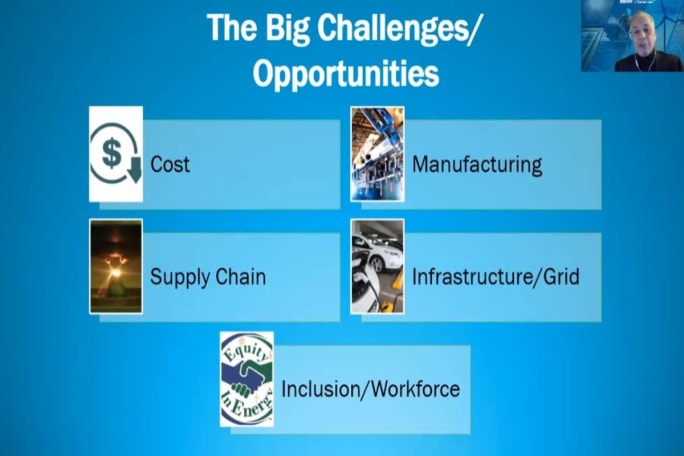
Berube discussed big challenges that could also be opportunities.
Photo: DOE
The Big Challenges
Cost: According to a recent study, regional haul and Class 6 box trucks show battery-electric vehicle (BEV) cost parity before 2030 due to shorter and more dynamic duty cycles, as well as longer ownership period. Long haul appears to reach cost parity just after 2030.
Manufacturing: More electric trucks are being announced and are entering the market. Battery packs and battery cells are another story. Investments need to be made to attract battery manufacturers to the US.
“If we can create the demand side, I believe the supply side will be there with the right type of support,” he said. New and better technology will help drive down costs.
Supply Chain: The US has to make sure it has the domestic supply and processing capability for the minerals that go into making a battery.
“A key part of that is developing technologies less reliant on hard-to-get critical minerals. The amount of cobalt in an electric vehicle battery has dropped tremendously. We've been able to get the performance we need out of the vehicle battery by driving that cobalt down, and we'd like to get it to less than 5% of the overall battery. But then there's other critical minerals in there as well that we have to address. So new chemistries will help reduce that,” he explained.
Battery recycling enables manufacturers to get the raw materials back and use them as a new supply source.
Infrastructure and the Grid: The US has to invest in developing overall infrastructure. Not just EV charging stations, but also hydrogen fueling stations as well.
“We believe that in many cases, trucks work really well for hydrogen because hydrogen fueling stations are very expensive to build, but once you have one, you can fuel vehicles very quickly. If you have centrally controlled retail vehicles and central fueling, that lends itself much better to hydrogen fuel.”
Last year, the DOE’s Hydrogen and Fuel Cell Technologies Office established something called the million-mile trucking service. This is a combination of lab R&D and industry collaboration to develop a hydrogen fuel cell truck capable of the million miles of durability, capable from the performance point of view, and cost effective. Their goal is to demonstrate the vehicle can be all of those things combined by 2025.
Inclusion in the Workforce: New transportation technology creates many new job opportunities. The US must provide the workforce training and job opportunities that can lead to a successful transition for everyone.
“This is a massive effort. But it is one included that we must achieve. Hope is not a plan. Government and industry must do this together.
At the end of the presentation, Kelly Speakes-Backman, acting assistant secretary at DOE’s Office of Energy Efficiency and Renewable Energy, announced the Office's intent to issue three sustainable transportation technologies funding opportunity announcements (FOAs) in Spring 2021.
These include:
Notice of intent - SuperTruck 3
Notice of intent - Low Greenhouse Gas Vehicle Technologies Research, Development, and Deployment
Notice of intent - Bioenergy Technologies Office Scale-Up and Conversion
More details on these programs can be found here.
Topics:DOEU.S. Department of EnergyWork Truck ShowSustainabilityBattery-Electric VehiclesHydrogen Fuel Cell VehiclesAlternative FuelsElectric VehiclesLegal/LegislativeVehicle Research
Originally posted on Work Truck Online
Subscribe to Our Newsletter
More Electric Vehicles
EV Charging Use Is Outpacing Infrastructure Growth
ChargePoint’s 2026 Charging Forward Report points to rising charger use, higher-powered charging, commercial vehicle electrification, and energy-management technology. Here’s what fleets should know.
Read More →
EV Realty Names Henrik Holland President as Charging Platform Expands
The former Prologis Mobility and Shell executive will help expand EV Realty’s truck charging business and move its power-first infrastructure model into autonomous vehicle depots and other fleet sectors.
Read More →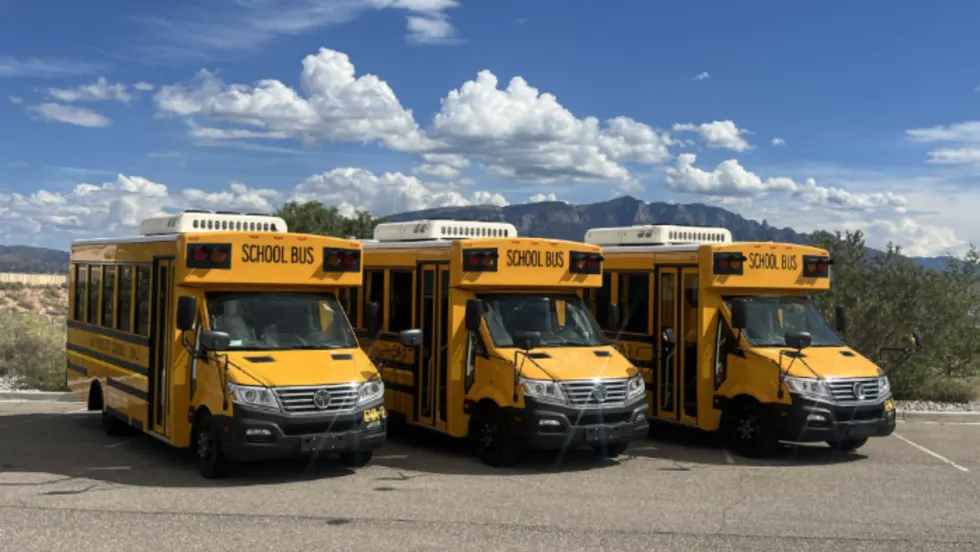
GreenPower Expands New Mexico EV Pilot With Larger Buses, V2G Testing
After logging more than 17,000 electric miles in the first year, New Mexico’s statewide pilot is moving into its second phase with larger vehicles, continued charging evaluations, and more.
Read More →
Can EV-as-a-Service Help Fleets Scale Electrification?
Sustainability Partners CEO Adam Cain explains how matching EVs, charging infrastructure, and duty cycles can help fleets scale electrification.
Read More →
How EV-as-a-Service Is Moving Fleets Beyond Pilots
Adam Cain, president and CEO of Sustainability Partners, explains how EV-as-a-service can help fleets scale deployments by addressing duty-cycle requirements and charging challenges.
Read More →
PowerFlex, The Mobility House Join Forces to Advance Fleet Electrification
Two EV charging providers are joining forces to deliver a broader portfolio of energy management and fleet electrification solutions.
Read More →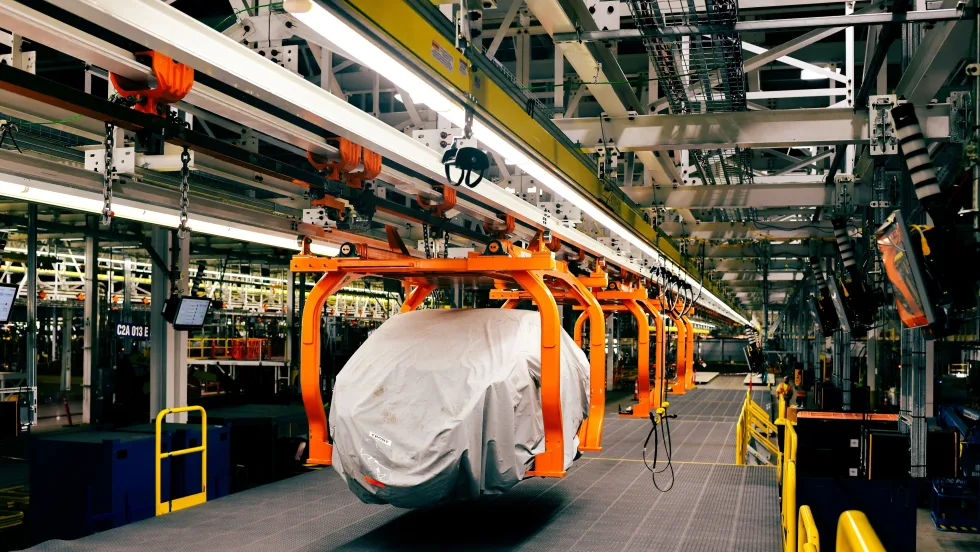
Ford Retools Louisville Plant for Fathom Electric Truck Production
Ford's $2 billion Louisville Assembly Plant overhaul introduces a three-part assembly process for the Fathom midsize electric truck, with production scheduled to begin in 2027.
Read More →
Merchants Fleet Reports 290M EV Miles as Fleets Navigate Changing Electrification Market
From millions in operating savings to hundreds of millions of EV miles, Merchants Fleet’s latest report reveals what’s working and what’s changing in fleet electrification.
Read More →
California District Commits to Electrify 25% of School Bus Fleet by 2028
One of the nation's largest school bus electrification projects to date demonstrates how grants, charging infrastructure, and public-private partnerships can help fleets transition to EVs at scale.
Read More →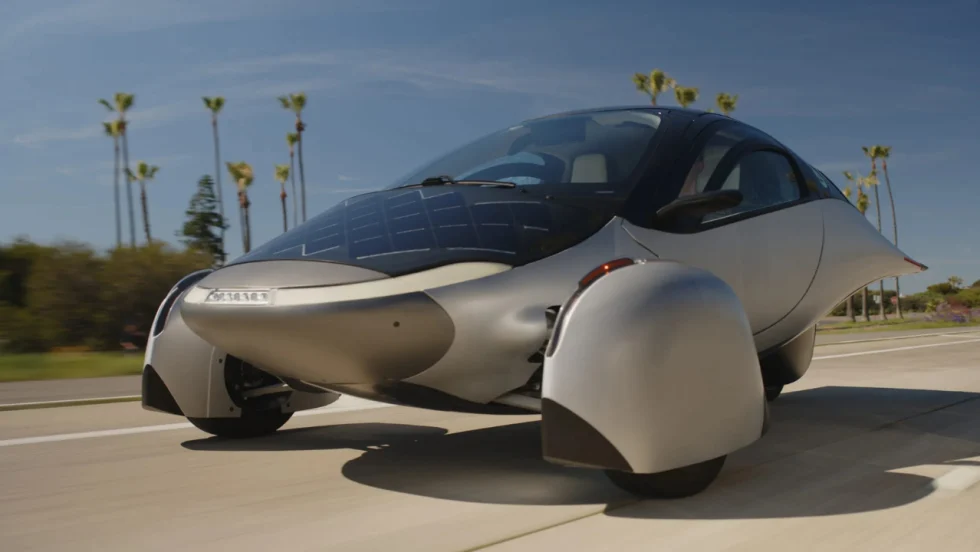
Aptera Orders Bodies and Chassis for Its First 40 Production Vehicles
Aptera Motors Corp. has issued purchase orders for the major structural components of its first 40 vehicles, and body and chassis components are expected to begin arriving in October.
Read More →