



The Savvy Fleet Manager: 3 Strategies to Further Reduce Fuel Costs
Clearing Up Common Alt-Fuel Myths
Dirty, expensive, explosive, and costly are just a few assumptions about alternative-fuels that are sticking around. But is there any truth to these ideas, or can we bust them once and for all?
December 14, 2020

Myths are dangerous. They present a set of preconcieved notions that may prevent fleets from making changes that can save on costs and impact the environment.
Photo: Gettyimages.com/Xolms
9 min to read
Myths are hard to clear up. Often, one assumption, lousy piece of information, or major news item can tarnish an otherwise stellar record.
From diesel’s dirty past to the “it’s just a bridge fuel” comments about natural gas, Work Truck looks at some of the top myths for each fuel type to help bust the misconceptions.
Biodiesel: A ‘Dirty’ Past
Biodiesel continues to be a struggle for some legacy fleets.
“In its infancy, before standards were established, biodiesel had quality issues. With current standards, such as ASTM 6751, and reputable suppliers, biodiesel quality is comparable to conventional diesel,” said Christopher Lyon, director of Fleet Relations for NTEA – The Association for the Work Truck Industry.
Biodiesel can be used in any diesel engine with little or no modification to the engine or fuel system.
“Biodiesel has a solvency effect that may release deposits accumulated on tank walls and pipes from previous petroleum diesel fuel storage. The release of the deposits may clog filters initially, and precautions should be taken. The main thing is to ensure that only fuel meeting the biodiesel specification is used,” said Scott Fenwick, technical director for the National Biodiesel Board (NBB).
Additionally, biodiesel blends of up to B-20 can be used in cold weather.
“Just like regular diesel, biodiesel can gel in cold temperatures, so precautions need to be taken. However, those precautions include the same remedies that users would take to ensure cold weather operability with regular diesel fuel,” Fenwick added.
One biodiesel myth is that it leads to the clearing of the land.
“Making biodiesel from soybeans uses only the oil portion of the soybean, leaving all the protein available to nourish livestock and humans. Biodiesel has not caused changes in agriculture production,” Fenwick said.
Since the mid-1990s, World Energy pioneered the use of advanced biofuels and has heard just about every myth you can think of.
“Some people are resistant to change, especially as it relates to something as important as the fuel that powers everything they do. That’s understandable, but many of the excuses aren’t. Yes, low-carbon fuels can be used year-round. No, using them won’t void your warranty. And, yes, they are available where you operate too,” said Gene Gebolys, CEO of World Energy.
Both biodiesel and renewable diesel offer benefits beyond simply a decrease in greenhouse gas emissions.
“Both fuels have a higher cetane than U.S. diesel fuel and offer custom blending capabilities for the best combination of fuel benefits. Blends such as B20 offer similar fuel economy, horsepower, torque, and haulage rates as diesel fuel. Biodiesel and renewable diesel also have superior lubricity to petroleum diesel. Renewable diesel and biodiesel blends provide successful operation management in cold weather,” said Gebolys added.
Electricity: High Cost & Range Concerns
Probably the most common electric vehicle (EV) concern, and myth, involves range.
“While limits remain, battery capacity and energy density continue to accelerate exponentially. Electric vehicles do not have the same range limits as they did five years ago,” said Lyon of the NTEA.
For fleet managers still concerned about whether EVs will have the range required to support operations, it is helpful to note that battery performance and range has improved over time.
“Most sedan EVs can support a range of over 150 miles on a single charge. Several new EV truck models coming to market in 2021 and 2022 have ranges between 200-400 miles. These EVs are already more than capable of supporting most fleets,” said Nate Valaik, e-Mobility product marketing manager for Gilbarco Veeder-Root.
Many fleet operators believe that switching to electric vehicles is expensive, complicated, and the charging infrastructure isn’t “ready for prime-time.”
“Although zero-emission incentives and special utility rate structures are in place across the country, fleet operators are overwhelmed with where to start and hesitant to roll out a successful electrification program for fear they might get it wrong,” said Vic Shao, CEO & Founder of AMPLY Power. “The truth is, getting started with a small pilot can ease a fleet into electrification and give them the confidence to grow their fleet over time. You don’t have to do it all at once. And, you don’t have to go it alone. There are several companies and organizations out there designed to help operators transition to zero-emission fleets.”
Clearing up the TCO comparison between electric and fossil-fueled powered fleets is essential.
“Some fleet managers still don’t believe the return on investment exists for electric vehicles. That’s simply not true. Another myth is that EVs will not have the range required to support fleet operations,” Valaik said.
It’s important to note that the battery pack comprises a large portion of the cost of an electric vehicle.
“Battery technology is improving, and costs are dropping. At this point, some quick internet searches can point fleet managers to data showing that TCO for an electric vehicle is, in fact, better than a traditional fleet vehicle. This is due both to decreases in battery costs but also because EVs have significantly fewer moving parts and are therefore more affordable to maintain than traditional fleet vehicles. Since minimizing TCO is the name-of-the-game for fleet managers, debunking this myth is critical to promoting EV adoption,” Valaik added.
Many fleet managers and operators are still applying patterns from petroleum-fueled vehicles to the EVs.
“For example, vehicles don’t need to charge as fast as possible, nor do they need to charge immediately upon returning to base. Software can determine how fast vehicles charge and when and do so in a way that keeps costs low. For example, we frequently see EV charging peak for two to four hours across the entire fleet in the late afternoon and early evening, but the vehicles aren’t used in many cases for another 10-15 hours. This type of peaking can be avoided with schedule charging that takes advantage of the long-time vehicles are parked and generate significant savings in avoided electrical capacity upgrades,” said David Peterson, director, Fleet Solutions for ChargePoint.
Ethanol: Too Expensive
For fleets, the top ethanol-related myth is that the fuel will cost more,” said Robert White, VP of Industry Relations for the Renewable Fuels Association.
Ethanol is less energy-dense than gasoline, so science tells you that one gallon of ethanol won’t take you as far as a gallon of gasoline. But it also less expensive per gallon than traditional gasoline.
“When all factors are considered, ethanol is historically a lower cost per mile. While looking at cost-per-mile vs. cost at the pump can be a different thought process, what is most important?” White asked.
“Additionally, many fleets tried E-85 in the past, and it was a different time with limited availability. I encourage all fleets to give ethanol a fresh look for all of their fuel needs,” White added.
Natural Gas: Just a Bridge Fuel
The main myths surrounding natural gas vehicles (NGVs) focus on lack of availability and built-out infrastructure, whether the vehicles are proven with the same performance as diesel trucks, and the perceived increased cost of NGVs, according to Sahar Kamali, director of Business Development for Clean Energy Renewables.
“Natural gas trucks already have nearly a thousand refueling stations across North America, and thanks to the ultra-low-cost of natural gas fuel, their all-in price is comparable to if not more affordable than diesel. Natural gas trucks have demonstrated long-distance range with refueling that is fast and convenient — and with far less noise than diesel trucks,” Kamali added.
Switching to a natural gas fleet is a cost-effective way to clean up heavy-duty transportation.
“Natural gas trucks reduce air pollution and CO2 more than battery trucks promise to — with no giant toxic battery,” Kamali said. “And natural gas trucks can use renewable natural gas, which can have negative carbon emissions when sourced from agricultural waste.”
Other myths involve pressure vessels, such as compressed natural gas (CNG) vehicles.
“Those unfamiliar with operating parameters may believe CNG is dangerous as it’s compressed to pressures of 3600 PSI. Safeguards are built-in, but it is imperative to use the proper tank/storage system. It’s also important to understand the vehicle must still meet the appropriate fuel system integrity safety standard for the fuel being used,” said Lyon of NTEA.
Some associate all forms of natural gas, regardless of the source, as a fossil fuel.
“The reputation of natural gas has also been tarnished by past missteps within the fracking industry. Renewable natural gas is different, however. And it’s important for people to realize that every vehicle technology has an impact on the planet and our environment when its complete lifecycle is fully considered,” said Paul Sandsted, director of Technology & Sustainability for NGVAmerica.
NGVAmerica works to address natural gas misconceptions by educating the public and policymakers.
“We provide education on the sustainable decarbonization (GHG) and clean air (NOx, PM) benefits of natural gas, informing them that NGV technology is proven and deployable at scale today, helping them to understand what RNG is, and providing factual evidence that NGVs can offer the lowest lifecycle carbon intensity of any other vehicle technology today and for years to come,” Sandsted added.
The argument that natural gas is just a bridge fuel is also no longer applicable.
“The opportunity for a new generation of hybrid trucks fueled by natural gas, increased availability of renewable natural gas, and the advent of hydrogen and power-to-gas or synthetic natural gas produced using renewable electricity, will result in steep reductions in carbon emissions and provide a ready solution for fleets and businesses for years to come,” Sandsted said.
Propane Autogas: Unsafe & Limited
Propane autogas is a clean, environmentally-friendly fuel source. Some common myths include the belief that propane is not safe for the environment and not renewable or clean energy.
“Propane autogas is a nontoxic, non-carcinogenic and non-corrosive energy source that is safe for the environment, drivers, and passengers. Currently, propane-autogas-powered medium- and heavy-duty vehicles provide a lower carbon footprint solution in 38 U.S. states and Washington, D.C. when compared to medium-duty EVs charged using the electrical grid. Using renewable propane makes this true for all 50 states. Plus, propane autogas emits up to 45% less particulate matter than electric vehicles from well-to-wheels,” said Steve Whaley, director of autogas business development for the Propane Education & Research Council (PERC).
Biodiesel refineries can also now produce renewable propane from animal fats and cooking oils before they are made into biodiesel.
“With propane autogas, fleet owners get a quick refueling process and transparent costs to provide a simpler and more convenient solution to the challenges of electric charging,” Whaley added.
“New technology like renewable propane and the ultra-low NOx engine have pushed propane autogas to near-zero emissions levels,” Whaley said.
Other myths include that propane autogas’s uses are limited.
“Propane autogas is an excellent choice for medium- and heavy-duty vehicles and is currently in use in numerous market sectors including school transportation, paratransit, parcel delivery, towing, food and beverage delivery, police fleets, government municipality vehicles — the list goes on and on. Propane autogas’s performance is similar to that of gasoline-powered vehicles, giving fleet owners the performance they need with the emissions profile they want.”
Propane autogas is also readily available and easy for fleet owners to add to their fleet.
“With propane autogas, fleet owners get a quick refueling process and transparent costs to provide a simpler and more convenient solution to the challenges of electric charging,” Whaley added. “Many propane suppliers will provide fuel dispensing equipment at your site along with a multi-year contract that locks in a fuel price substantially less than gasoline and diesel.”
Topics:Alternative Fuels & HybridsGreen FleetsPropane AutogasBiodieselElectric TrucksEthanolNatural GasElectric VehiclesVehicle Research
Originally posted on Work Truck Online
Subscribe to Our Newsletter
More Electric Vehicles

PowerFlex, The Mobility House Join Forces to Advance Fleet Electrification
Two EV charging providers are joining forces to deliver a broader portfolio of energy management and fleet electrification solutions.
Read More →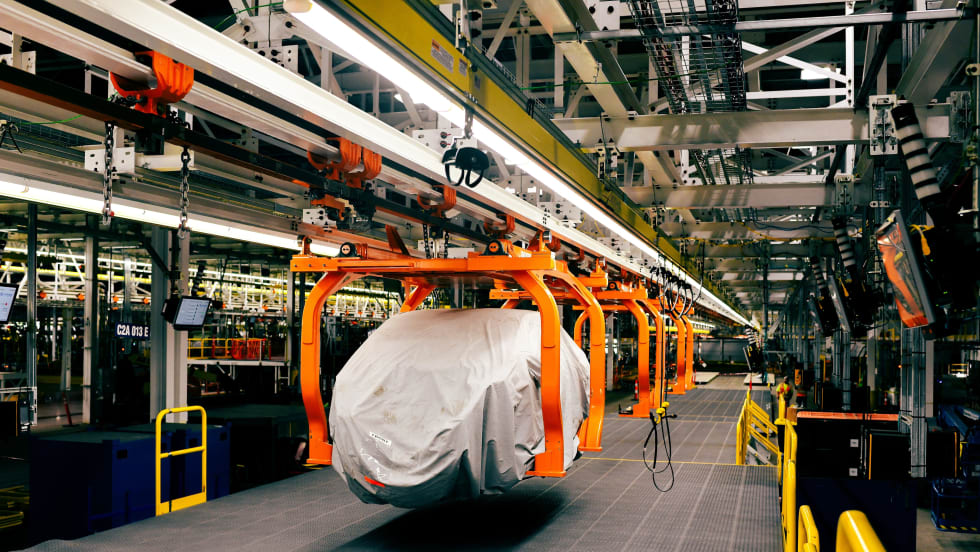
Ford Retools Louisville Plant for Fathom Electric Truck Production
Ford's $2 billion Louisville Assembly Plant overhaul introduces a three-part assembly process for the Fathom midsize electric truck, with production scheduled to begin in 2027.
Read More →
Merchants Fleet Reports 290M EV Miles as Fleets Navigate Changing Electrification Market
From millions in operating savings to hundreds of millions of EV miles, Merchants Fleet’s latest report reveals what’s working and what’s changing in fleet electrification.
Read More →
California District Commits to Electrify 25% of School Bus Fleet by 2028
One of the nation's largest school bus electrification projects to date demonstrates how grants, charging infrastructure, and public-private partnerships can help fleets transition to EVs at scale.
Read More →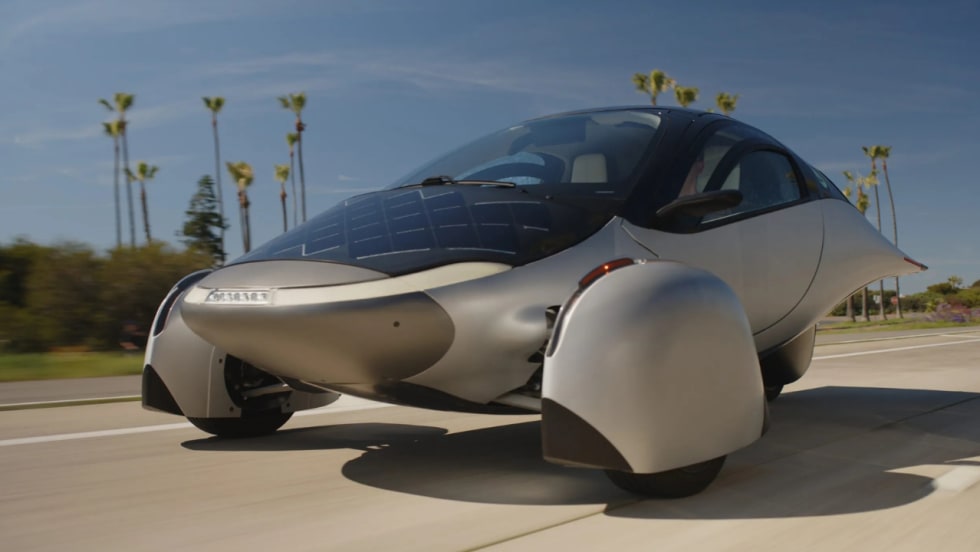
Aptera Orders Bodies and Chassis for Its First 40 Production Vehicles
Aptera Motors Corp. has issued purchase orders for the major structural components of its first 40 vehicles, and body and chassis components are expected to begin arriving in October.
Read More →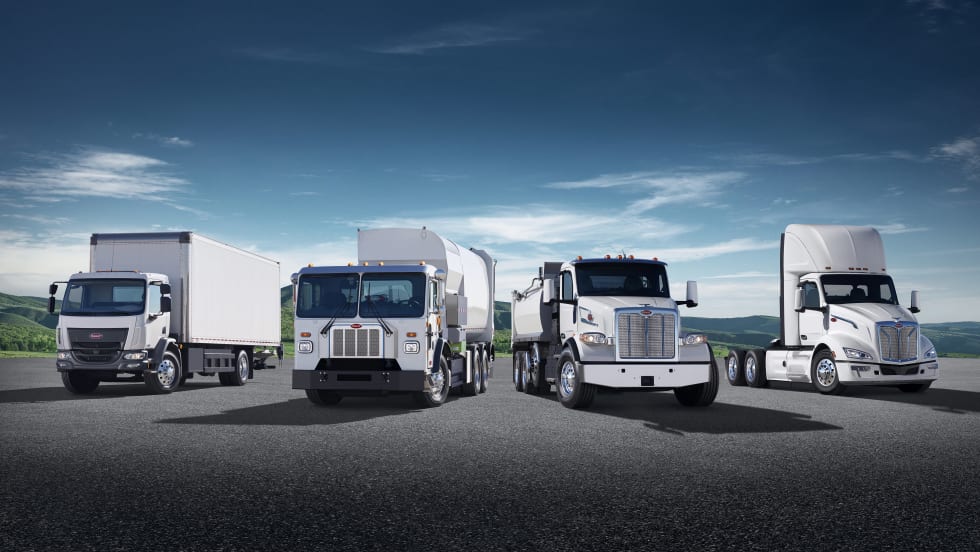
Peterbilt Expands Sourcewell Purchasing Agreement to Include Electric Trucks
The cooperative purchasing contract, now extended through July 2028, adds Peterbilt's battery-electric lineup for eligible government, education, nonprofit and tribal organizations.
Read More →
PITT OHIO Donates DC Fast Chargers to Community College of Allegheny County
The logistics company donated two 75-kW DC fast chargers to CCAC to support electric vehicle education and workforce training programs.
Read More →
California Governor Approves Instant ZEV Rebates For First-Time Buyers
That instant rebate is the centerpiece of a broader $600 million package Governor Newsom signed into law, keeping California active in the global clean transportation race.
Read More →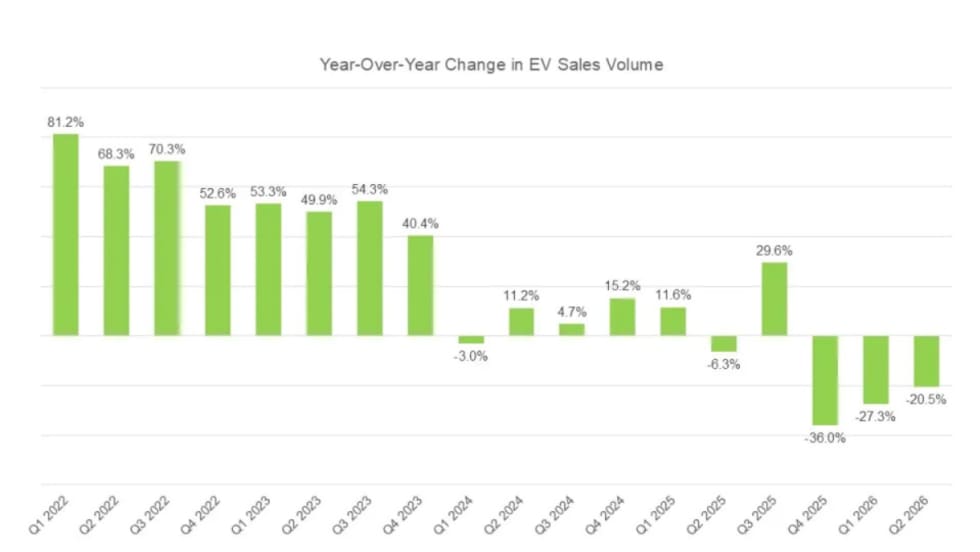
New Vehicle Models Stabilize Electrified Market In Q2
But more credit goes to hybrids than to all-electric vehicles, as more buyers look for fuel-efficient alternatives amid high gas prices.
Read More →
Xos White Paper Asserts LA Olympics Will Lack Enough EV Chargers
The commercial EV fleet company recommends some faster and more flexible remedies to relieve the anticipated shortfall.
Read More →