


Become Green-Minded
“Going green” is not always about buying the latest and greatest alt-fuel vehicles. Companies must also look at how fuel efficiency, TCO and infrastructure costs affect their choices.
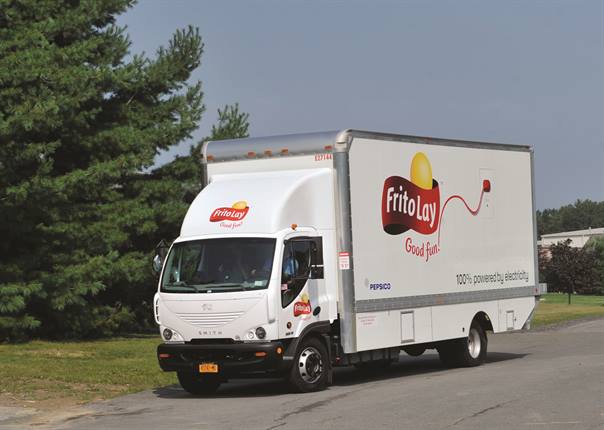
One of the 20 all-electric delivery trucks Frito-Lay introduced onto routes in 2013.
Although the green movement started gaining momentum in the 1970s, specifically with the creation of the Environmental Protection Agency (EPA), it took most of the country a little more time to really get the ball rolling. But, with the manufacture of alternative-fuel vehicles becoming more commonplace in the last decade, companies are going green at much faster rates.
A growing number of corporations have created sustainability action plans, in which they list the goals they seek to meet, as well as the steps to get there. In regard to sustainability, these plans can include altering the types of vehicles and the types of fuel that power them, while also measuring the effectiveness of certain parts of the game plan. For some, sustainability becomes a big picture issue, while other companies focus on the way certain vehicles fit into their fleets and bottom line.
Applying a New Philosophy
At global healthcare company Novo Nordisk, the green movement goes beyond being fuel efficient and alt-fuel savvy. The company follows what it calls a Triple Bottom Line Philosophy.
“This philosophy pledges that we will be socially, fiscally, and environmentally responsible in everything we do, so providing eco-friendly vehicles falls right in line with the Novo Nordisk Way,” said Donna Bibbo, CAFM, the company’s manager of fleet and travel.
The leaders at the company headquarters in Denmark have made a dedicated effort to reduce CO2 levels, asking Novo Nordisk sites around the world to include specific reduction targets in their annual objectives. Progress is reviewed each year and new goals are set for the following year. But, with a fleet size that has increased by 210 percent since she began with the company in August 2006, and an anticipated increase of 13 percent from the fourth quarter of 2013 through January 2014, Bibbo must vigilantly review the average CO2 per mile driven of the total fleet.
“Reducing average CO2 per mile driven shows that we are making progress in the greening of our fleet,” Bibbo added.
Fuel efficiency is another metric that Bibbo keeps a close watch on. She breaks down this aspect of fleet management first by the overall fleet and then by each model-year group of vehicles. Bibbo looks to other pharmaceutical companies’ successes to mine for new ideas. Annually, she reviews the average gallons of gasoline used by her fleet’s vehicles, as well as the average amount of mileage driven.
“Our average miles driven have remained flat, but our fleet’s average fuel economy over our fleet has increased by 4 percent in 2013 over 2012,” Bibbo said, adding that the increase has surpassed her goal of a 3-percent improvement.
There have been some challenges along the way to a greener tomorrow, Bibbo stated. While she has been given great executive support for running an environmentally friendly fleet, some alternative-fuel choices do not completely align themselves with the job at hand.
For instance, the lack of a national infrastructure for compressed natural gas (CNG) vehicles has removed them from the company’s list of alt-fuel options. Also, since Novo Nordisk’s primary product is insulin, which needs to be kept cold, Bibbo has found it difficult to use smaller alternative-fuel vehicles since they do not always have enough storage space to carry around the large coolers salespeople use to keep their samples cold.
“I need to balance the needs for those vehicles with the environmental goals,” Bibbo said. “I’ve still managed to make good progress by choosing the most fuel-efficient vehicles in each class to keep them available.”[PAGEBREAK]
Starting with the Economics
For satellite television provider DISH Network, measuring the affordability and effectiveness of moving towards alternative-fuel vehicles can be done with dollars and cents.
“We look for opportunities to save money, because it impacts our ability to pass savings to our customers,” said Abe Stephenson, fleet and administration manager at DISH.
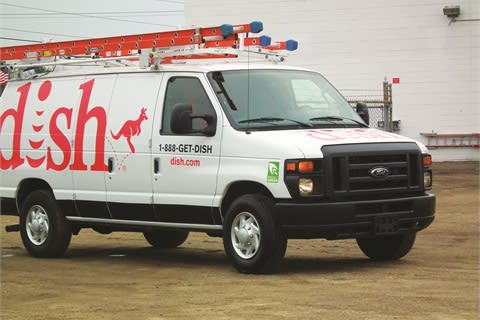
DISH is currently in the process of implementing 200 propane autogas vans in its fleet.
But, it is not just about the savings. Stephenson looks at how these decisions will impact the company’s operations teams as well. This includes vehicles that can carry the necessary tools and product and provide the appropriate range and payload capacity.
“We don’t want to make sacrifices to the efficiency of our operation or to the service we provide to our customers,” Stephenson said, adding that reducing DISH’s carbon footprint and environmental considerations are also a big part of the equation as a company, as well as for its customers and employees.
DISH is currently in the process of deploying 200 Ford E-250 propane autogas vans powered by ROUSH CleanTech’s propane autogas fueling system. When it comes to measuring the vehicle’s effectiveness, Stephenson looked at both range and available parking space for onsite fueling tanks to determine office eligibility for propane autogas.
“DISH’s propane autogas fuel tanks have less range than their gasoline equivalent,” Stephenson said. “Office selection included job routing where daily miles driven would not exceed the tank mileage capacity. And, we did not want to limit ourselves to only those markets that have public fueling stations, so we wanted to minimize the chance a driver would have to come back to the office to fuel during the day.”
To justify the cost difference of the vehicles, Stephenson and his team performed a comprehensive return on investment (ROI) analysis including market-specific inputs such as fuel price, average mileage per vehicle, HOV lane availability, tax credits, and impact of amortization options on cash flow. This understanding of the costs and benefits of utilizing alternative fuels will not only help Stephenson, but fleet managers industry-wide.
“Advancements and development of alternative-fuel choices are one of the fleet industry’s top technology stories today,” Stephenson said. “This trend is likely to continue through the rest of most of our careers. It will soon be a base requirement of fleet managers to understand the alternative fuel and vehicle choices that are available for their fleets, if it has not already become a requirement today.”
Focusing on the Future in the Present
While many companies would love to swap out their entire gasoline- or diesel-powered fleets for alt-fuel vehicles, the costs involved can sometimes slow their efforts. To meet its goal of energy efficiency across all platforms, PepsiCo has initiated a number of environmental sustainability initiatives over the past few years, including adding a considerable number of alternative-fuel vehicles to its more than 21,000-vehicle fleet.
In 2010, the company’s Frito-Lay division introduced its first all-electric delivery trucks in New York City and announced plans to create the largest commercial fleet of all-electric trucks in the U.S. Since then, nearly 270 trucks have been deployed across the U.S., traveling more than 3 million miles. Not a rash decision by any means, the company did much more than just attempt to meet its environmental sustainability goals through the purchase of the electric vehicles.
“We first have to make sure the vehicle fits the purpose for which it was intended,” said Pete Silva, senior director of fleet and indirect procurement at PepsiCo Global. “As an example, an electric delivery truck has to meet daily delivery requirements without the risk of stranding the driver. We calculate greenhouse gas (GHG) emissions results, as well as the economics of each specific vehicle in the application it was intended.”
According to Silva, the company’s overall truck fleet has also reduced fuel consumption by 18 percent in the past five years.
“We measure lifecycle costs of vehicles and GHG emission results, which include, but are not limited to asset cost, maintenance records, fuel economy, and fuel price,” added Silva.
The company’s light-duty automotive fleet has reduced fuel consumption by 36 percent since 2008 by focusing on hybrid vehicles and fuel-efficient sedans. Although PepsiCo has set internal goals for energy reductions in the fleet that are not published externally, the company focused on the fuel efficiency of its fleet and reducing GHG emissions, according to Silva.
“We will continue to base our decisions on the economics of various alternatives and our objective to be more environmentally conscious,” he concluded.
Originally posted on Automotive Fleet
More Vehicle Research
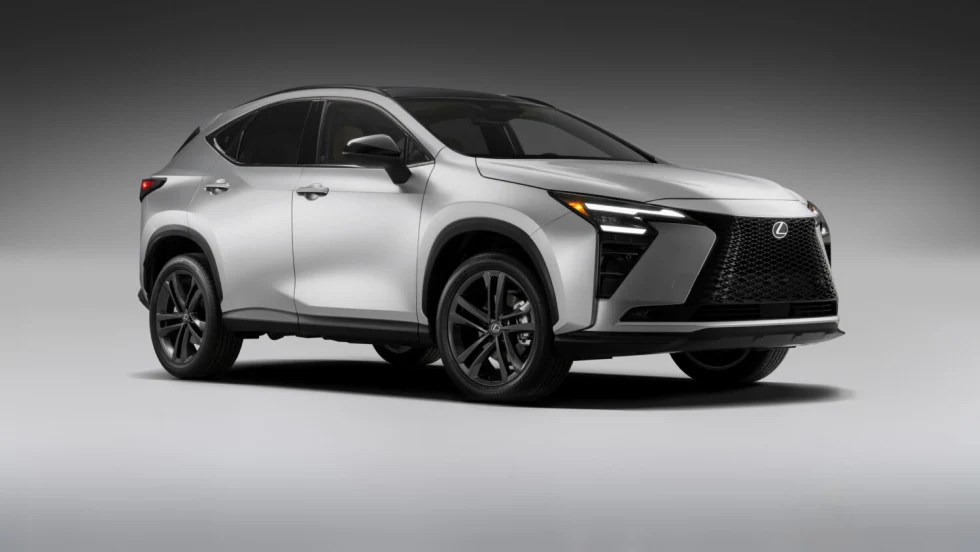
2027 Lexus NX Moves to Fully Electrified Lineup
For 2027, the NX moves to an entirely electrified lineup, with either hybrid or plug-in hybrid powertrains.
Read More →
2027 Mitsubishi Eclipse Sportback Named Green SUV of the Year
Green Car Journal recognized Mitsubishi’s new battery-electric crossover, which offers NACS compatibility and DC fast charging at up to 150 kW.
Read More →
Dave Carroll Named President of Ford Energy
Carroll succeeds Lisa Drake, who will remain with Ford through Dec. 31 to support the leadership transition.
Read More →
City of Long Beach Named No. 1 Green Fleet of 2026
NAFA's 2026 Green Fleet Awards recognized fleets for sustainability efforts spanning alternative fuels, technology, facilities, workplace culture and fleet operations.
Read More →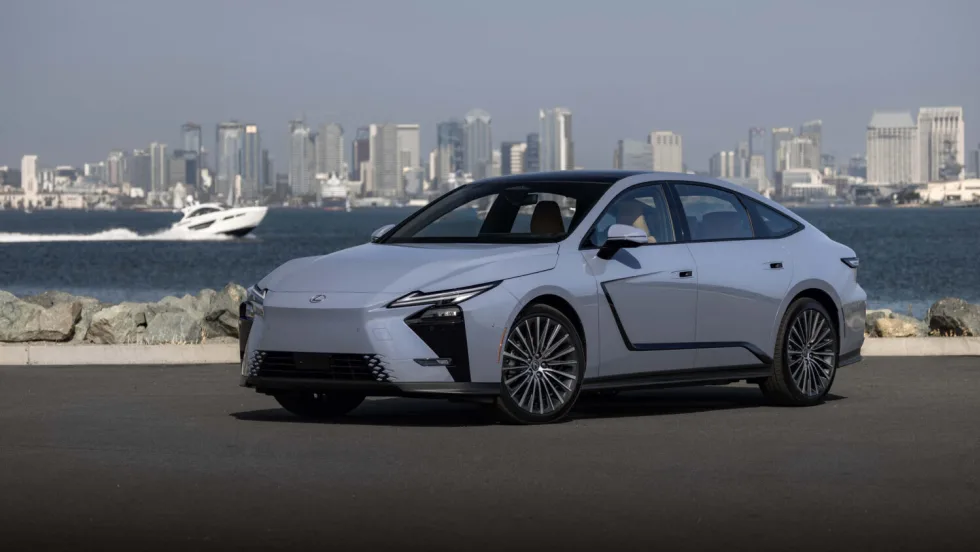
2027 Lexus ES Adds First Battery-Electric Models
The ES 350e and ES 500e join the hybrid ES lineup with up to 338 hp, an EPA-estimated 307 miles of range and standard NACS charging capability.
Read More →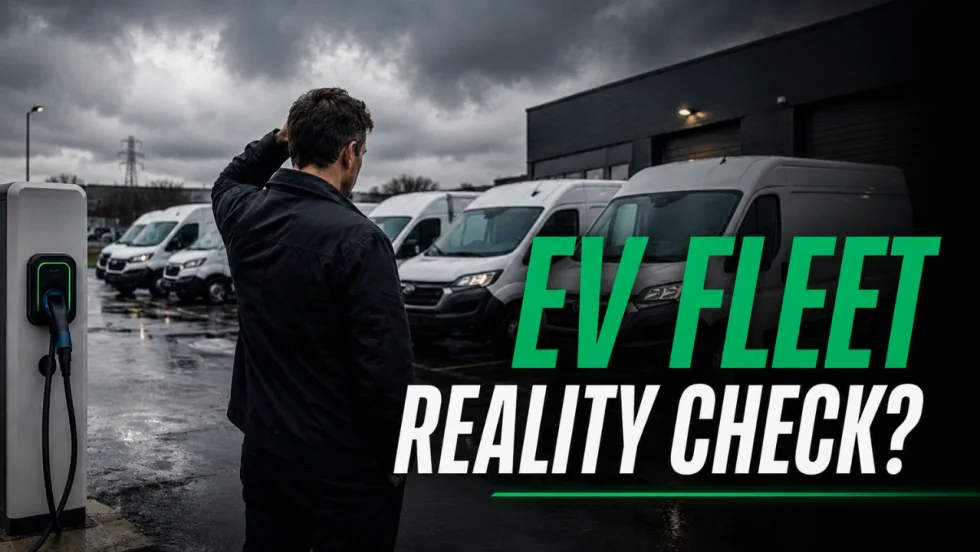
EV Fleet Reality Check: What Operators Wish They Knew Before Electrifying Their Work Vans
Electric work truck upfits bring new compatibility questions. Learn how parts availability, OEM guidance, power demands, and route planning can affect fleet performance.
Read More →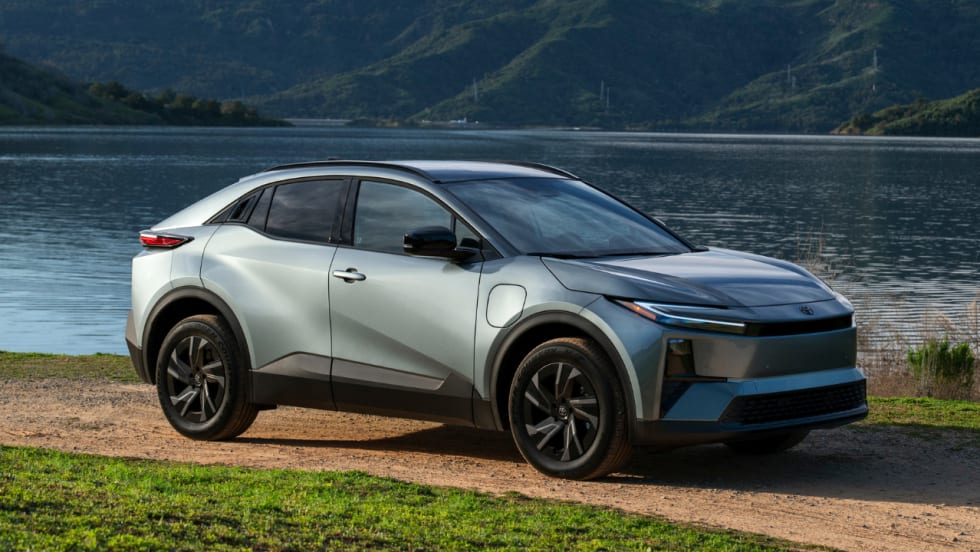
2027 Toyota C-HR Offers 287-Mile Range and Standard AWD
Toyota’s 2027 C-HR brings 287 miles of estimated range, standard all-wheel drive, and NACS fast-charging capability to the compact EV market. See what its mix of performance, cargo space, and everyday technology could offer business users.
Read More →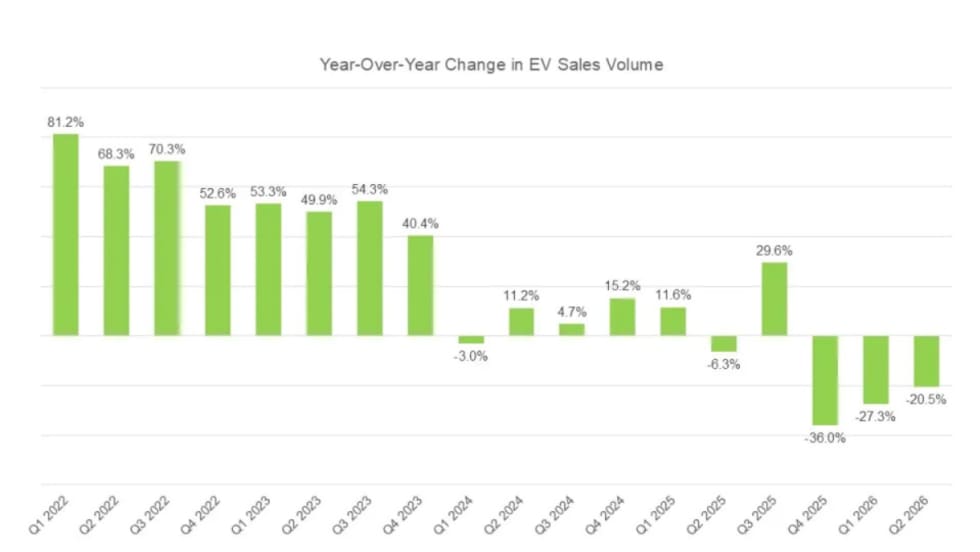
New Vehicle Models Stabilize Electrified Market In Q2
But more credit goes to hybrids than to all-electric vehicles, as more buyers look for fuel-efficient alternatives amid high gas prices.
Read More →
Slate Debuts Colorful, Unique EV Models
A recent media and client event, studded with electric vehicles dressed up on platforms, planted a new position for the manufacturer in the wider EV market. Fleets will find cost-saving advantages.
Read More →
Slate Electric SUV, Pickup Switchable Model Aims For Light-Duty Fleets
Everything about this EV is counterintuitive and understated, making it stand out from the crowd.
Read More →