



Related: How to Implement a Fleet Preventive Maintenance Program
Acing Your Bucket Truck Inspection
Bucket and crane trucks pose greater safety risks than some other fleet equipment. Because employees’ lives may be at risk, careful inspection and maintenance of these vehicles are essential.
October 8, 2014
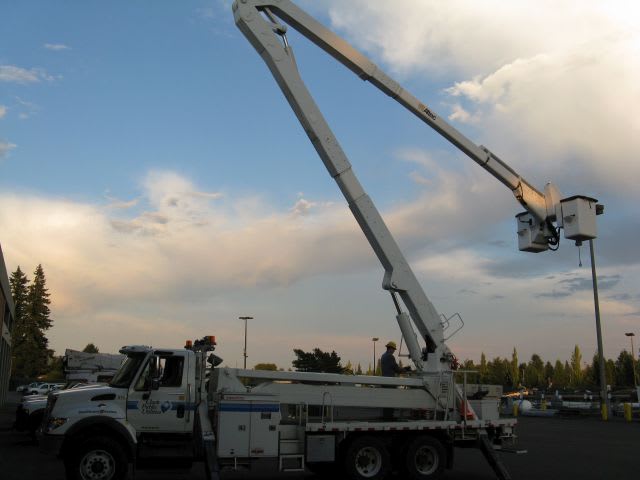
Photo courtesy of Clark Public Utilities.
9 min to read
Responsible for lifting staff high into the air to perform work, there’s no doubt bucket and crane trucks pose greater safety risks than some other fleet units. While they need to be maintained just like other equipment, fleets must also consider other elements for safe operation, such as preventing tip-overs, making sure buckets are securely fastened to booms, verifying aerial devices are working properly, and more.
That’s why safety inspections for bucket and crane trucks are critical; without them, safety is jeopardized and the risks can be great.
But fleets don’t always regard bucket and crane truck inspections as they would other equipment, such as fire trucks, said Gary Lentsch, CAFM, fleet manager, Eugene Water & Electric Board in Oregon.
“When it comes to inspecting an aerial device, we simply cannot pick and choose what we want to do,” he said. “We wouldn’t think twice about doing an aerial inspection every 30 days on a fire apparatus such as a ladder truck. Why should it be any different when we inspect a tree trimming truck or one that we use for changing out streetlights? When it comes to our employees’ safety, properly inspecting aerial devices is ultimately our responsibility.”
To ensure aerial devices operate safely, owners should perform visual and physical checks. Several agencies offer regulations for fleets to follow, including ANSI (American National Standards Institute), OSHA (Occupational Safety and Health Administration), ASME (American Society of Mechanical Engineers), the Federal Motor Carrier Safety Administration, and individual states. In addition, owners should also pay attention to manufacturer recommendations and fleet utilization factors that may cause excessive wear on equipment and warrant more frequent inspections.
“These are complex pieces of equipment requiring trained operators and are designed to perform specific functions within limited capabilities that you must be aware of,” said Paul Chamberlain, fleet services manager, Clark Public Utilities in Vancouver, Wash. “Safety and reliability are of the utmost importance, as they carry personnel and materials.”
For those who want to ensure their bucket and crane trucks operate properly — and personnel remain safe — three utility fleet managers shared the following tips:
Get the Timing Right
Depending on which part of a truck is being inspected, inspections could occur daily, weekly, monthly, or annually. However, inspections typically fall into two categories:
Frequent Inspections: These inspections typically follow manufacturer recommendations for each specific device. Generally performed by the operator at the beginning of each shift, inspections for defects may happen at daily or monthly intervals.
Periodic Inspection and Testing: The frequency of these inspections is based on a truck’s activity, severity of service, and environment. They should be performed by qualified personnel with a thorough understanding of the aerial device, and should be performed monthly or annually, depending on utilization. For machines in which utilization triggers an inspection, this is usually based on engine hours, PTO hours, and mileage.
“Understanding of the need or frequency in which an aerial device needs to be performed is probably the easiest way to get started,” Lentsch said. “For example, we all have small cranes on our small service trucks. Can you honestly say they are being inspected following the guidelines set forth by the manufacturer? If you don’t know, it might be a great time to review the inspection requirements of your fleet.”
Put It on Paper
Once timing is established, make it easy for inspectors to check inspection items off a list. Inspection forms ensure accurate and thorough inspections. These forms should include space to record any discrepancies noted during the inspection.
“In the past, we have had equipment experience major failures due to a lack of detail and knowledge associated with required inspections,” said Sean Joyce, fleet manager, Bonneville Power Administration (BPA) in Vancouver, Wash. “This has led to a dedicated effort by some BPA maintenance technicians and technical experts to develop specialized inspection forms for particular types of equipment as well as the development of an operator and maintenance technician focused class on proper equipment inspections.”
Forms should be easy to use so inspectors aren’t tempted to skip the form altogether.
Schedule Inspections Strategically
Bucket and crane trucks are critical for performing specialized work such as tree trimming, utility work, and street light maintenance. So it’s no wonder fleets would be reluctant to take them out of service. However, inspections can be timed strategically so fleets can balance service and safety needs.
“Taking a unit out of service isn’t a bad thing; it’s always better to err on the side of safety than placing an aerial device back in service when you know of a defect that could cause you problems later,” Lentsch said.
Joyce plans ahead for the least impact on service and operators. “We generally have scheduling windows for our inspections to ensure that both our technicians and our crews have the flexibility to schedule the inspections with the least impact on work,” he said.
Consider the Working Environment
Bucket and crane trucks operate in a wide variety of environments, and these environments can cause equipment to wear in different ways. “The environment in which we use an aerial device takes a toll on the device itself,” Lentsch said. “This may come from clipping a tree branch driving down the road to working in a tight and congested area.”
Likewise, there may be additional safety considerations depending on where a vehicle is operated. For instance, Joyce said working near live wires means additional inspection points are required. “Some machines we operate while conducting maintenance work on live transmission lines running up to 500kV, thus they require a very regimented inspection routine to ensure the machine’s ability to operate in this environment is not compromised,” he said.
Educate Your Staff
Inspection standards continually evolve, so keeping staff current on inspection requirements is important — as is communicating the importance of inspections altogether.
“The training and accuracy of up-to-date information is paramount. We keep our cranes, derricks, and bucket trucks in service on average 15-20 years, so the change in technology and requirements of that period can be immense,” Joyce said. “Mix that with the fact that the operators of this equipment are generally linemen and electricians whose primary focus is the electrical system; you have the opportunity to remind them of the areas of focus necessary to conduct a thorough and accurate inspection.”
Joyce said there is often a lack of knowledge about the importance of the inspection as well as on how to perform the inspections correctly. This can lead to reluctance by employees to perform inspections, so it’s important to provide training as well as quick reference documents that allow for comprehensive inspections. Training should be ongoing, not a one-time occurrence.
Lentsch reinforces that ultimately, responsibility falls to government agencies to ensure staff members are educated and do all they can to keep each other safe. “Just because we’re a governmental agency doesn’t mean we’re exempt from following these standards on maintaining, inspecting, and testing our aerial devices,” he said. “In today’s world, you can’t escape responsibility by saying, ‘I didn’t know.’ Get a hold of the manufacturers of your aerial devices and see what you’re required to do. Share this information with your staff and establish an inspection program that covers all of your aerial devices.”
Establish a Healthy PM Program
Lentsch, Joyce, and Chamberlain noted that over the years, a stronger focus on inspection has led to less of a focus on preventive maintenance (PM) on bucket and crane trucks. But, preventing equipment failure altogether is a safer approach than catching defects during inspection. Ultimately, the two should work in tandem for safe operation.
“Fleets need to establish a way for the operators to report deficiencies or the safety hazards when they use the aerial device. Don’t let minor repairs build up to find [them later] when your do your safety inspection; you end up taking the device out of service to do all those repairs,” Lentsch said.
Get a Second Set of Eyes
Educating staff about the importance of inspections and how to perform them accurately goes a long way. But, it never hurts to validate that your equipment is operating safely.
To do so, Joyce recommends hiring a third party to perform annual inspections. “Don’t be afraid of the external look to see how things could be more effective,” he said. “We operate 16 garages over four states and we are looking at this as an additional level of quality control to ensure our operators are performing inspections correctly as well as to have an independent analysis of our maintenance quality since verification of compliance is difficult with dispersed operations.”
Learn From Others
With inspection requirements continually changing, creating a dialogue with other fleet professionals, operators, and manufacturers can be a quick and easy way to stay on top of the latest developments.
“Networking with other fleet professionals is critical,” Lentsch said. “Here in the Northwest, we participate in a regional fleet managers group — the Northwest Electric Utility Fleet Managers Association — in which we share information about doing aerial inspections.”
Chamberlain underscores the importance of learning from the fleet community, but he adds operators can also provide valuable information to ensure the right inspections are being performed based on how equipment is used. “Stay connected with your fleet peers. See what they are doing. Everyone I have met in the fleet business is willing to share, offer advice, and take advice. Don’t reinvent the wheel,” he recommended.
The manufacturers can help, too, and they may offer training classes for technicians and operators.
Continually Evaluate Your Program
Once you’ve got a great inspection program in place, don’t stop — continually ask what more you can do to ensure safety.
“We are continually evaluating and revising our preventive maintenance program and inspection processes. When evaluating our inspection program, we look at historical information on what type of problems keep re-occurring, and we perform failure analysis to see if the problem is related to parts performance, inspection intervals, operator training, or technician training,” Chamberlain said. “I am continually doing physical audits to help me answer these questions.”
One challenge noted during an annual inspection by a third party was that smaller aerials were failing the dielectric testing of the aerial. After discovering that the design of the boom created a trap for debris, the fleet incorporated an aerial boom wash into every inspection.
Avoid These Pitfalls
Finally, don’t forget to avoid common pitfalls, such as dirty aerials, inoperative emergency systems, aerials with hydraulic leaks, poor maintenance records, missing operating manuals, and aerial equipment that is modified in any way (aerial devices are designed, constructed, and tested to meet specific standards with limitations).
It All Goes Back to Safety
Performing inspections may keep your fleet compliant with the various regulations in place, but ultimately it goes back to making sure operators return home safely each night.
“So many times every year we read about a worker who was injured or was killed when he or she had a catastrophic failure with an aerial device. How many of those could have been prevented if we would have stepped up and took the time to understand what was required as an owner?” Lentsch asked. “We need to take the time to assure that our operators are properly trained and they know how to conduct a frequent inspection before they use the device.”
Joyce agreed. “These inspections are in place to ensure that linemen and electricians who are already operating in a dangerous environment have equipment that meets or exceeds their safety and reliability needs,” he said. “Without these inspections designed to keep them safe, the impacts can and have been catastrophic.”
Topics:CranesBucket TrucksInspectionsUtility FleetsPreventive MaintenanceMedium-Duty TrucksVocational FleetsElectric Vehicles
Originally posted on Work Truck Online
Subscribe to Our Newsletter
More Electric Vehicles

EV Charging Use Is Outpacing Infrastructure Growth
ChargePoint’s 2026 Charging Forward Report points to rising charger use, higher-powered charging, commercial vehicle electrification, and energy-management technology. Here’s what fleets should know.
Read More →
EV Realty Names Henrik Holland President as Charging Platform Expands
The former Prologis Mobility and Shell executive will help expand EV Realty’s truck charging business and move its power-first infrastructure model into autonomous vehicle depots and other fleet sectors.
Read More →
GreenPower Expands New Mexico EV Pilot With Larger Buses, V2G Testing
After logging more than 17,000 electric miles in the first year, New Mexico’s statewide pilot is moving into its second phase with larger vehicles, continued charging evaluations, and more.
Read More →
Can EV-as-a-Service Help Fleets Scale Electrification?
Sustainability Partners CEO Adam Cain explains how matching EVs, charging infrastructure, and duty cycles can help fleets scale electrification.
Read More →
How EV-as-a-Service Is Moving Fleets Beyond Pilots
Adam Cain, president and CEO of Sustainability Partners, explains how EV-as-a-service can help fleets scale deployments by addressing duty-cycle requirements and charging challenges.
Read More →
PowerFlex, The Mobility House Join Forces to Advance Fleet Electrification
Two EV charging providers are joining forces to deliver a broader portfolio of energy management and fleet electrification solutions.
Read More →
Ford Retools Louisville Plant for Fathom Electric Truck Production
Ford's $2 billion Louisville Assembly Plant overhaul introduces a three-part assembly process for the Fathom midsize electric truck, with production scheduled to begin in 2027.
Read More →
Merchants Fleet Reports 290M EV Miles as Fleets Navigate Changing Electrification Market
From millions in operating savings to hundreds of millions of EV miles, Merchants Fleet’s latest report reveals what’s working and what’s changing in fleet electrification.
Read More →
California District Commits to Electrify 25% of School Bus Fleet by 2028
One of the nation's largest school bus electrification projects to date demonstrates how grants, charging infrastructure, and public-private partnerships can help fleets transition to EVs at scale.
Read More →
Aptera Orders Bodies and Chassis for Its First 40 Production Vehicles
Aptera Motors Corp. has issued purchase orders for the major structural components of its first 40 vehicles, and body and chassis components are expected to begin arriving in October.
Read More →