


Getting Through the EV Growing Pains
The recent Fleet Forward Conference offered fleet managers some takeaway insights on the state of electric vehicles and the overall transition to electrified fleets.


Tyson Jominy, vice president of data and analytics at JD Power, analyzed the decline in EV sales this year during the recent Fleet Forward Conference in Santa Clara, California on Nov. 9, 2023.
Photo: Martin Romjue / Bobit
Fleet electrification poses challenges that will require advances in technology and resources to make it fully possible, as fleet managers recently heard while gathered for a conference devoted to the future development of fleets.
A keynote expert panel delved into the nuances of electric vehicles at the 6th annual Fleet Forward Conference and 2nd annual Fleet Safety Conference on Nov. 8 in Santa Clara, California. Panelists included Charlotte Argue, senior manager of sustainable mobility at Geotab; Jeff Schuchardt, vice president of information technology at Enterprise Fleet Management; and Mike Hauge, fleet manager at Ecolab.
Learn About and Test Electric Vehicles to Deploy
Fleet Electrification must make sense first through practical examples of good use cases, Schuchardt said. “Don’t let the perfect be the enemy of the good. About 80%-85% would be a success. There will be nuances in charging infrastructure and vehicle availability.”
With 130 BEV models available today, there are plenty of opportunities to test, learn and iterate with electric vehicles, Hague said. “What needs to be true to take EVs from pilot stage to expansion and deployment? We’re looking at variables and uses, metrics such as weight and range, and the feasibility of home charger installs.” His company is laying the groundwork on compliance and policies as it works toward a 2030 goal of fully electrifying 100% of its light-duty fleet vehicles.
Many global and economic factors now interfere with electric vehicle adoption, Argue said. “We’re still seeing positive uptake and increases and every year over the last decade, the line gets steeper. It’s not easy, but the fact is it’s good technology and fits many uses cases, which are growing.”
With advancements in technology and investments in larger vehicles, the fleet industry is seeing a lot of demand, interest, and commitments in the larger commercial vehicles space.
“You start with where fleet electrification makes sense today and work into other vehicle classes,” Argue said. “The worst thing now is to not do anything. There are many things to do now to make fleets more efficient and work toward a business case based on TCO.”
Schuchardt recommended suitability assessments to see what percentage of vehicles can be electrified by certain dates. “Incremental progress is still a success.” Fleets also should consider hydrogen fuel cell vehicles and expand their approach to any vehicle type that reduces carbon emissions, helps the environment, and meets ESG goals.

With 130 battery electric vehicle models available today, there are plenty of opportunities to find the right models that are the right fit for a fleet operation, according to a Fleet Forward Conference keynote panel: (L to R) Jeff Schuchardt, vice president of information technology at Enterprise Fleet Management; Charlotte Argue, senior manager of sustainable mobility at Geotab; and Mike Hauge, fleet manager at Ecolab.
Photo: Lauren Brooks / Monclay Media
Tips and Questions for Better Electric Fleet Practices
Among the insights fleet managers can apply to electrification:
What additional power will be needed for electric vehicles that have to be upfitted with heavier equipment that adds weight, such as liftgates and rear-mounted toolboxes?
Overcoming reluctance from drivers who don’t want EVs forced on them. If fleets don’t succeed in winning over the first wave of EV drivers, then all the positive efforts built up will disappear.
Identifying suitable driving patterns for electric fleet vehicles that match the needs of the fleet and can be adequately powered.
Because electrified fleets require a large and steep learning curve, success lies with the champions in an organization who can push them through.
Understanding true capabilities, and bringing those factors into TCO calculations: What will the EV cost? Can you use ICE vehicle data on parts and inform a strategy for infrastructure? Which vehicles will be parked longer to help determine usage of level 2 vs. level 3 chargers? And once vehicles are deployed, do they match the training, telematics, and power load capacity?
Put into context all the increasing pressures and mandates companies are facing with emissions reductions. EVs are only one part of the solution. Fleets need to be stepping in and addressing how to track emissions now. What are they doing about that? It’s not just about electrifying but reducing waste.
EVs Turning Negative, But Numbers Still Positive
Another keynote speaker on Nov. 9 provided deeper insights on the current state of electric vehicles, providing some perspective on recent negative developments.
Electric vehicles have seen a spate of negative press with more potential buyers reluctant to pursue them, said Tyson Jominy, vice president of data and analytics at JD Power, who opened Day 2 of the Fleet Forward Conference. But the numbers still show a steep rise in EV purchases this year.
“Even as we've been talking about how nobody wants EVs and everyone hates them we’ve actually been selling a lot more EVs with the share of the industry hitting 9% on a retail basis in September,” Jominy said. Most sales still go to Tesla, which despite competition and price cutting, retains 60-62% of the new EV market.
Today there are 48 electric vehicle models on the ground, compared to 16 in 2019. Most are selling for between $50,000 and $60,000. In 2024, there will likely be 80 EV models on the market.
Despite such momentum, the average new car dealer in in the U.S. sells fewer than one EV per month, which causes days’ supply to reach the 100 level, hence the negativity, Jominy said.
EV-ICE Pricing Parity?
Determining price parity between EVs and ICE vehicles is near impossible given the varying levels of government and utility rebates, tax credits, incentives, and sales tax levels among the states for electric vehicles. “What does price parity even mean anymore?” Jominy asked. “An automaker can't see the price parity. Even if you're Tesla and you've got consistent prices for everybody, where you live causes radical differences in total ownership costs.”
Given the expected future demand for EVs, public charging will not be able to keep up, Jominy said.
“EVs may or may not be right for your fleets,” he said. “But something to keep in mind is there is very little (charging) infrastructure, at least from the federal government. In terms of how government is spending our money, it is highly skewed toward variable marketing and getting consumers into EVs and nothing for making EVs livable.”
Consumers need a “map” to figure out and understand the “Byzantine requirements” surrounding the purchase of vehicles, such as the income limits, pricing guidelines, and location of where the EV is built, Jominy said.
As a result, 55% of all EVs are being leased, since the benefit amounts to $3,500 for the lessee and avoids the tax forms, reporting requirements, and lower resale values brought on by the new EV price cuts.
Citing the EV index at JD Power, affordability in October 2023 hit 102% for EVs, which means that on average, an EV is 2% cheaper to own than an ICE vehicle for the first time ever, Jominy said. He credits the myriad federal, state, and local utility funds and credits that reduce the cost of owning an EV and even provide some chargers for free. Ownership costs still vary based on mileage and local area, but overall EVs can be a better purchase financially than an ICE vehicle, he said.
On the lack of reliable public charging stations, for example, Jominy underscored that 88% of all EV charging happens in homes. But now the growth in data will help EV owners identify in real time which public chargers are working, when they are available, and the speed of the charge.
“As you get into your fleet, you want to know if you can get these vehicles charged,” he said. “The good thing is that now the data is finally starting to pour in about public charging.”
Despite the negative press on EVs, J.D. Power stats show consumer consideration is still high as the data surrounding EVs expands and can help identify and solve problems. Data also helps a fleet operation figure out which fleet vehicles to replace with EVs, whom to assign them to, and where to deploy them.
“That's a very hyper local situation, depending on where you are, where your people are, and where your customers are, which can greatly impact your cost of ownership,” Jominy said. “It requires some sophisticated analysis.
“Now we’ve got a lot of great data out there that can help you solve some of these problems, like total cost of ownership and working through all the pieces of what goes into an electric fleet.”
More Electric Vehicles

GreenPower Plans 50 Electric Shuttle Buses for Mexico
GreenPower plans to build 50 electric shuttle buses for Mexico using its EV Star Cab & Chassis platform, partnering with local body builders to expand its market reach.
Read More →
Who You Gonna Call? Rivian Turns Electric Vehicles Into Ghostbusters Rides
Rivian teams up with Sony Pictures for a Ghostbusters-inspired Halloween software update, complete with custom sounds, lighting effects, and a special Ecto-R1.
Read More →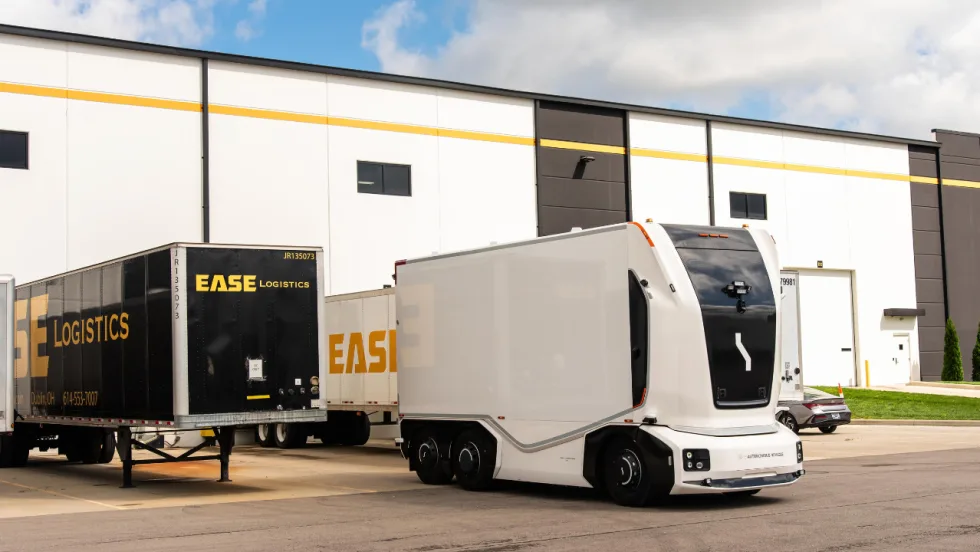
Einride Electric Driverless Trucks Begin Daily Freight Operations in Ohio
Two cabless electric trucks are now moving freight between EASE Logistics facilities, putting autonomous EV technology into daily commercial operations.
Read More →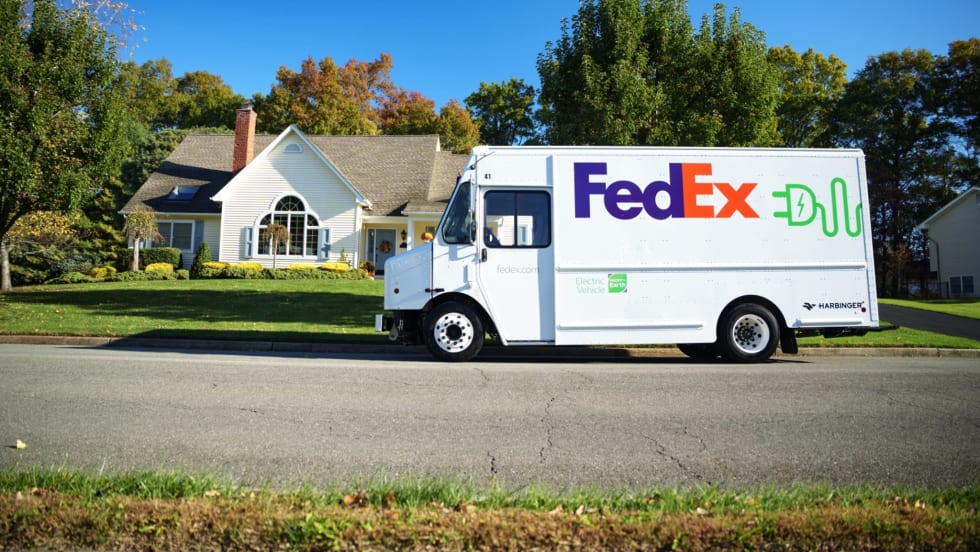
FedEx Orders 2,000 Harbinger Electric Trucks in $300 Million Deal
The Class 5 and 6 electric trucks are planned for delivery by the end of 2027 and will be deployed in FedEx pickup and delivery operations across the U.S. and Canada.
Read More →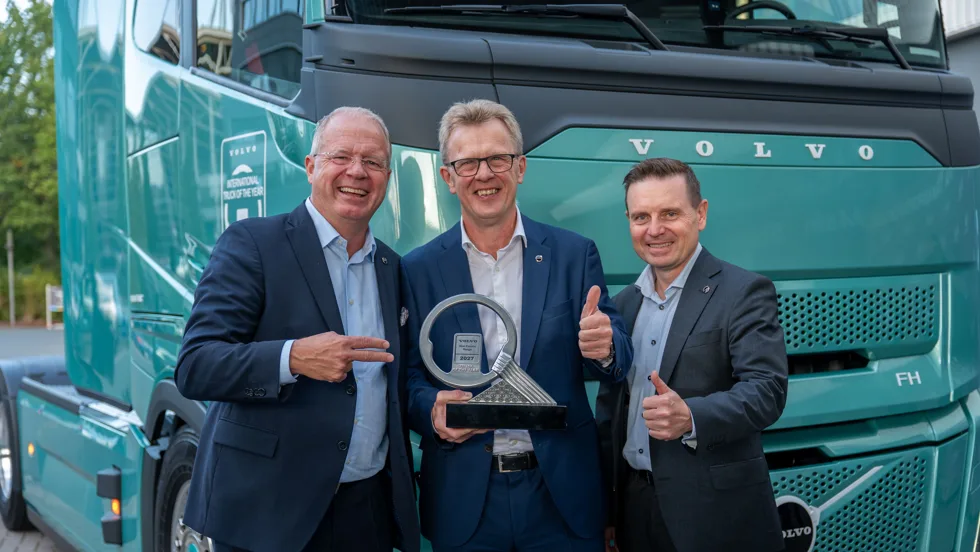
Volvo Trucks’ Electric Range Named International Truck of the Year 2027
The award recognizes Volvo’s global heavy-duty electric lineup, while more than 750 VNR Electric trucks have accumulated nearly 37 million miles in U.S. and Canadian fleet operations.
Read More →
How Republic Services Decides Where Its Next Electric Trucks Can Go
With 250 electric collection trucks now in service, Republic Services is learning that scaling electrification depends less on proving the vehicle and more on whether each site can support what comes next.
Read More →
EV Charging Use Is Outpacing Infrastructure Growth
ChargePoint’s 2026 Charging Forward Report points to rising charger use, higher-powered charging, commercial vehicle electrification, and energy-management technology. Here’s what fleets should know.
Read More →
EV Realty Names Henrik Holland President as Charging Platform Expands
The former Prologis Mobility and Shell executive will help expand EV Realty’s truck charging business and move its power-first infrastructure model into autonomous vehicle depots and other fleet sectors.
Read More →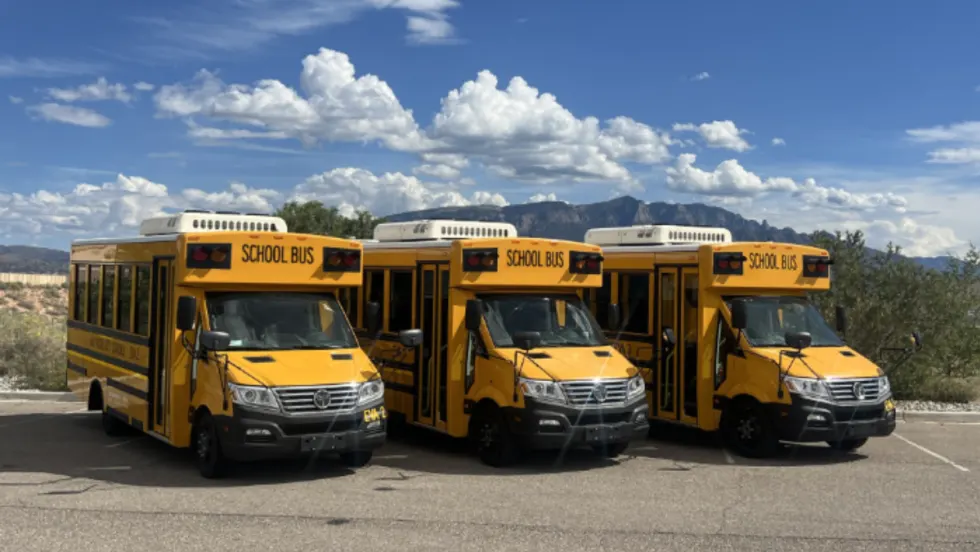
GreenPower Expands New Mexico EV Pilot With Larger Buses, V2G Testing
After logging more than 17,000 electric miles in the first year, New Mexico’s statewide pilot is moving into its second phase with larger vehicles, continued charging evaluations, and more.
Read More →
Can EV-as-a-Service Help Fleets Scale Electrification?
Sustainability Partners CEO Adam Cain explains how matching EVs, charging infrastructure, and duty cycles can help fleets scale electrification.
Read More →