



Related Article: Polestar Rolls Out Electric Performance Vehicle
Polestar Readies All-Electric SUV Model
The Polestar 3 will launch in 2022 will be made in the U.S. as the company expects to close out 2021 with global sales of 29,000 vehicles.
December 2, 2021
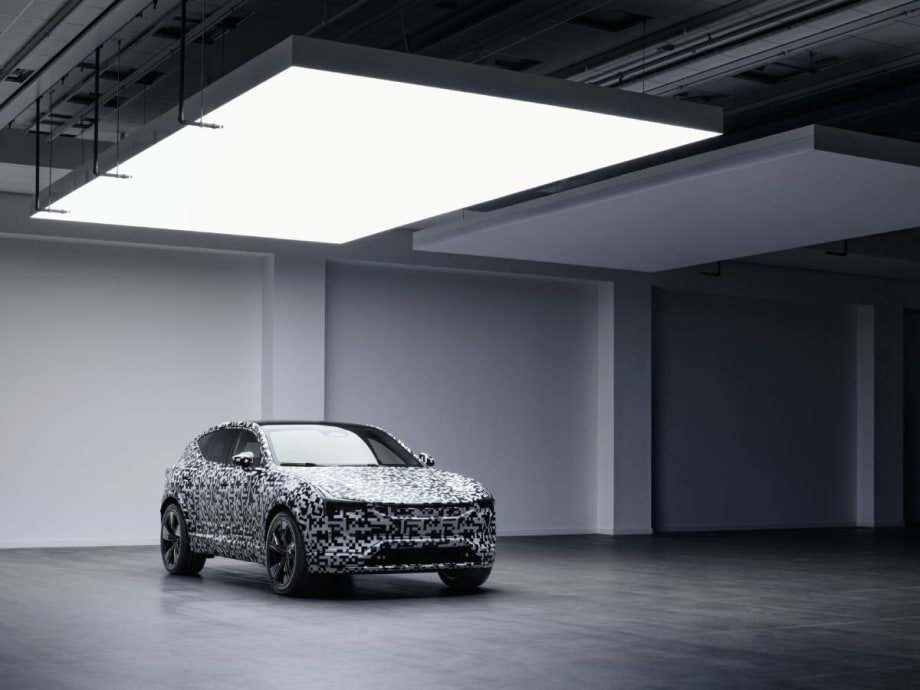
Latest image of the Polestar 3, still wrapped. The premium SUV market is the fastest growing segment in the U.S. automotive industry and is expected to be one of the most rapid to adopt fully electric vehicles.
Photo: Polestar
4 min to read
Electric car manufacturer Polestar has released a second teaser image of the forthcoming Polestar 3 electric performance SUV, which is set to launch in 2022, according to a Dec. 2 news release.
Polestar 3 is the company’s first SUV and will be its first vehicle to be built in the U.S., with production in Charleston, S.C.
This news follows the September announcement of Polestar’s intention to list on Nasdaq in connection with its proposed business combination with Gores Guggenheim, Inc. (Nasdaq: GGPI, GGPIW, and GGPIU), which is expected to close in the first half of 2022.
“We will build in America for Americans,” says Thomas Ingenlath, Polestar CEO. “Polestar 3 is planned to be launched in 2022 as a premium electric performance SUV that will define the look of SUVs in the electric age. It will also be the first Polestar vehicle to be built in America.”
Ingenlath hosted investors and press at a series of events in New York to discuss the company’s vision, brand and growth plans. The audience learned that Polestar 3 is intended to be one of the most climate-responsible cars ever made and will in time offer autonomous highway piloting powered by the best-in-class LiDAR sensor from Luminar and centralized NVIDIA computing power.
The premium SUV market is the fastest growing segment in the U.S. automotive industry and is expected to be one of the most rapid to adopt fully electric vehicles.
Polestar Precept, the company’s manifesto concept car that previews the future of its design, technology and sustainability, also made its U.S. debut in New York City. Precept now embarks on a national tour, visiting Polestar retail locations nationwide into the new year.
Ingenlath told audiences he believes there is a fundamental difference between Polestar and many other electric car companies. “We are not a virtual company waiting to build factories and sell cars; we are an actual company already building and selling cars around the world. Our two award-winning cars are on the road in 14 markets globally and we expect our global sales volume to reach around 29,000 vehicles this year.”
He also underlined the company’s established manufacturing and sales capability, expressing that Polestar is planning to launch a new car every year for the next three years, starting with Polestar 3, and plans to increase its presence to at least 30 global markets by the end of 2023.
Expanding presence in these new markets, the arrival of three new cars, and further advances in its existing markets mean that Polestar plans to grow 10-fold from global sales of around 29,000 in 2021 to 290,000 by 2025. “From here on in, Polestar is all about growth,” concludes Thomas Ingenlath.
Polestar 3 will be built at the Volvo Cars plant in Charleston, S.C. Volvo Cars is a large shareholder in Polestar, allowing Polestar to benefit from the Swedish company’s safety technologies, but also generate cost efficiencies through financial and industrial synergies.
Polestar Outlines Plans for the 2020s
Polestar was established as a new, standalone Swedish premium electric vehicle manufacturer in 2017. Founded by Volvo Cars and Geely Holding, Polestar enjoys specific technological and engineering synergies with Volvo Cars and benefits from significant economies of scale as a result.
Polestar, headquartered in Gothenburg, Sweden, has its vehicles available and on the road in markets across Europe, North America,China and Asia Pacific. By 2023, the company plans to be present in 30 global markets. Polestar cars are now manufactured in two facilities in China, with additional future manufacturing planned in the USA.
In the U.S., the local Polestar office is located in the New York metro area, in Mahwah, N.J. Polestar Spaces have been opened in Los Angeles, the San Francisco Bay Area, and Orange County, Calif.; New York City; Denver, Boston; Central and Southern New Jersey; Dallas, Austin, Detroit, Minneapolis, Phoenix, Seattle, Atlanta, Charlotte, Connecticut, South Florida, and Washington D.C., with more to follow in Central California, the Pacific Northwest, and Hawaii.
Polestar has produced two electric performance cars. The Polestar 1 was built between 2019 and 2021 asa low-volume electric performance hybrid GT with a carbon fiber body, 619 hp, 738 lb-ft of torque, and an electric-only range of 52 miles (EPA) – the longest of any hybrid car in the world.
The Polestar 2 electric performance fastback is the company’s first fully electric, high volume car. The Polestar 2 model range includes three variants with a combination of long- and standard range batteries as large as 78 kWh, and dual- and single-motor powertrains with as much as 408 hp and 487 lb-ft of torque.
In the coming three years, Polestar plans to launch one new electric vehicle per year, starting with Polestar 3 in 2022. Polestar 4 is expected to follow in 2023, a smaller electric performance SUV coupe.
In 2024, the Polestar 5 electric performance 4-door GT is planned to be launched as the production evolution of Polestar Precept – the manifesto concept car that Polestar released in 2020. As the company seeks to reduce its climate impact with every new model, Polestar aims to produce a truly climate-neutral car by 2030.
More Electric Vehicles

Who You Gonna Call? Rivian Turns Electric Vehicles Into Ghostbusters Rides
Rivian teams up with Sony Pictures for a Ghostbusters-inspired Halloween software update, complete with custom sounds, lighting effects, and a special Ecto-R1.
Read More →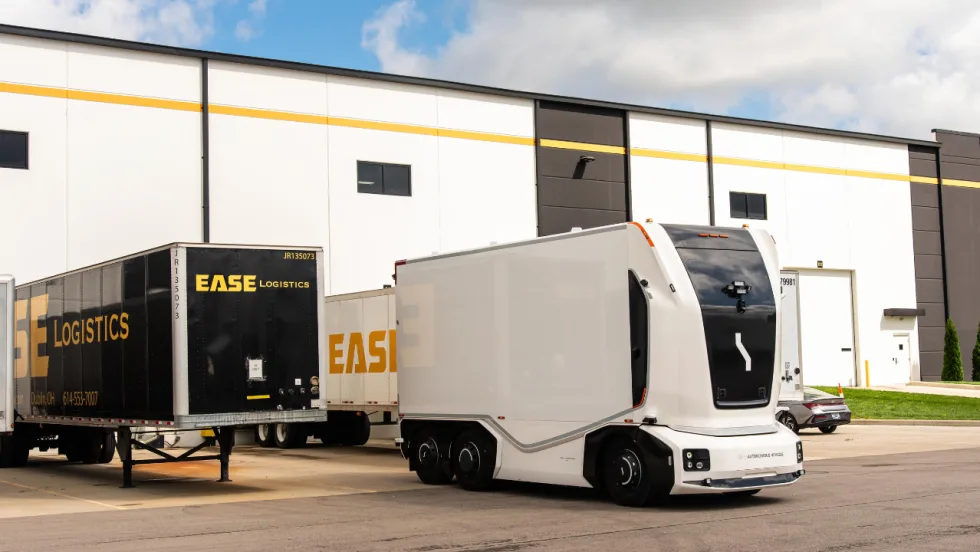
Einride Electric Driverless Trucks Begin Daily Freight Operations in Ohio
Two cabless electric trucks are now moving freight between EASE Logistics facilities, putting autonomous EV technology into daily commercial operations.
Read More →
FedEx Orders 2,000 Harbinger Electric Trucks in $300 Million Deal
The Class 5 and 6 electric trucks are planned for delivery by the end of 2027 and will be deployed in FedEx pickup and delivery operations across the U.S. and Canada.
Read More →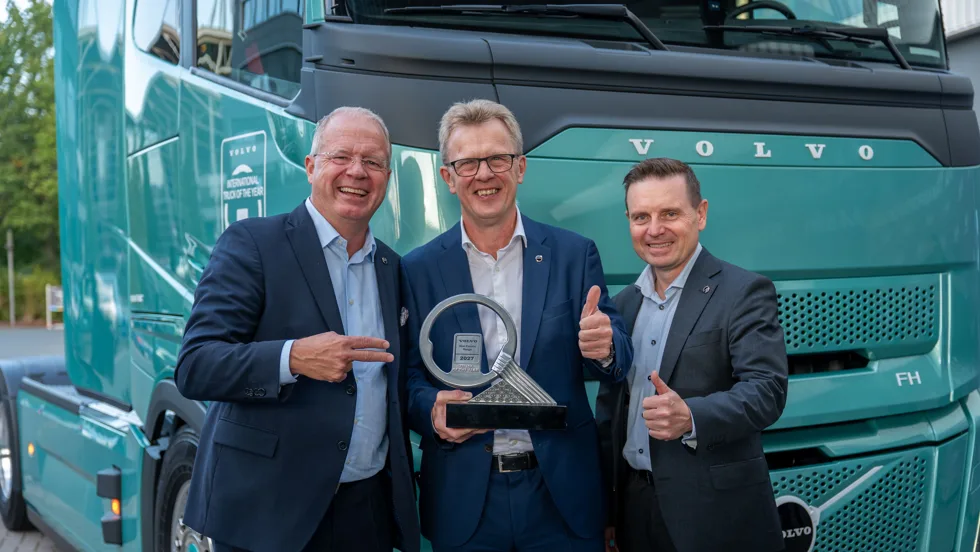
Volvo Trucks’ Electric Range Named International Truck of the Year 2027
The award recognizes Volvo’s global heavy-duty electric lineup, while more than 750 VNR Electric trucks have accumulated nearly 37 million miles in U.S. and Canadian fleet operations.
Read More →
How Republic Services Decides Where Its Next Electric Trucks Can Go
With 250 electric collection trucks now in service, Republic Services is learning that scaling electrification depends less on proving the vehicle and more on whether each site can support what comes next.
Read More →
EV Charging Use Is Outpacing Infrastructure Growth
ChargePoint’s 2026 Charging Forward Report points to rising charger use, higher-powered charging, commercial vehicle electrification, and energy-management technology. Here’s what fleets should know.
Read More →
EV Realty Names Henrik Holland President as Charging Platform Expands
The former Prologis Mobility and Shell executive will help expand EV Realty’s truck charging business and move its power-first infrastructure model into autonomous vehicle depots and other fleet sectors.
Read More →
GreenPower Expands New Mexico EV Pilot With Larger Buses, V2G Testing
After logging more than 17,000 electric miles in the first year, New Mexico’s statewide pilot is moving into its second phase with larger vehicles, continued charging evaluations, and more.
Read More →
Can EV-as-a-Service Help Fleets Scale Electrification?
Sustainability Partners CEO Adam Cain explains how matching EVs, charging infrastructure, and duty cycles can help fleets scale electrification.
Read More →
How EV-as-a-Service Is Moving Fleets Beyond Pilots
Adam Cain, president and CEO of Sustainability Partners, explains how EV-as-a-service can help fleets scale deployments by addressing duty-cycle requirements and charging challenges.
Read More →