


Tariffs Prompt EV Buying That Tightens Inventory
With over 70 models available, competition in the EV market is fierce. The new EV price premium over ICE+ vehicles increased to $12,229, the highest in two years.

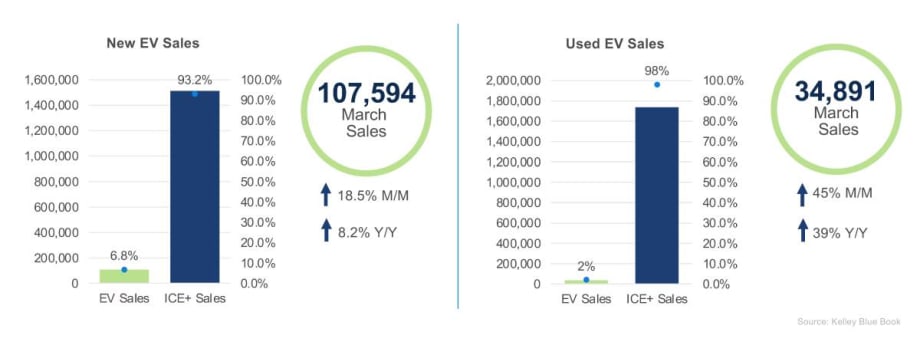
In March, used electric vehicle sales surged by 45% month over month, while yearly used EV sales rose 39%.
Graphic: Cox Automotive
While sales increased for both new and used EVs in March, the market share for new EVs saw a slight decline as inventory levels tightened across the board due to tariffs influencing consumer behavior.
However, new EV prices rose, whereas used EV prices decreased slightly, and many affordable options remained.
Used EV Sales Surge and Gain Market Share
New EV Sales: In March, new electric vehicle (EV) sales increased by 18.5% monthly to 107,594 units, although the EV market share dropped to 6.8%. Year over year, the new EV sales volume increased by 8.2%. Tesla’s market share fell by 5 percentage points to 42%, although the Model Y and Model 3 remained the top-selling vehicles. It was a strong month for Chevrolet, Hyundai, Genesis, and Cadillac, with each brand experiencing a month-over-month volume increase of 50% or more. The top five selling new EV models, ranked by sales volume, were the Tesla Model Y, Tesla Model 3, Ford Mustang Mach-E, Chevrolet Equinox and Hyundai Ioniq 5. With over 70 models available, competition in the EV market is fierce.
Used EV Sales: In March, used electric vehicle sales surged by 45% month over month, reaching a total of 34,891 units, up from 24,875 in February. Retail share for EVs in the used market hit 2% for the first time ever. Year-over-year used EV sales growth was 39%. Tesla continued to dominate the used EV market with a 54.5% share. The EV pioneer increased its share of the used EV market by 300 basis points to 43%, partly thanks to a growing availability of used Tesla models. Chevrolet and Ford followed, holding market shares of 9.2% and 6.8%, respectively. The top five selling models by volume were the Tesla Model 3, Model Y and Model S, followed by the Ford Mustang Mach-E and Chevrolet Bolt, collectively accounting for 48% of the market share for the month.
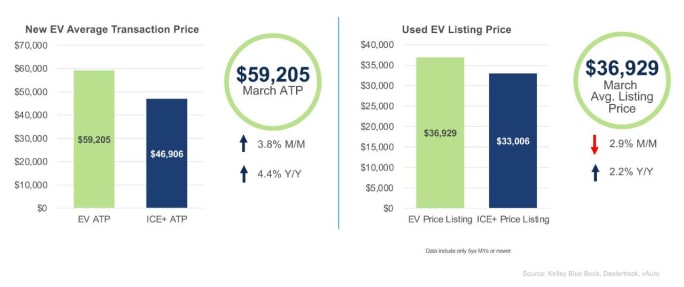
The average listing price for used electric vehicles (EVs) was $36,929, marking a 2.9% decrease from the previous month and a 2.2% increase compared to last year.
Graphic: Cox Automotive
Chinese Battery Tariffs Could Increase EV Prices
New EV Average Transaction Price: In March, the average transaction price (ATP) for new electric vehicles was $59,205, showing a 3.8% increase from the previous month and a 4.4% increase from the previous year. The EV price premium over ICE+ vehicles increased to $12,229, the highest it’s been in a couple of years. Incentives continue to be above the industry average at 13.3%, slightly down one percentage point from the prior month. The Nissan Leaf, Kia EV6, Mercedes EQB and Nissan Ariya had incentive levels exceeding 30% of their ATP. Recent tariffs on imported EV batteries and components from China, which accounted for about $1.9 billion worth of lithium-ion batteries in 2024, could further increase transaction prices, as these tariffs could raise the cost of imported materials by up to 82%.
Used EV Average Listing Price: The average listing price for used electric vehicles (EVs) was $36,929, marking a 2.9% decrease from the previous month and a 2.2% increase compared to last year. This adjustment has brought the price premium to under $4,000. Notably, 12 brands had listing prices lower than their internal combustion engine (ICE) counterparts. Affordable options are still available, with 40% of units sold priced below $25,000.
Buying Surge Cuts Supply Availability
New EV Days’ Supply: In March, the new EV days’ supply declined by 12.5% month over month, dropping to 93 days. The new EV days’ supply is down 26% yearly. The gap between days’ supply for EVs and ICE+ models doubled in March, reaching 24 days. Days’ supply varied a lot by make. GMC had the highest days’ supply at 170 days, while Kia had the lowest at 23 days. BMW experienced the largest month-over-month decline in days’ supply, dropping by 49 days to end the month at 80 days. In contrast, Volkswagen saw the highest increase, from 47 days to 82 days, which remains below the monthly average. The recent tariff announcements have influenced buying behavior, leading to a surge in vehicle purchases and impacting inventory levels.
Used EV Days’ Supply: In March, the days’ supply of used electric vehicles declined by 4.4% month over month and decreased by 10.9% year over year. Last month, used EVs had a one-day higher supply than ICE+ vehicles. However, with ICE+ days’ supply declining by 18.1% month over month, the gap has now increased to seven days. Similar to the new EV market, the days’ supply for used EVs varies by popular makes. Similar to the new EV days’ supply, inventory is tightened in the used EV marketplace.
Originally posted on Automotive Fleet
More Electric Vehicles
EV Charging Use Is Outpacing Infrastructure Growth
ChargePoint’s 2026 Charging Forward Report points to rising charger use, higher-powered charging, commercial vehicle electrification, and energy-management technology. Here’s what fleets should know.
Read More →
EV Realty Names Henrik Holland President as Charging Platform Expands
The former Prologis Mobility and Shell executive will help expand EV Realty’s truck charging business and move its power-first infrastructure model into autonomous vehicle depots and other fleet sectors.
Read More →
GreenPower Expands New Mexico EV Pilot With Larger Buses, V2G Testing
After logging more than 17,000 electric miles in the first year, New Mexico’s statewide pilot is moving into its second phase with larger vehicles, continued charging evaluations, and more.
Read More →
Can EV-as-a-Service Help Fleets Scale Electrification?
Sustainability Partners CEO Adam Cain explains how matching EVs, charging infrastructure, and duty cycles can help fleets scale electrification.
Read More →
How EV-as-a-Service Is Moving Fleets Beyond Pilots
Adam Cain, president and CEO of Sustainability Partners, explains how EV-as-a-service can help fleets scale deployments by addressing duty-cycle requirements and charging challenges.
Read More →
PowerFlex, The Mobility House Join Forces to Advance Fleet Electrification
Two EV charging providers are joining forces to deliver a broader portfolio of energy management and fleet electrification solutions.
Read More →
Ford Retools Louisville Plant for Fathom Electric Truck Production
Ford's $2 billion Louisville Assembly Plant overhaul introduces a three-part assembly process for the Fathom midsize electric truck, with production scheduled to begin in 2027.
Read More →
Merchants Fleet Reports 290M EV Miles as Fleets Navigate Changing Electrification Market
From millions in operating savings to hundreds of millions of EV miles, Merchants Fleet’s latest report reveals what’s working and what’s changing in fleet electrification.
Read More →
California District Commits to Electrify 25% of School Bus Fleet by 2028
One of the nation's largest school bus electrification projects to date demonstrates how grants, charging infrastructure, and public-private partnerships can help fleets transition to EVs at scale.
Read More →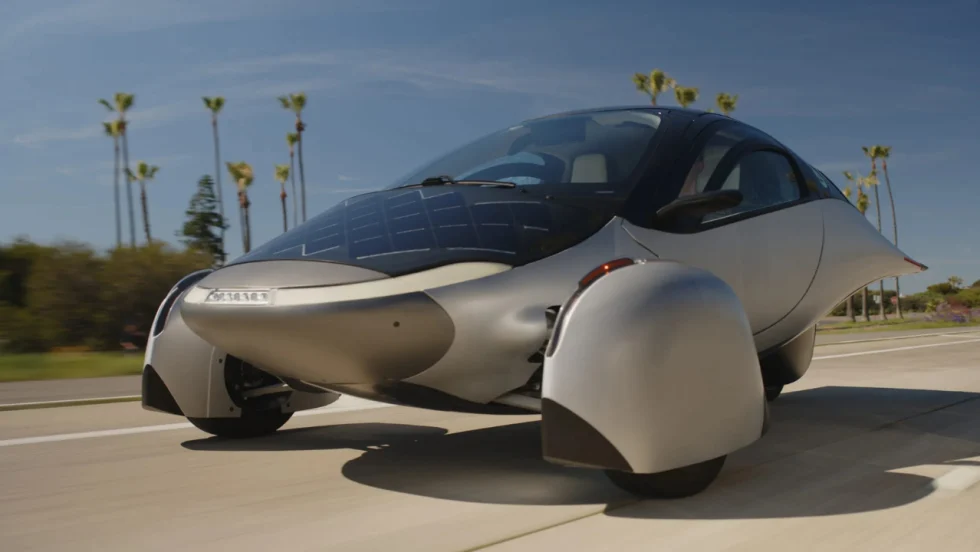
Aptera Orders Bodies and Chassis for Its First 40 Production Vehicles
Aptera Motors Corp. has issued purchase orders for the major structural components of its first 40 vehicles, and body and chassis components are expected to begin arriving in October.
Read More →