


New Hampshire Paves Way for Flying Cars
Dubbed the Jetson Bill, the legislation provides “roadable aircraft” — often called flying cars — a clear method of state registration allowing their use on state roads and highways.
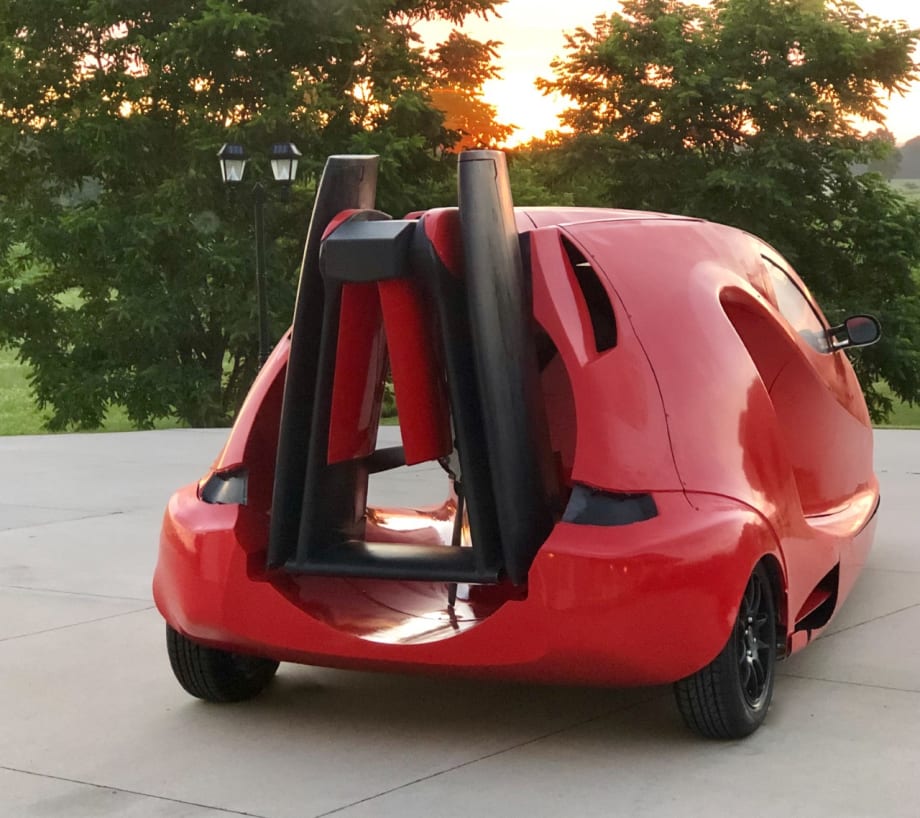
This is a prototype of the Switchblade made by Samson Sky, which the U.S. Department of Transportation classifies as a motorcycle.
Photo courtesy of Samson Sky.
It was inevitable that a post on Fleet Forward would come with the title “Flying Cars.” That time has come.
On July 29, the state of New Hampshire passed what has been nicknamed the “Jetson Bill.” Within House Bill 1182, a massive transportation package, is a wording to provide “roadable aircraft” — often called flying cars — a clear method of state registration allowing their use on state roads and highways.
While roadable aircraft can drive on highways, their purpose is mostly to fly from airport to airport, according to press materials from Samson Sky, makers of roadable aircrafts.
"Having two sets of rules (air and ground) for this category of vehicle would put a significant burden on manufacturers and make for a confusing integration of roadable aircraft into the highway system," said Sam Bousfield, CEO of Samson Sky.
Bousfield's company is one of three roadable aircraft companies that provided industry input to New Hampshire's House Transportation Committee. Other stakeholders included Terrafugia and PAL-V.
As aircraft are already required to have a rigorous annual inspection by an aircraft mechanic, the new law simplifies ground registration of flying cars once registered with the FAA. Drivers of roadable aircraft are required to adhere to the rules of the road while driving, the same as any other car, truck, bicycle, motorcycle, or farm vehicle.

Photo courtesy of Samson Sky.
Samson Sky makes the Switchblade, which the company dubs “a flying sports car.” The Switchblade is classified as a motorcycle by the U.S. Department of Transportation.
The Switchblade’s engine is a turbo-charged, lightweight 200 hp liquid-cooled V4 that is capable of 0-60 in 6.5 seconds and a top speed of 125+ mph. In the air it is designed to cruise at 160 mph, with a top speed of up to 190 mph and a range of 500 miles.
The Switchblade is not yet available to the public. According to Samson Sky’s website, it is expected to retail for $120,000.
A market for flying cars has been talked about for years — think the Popular Mechanics articles of the 1950s — yet hasn’t materialized.
According to a Wikipedia post, Terrafugia has been promising a publicly available model since 2015 but has yet to deliver. PAL-V, founded in 2001, expects first deliveries in 2021.
In an email exchange with Fleet Forward, Samson said that the Switchblade is just entering flight testing, with production to follow. The company has garnered 1,280 order reservations, which continues to grow.
“Due to our large demand, we are talking with investors to enable a faster start to production,” wrote Martha Hall Bousfield, assistant to CEO Sam Bousfield. “Even so, any assembly line would require more than a year to become established and enter into any meaningful production rate. As a result, we do not anticipate producing vehicles prior to 16 months after we fly.”
Originally posted on Automotive Fleet
More Electric Vehicles
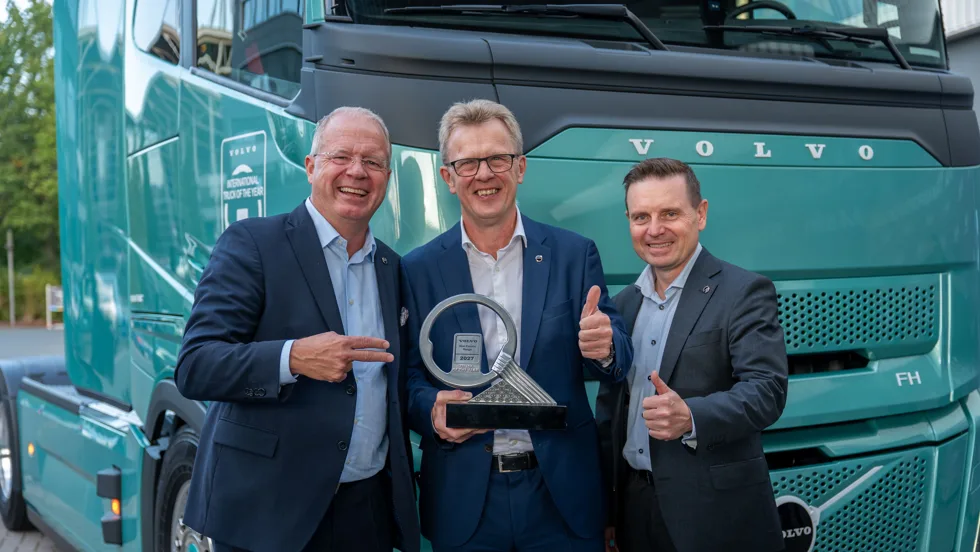
Volvo Trucks’ Electric Range Named International Truck of the Year 2027
The award recognizes Volvo’s global heavy-duty electric lineup, while more than 750 VNR Electric trucks have accumulated nearly 37 million miles in U.S. and Canadian fleet operations.
Read More →
How Republic Services Decides Where Its Next Electric Trucks Can Go
With 250 electric collection trucks now in service, Republic Services is learning that scaling electrification depends less on proving the vehicle and more on whether each site can support what comes next.
Read More →
EV Charging Use Is Outpacing Infrastructure Growth
ChargePoint’s 2026 Charging Forward Report points to rising charger use, higher-powered charging, commercial vehicle electrification, and energy-management technology. Here’s what fleets should know.
Read More →
EV Realty Names Henrik Holland President as Charging Platform Expands
The former Prologis Mobility and Shell executive will help expand EV Realty’s truck charging business and move its power-first infrastructure model into autonomous vehicle depots and other fleet sectors.
Read More →
GreenPower Expands New Mexico EV Pilot With Larger Buses, V2G Testing
After logging more than 17,000 electric miles in the first year, New Mexico’s statewide pilot is moving into its second phase with larger vehicles, continued charging evaluations, and more.
Read More →
Can EV-as-a-Service Help Fleets Scale Electrification?
Sustainability Partners CEO Adam Cain explains how matching EVs, charging infrastructure, and duty cycles can help fleets scale electrification.
Read More →
How EV-as-a-Service Is Moving Fleets Beyond Pilots
Adam Cain, president and CEO of Sustainability Partners, explains how EV-as-a-service can help fleets scale deployments by addressing duty-cycle requirements and charging challenges.
Read More →
PowerFlex, The Mobility House Join Forces to Advance Fleet Electrification
Two EV charging providers are joining forces to deliver a broader portfolio of energy management and fleet electrification solutions.
Read More →
Ford Retools Louisville Plant for Fathom Electric Truck Production
Ford's $2 billion Louisville Assembly Plant overhaul introduces a three-part assembly process for the Fathom midsize electric truck, with production scheduled to begin in 2027.
Read More →
Merchants Fleet Reports 290M EV Miles as Fleets Navigate Changing Electrification Market
From millions in operating savings to hundreds of millions of EV miles, Merchants Fleet’s latest report reveals what’s working and what’s changing in fleet electrification.
Read More →