



Related: Lightning eMotors Expands to Meet Commercial EV Demand
Lightning Day Shows Off Lightning eMotors’ Electric Vehicles
Lightning eMotors is making big waves in the electric vehicle space for trucks and vans. At a recent open house, the team opened their doors to show off their facility, offer tours and test drives, and share key insights into the past, present, and future of electrified fleets.
June 28, 2021
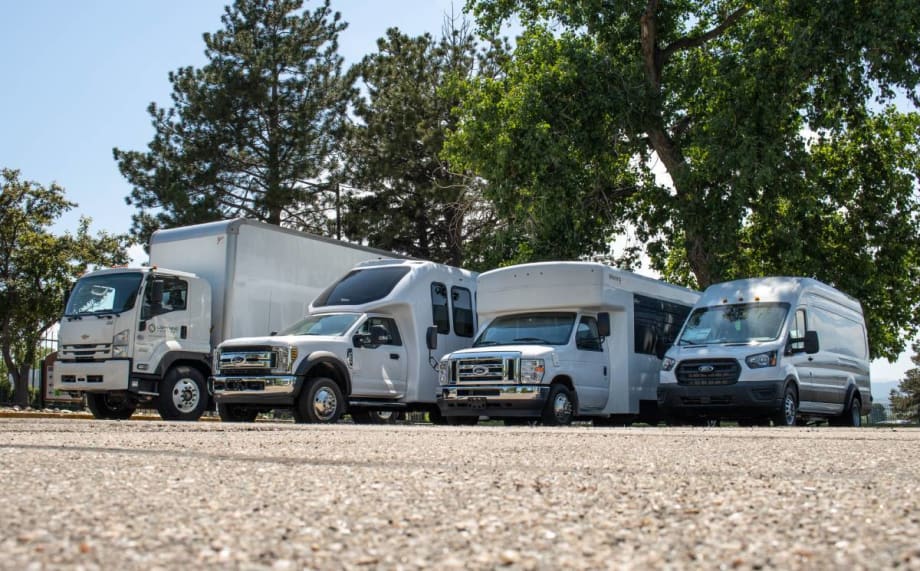
At the 2021 Lightning Day, Lightning eMotors opened its doors for visitors to get an up-close look at how this company is electrifying medium-duty vehicles.
Photo: Lightning eMotors.
3 min to read
Loveland, Colo.-based Lightning eMotors hosted an open house June 17 to show off their newly expanded facility, offer tours for an inside peek at production process, and allow customers, fleet managers, government officials, and journalists, to ride and drive their all-electric medium-duty commercial vehicles.
Since the last Lightning Day in 2019, the company has grown in the market, combined with GigCapital3 and went public, expanded their factory, and moved into new niches.
Lightning Electrifies Fleets
If you haven’t heard of Lightning eMotors yet, the company serves a growing market of forward-thinking commercial fleets looking to achieve sustainability goals with zero-emission battery-electric vans, trucks, and buses from manufacturers such as Ford and GM.
Lightning works with medium-duty Class 3 cargo and passenger vans, Class 4 and 5 cargo vans and shuttle buses, Class 6 work trucks, school buses, Class 7 city buses, and Class A motorcoaches. They do this by converting chasses and powertrains from the major manufacturers to electric.
The company also designs and manufactures a suite of control software, telematics, analytics, and charging solutions, while offering driver training.
According to a May 17 earnings report, Lightning sold 31 purpose-built, commercial vehicles in Q1 2021, which included shuttles buses, delivery vehicles, refrigerated trucks, ambulances and RVs, for DHL Express, Fluid Truck, ABC Companies, Meals on Wheels and more. The company’s forecast is 500 vehicles by the end of the year.
Behind the Wheel
Lightning Day put on full display the benefits and capabilities of going electric, allowing visitors to get behind the wheel and experience the difference. Not only was the drive smooth, quiet, and powerful — without the sound, smell, or sight of a gas plume — but the feeling of regenerative braking kicking in was a reminder that the vehicle’s battery was doing its job while saving wasted energy, reducing idling, and charging the battery.
Tim Reeser, CEO and Lightning eMotors co-founder, said the company was built with the vocational vehicle in mind and specializes in the custom environment. He believes there is no limit to the potential scalability of what they do. For instance, he referenced a custom-build for a paper shredding truck because none existed previously.
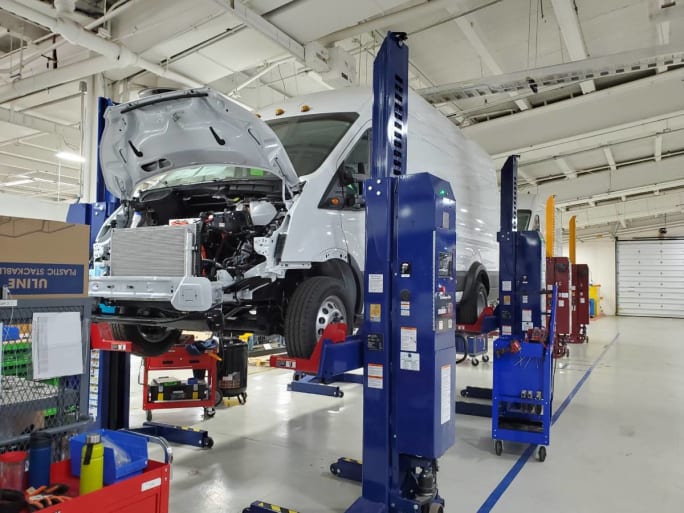
By producing and installing batteries into commercial vehicles, Lightning eMotors is ready for the growth in zero-emission work trucks.
Photo: Amanda Huggett.
Looking forward, Lightning intends to maintain premium pricing while expanding volume.
Looking Forward
Lightning leadership also shared insights into the electric market, noting that EVs perform best in cities, as the stop-and-go nature of the drive provides plenty of opportunity for the battery to charge itself throughout the drive. This, of course, equates to valuable fuel savings for fleet managers and makes the vehicles even more attractive for last-mile deliveries.
“The EV revolution is here, and it’s not just about cars or pickup trucks,” Chief Revenue Officer Kash Sethi said in a release. “We are glad to see EVs gain momentum across all segments of transportation – from transit buses to delivery trucks, from school buses to ambulances.”
Reeser also mentioned a growing interest in recreational vehicle (RV) electrification. But the growth opportunities he’s most attuned to are in utility trucks and school buses.
Lightning is working on a universal powertrain that would fit multiple OEM’s vehicles.
“I’ve never been a fan of building an electric vehicle just for carbon offset,” Reeser stated. “Sustainability is a key aspect of our business, but I don’t want it to be the only reason people buy our product. I want them to buy because it’s fundamentally a better vehicle.”
While passenger cars have already seen an uptick in interest in the last few years, larger vehicles have been slower to go electric. Reeser said he believes the interest has always been there, but now that costs are going down as volume is going up —especially in the last year alone — adoption is finally gaining momentum as ROI has become proven. “I believe we’ve hit the inflection point and growth will be quick,” Reeser said.
Reeser predicts 40% of all commercial vehicles will be electric in three years. Lightning eMotors is scaling and preparing for that now.
Topics:Battery-Electric VehiclesLightning eMotorsElectric PowertrainsElectric VehiclesSuppliersVehicle Research
Originally posted on Work Truck Online
More Electric Vehicles

EV Charging Use Is Outpacing Infrastructure Growth
ChargePoint’s 2026 Charging Forward Report points to rising charger use, higher-powered charging, commercial vehicle electrification, and energy-management technology. Here’s what fleets should know.
Read More →
EV Realty Names Henrik Holland President as Charging Platform Expands
The former Prologis Mobility and Shell executive will help expand EV Realty’s truck charging business and move its power-first infrastructure model into autonomous vehicle depots and other fleet sectors.
Read More →
GreenPower Expands New Mexico EV Pilot With Larger Buses, V2G Testing
After logging more than 17,000 electric miles in the first year, New Mexico’s statewide pilot is moving into its second phase with larger vehicles, continued charging evaluations, and more.
Read More →
Can EV-as-a-Service Help Fleets Scale Electrification?
Sustainability Partners CEO Adam Cain explains how matching EVs, charging infrastructure, and duty cycles can help fleets scale electrification.
Read More →
How EV-as-a-Service Is Moving Fleets Beyond Pilots
Adam Cain, president and CEO of Sustainability Partners, explains how EV-as-a-service can help fleets scale deployments by addressing duty-cycle requirements and charging challenges.
Read More →
PowerFlex, The Mobility House Join Forces to Advance Fleet Electrification
Two EV charging providers are joining forces to deliver a broader portfolio of energy management and fleet electrification solutions.
Read More →
Ford Retools Louisville Plant for Fathom Electric Truck Production
Ford's $2 billion Louisville Assembly Plant overhaul introduces a three-part assembly process for the Fathom midsize electric truck, with production scheduled to begin in 2027.
Read More →
Merchants Fleet Reports 290M EV Miles as Fleets Navigate Changing Electrification Market
From millions in operating savings to hundreds of millions of EV miles, Merchants Fleet’s latest report reveals what’s working and what’s changing in fleet electrification.
Read More →
California District Commits to Electrify 25% of School Bus Fleet by 2028
One of the nation's largest school bus electrification projects to date demonstrates how grants, charging infrastructure, and public-private partnerships can help fleets transition to EVs at scale.
Read More →
Aptera Orders Bodies and Chassis for Its First 40 Production Vehicles
Aptera Motors Corp. has issued purchase orders for the major structural components of its first 40 vehicles, and body and chassis components are expected to begin arriving in October.
Read More →