


EVs and Plug-In Hybrids in Germany See Growth in 2020
The amount of electric vehicles (EVs) and plug-in hybrids in operation in Germany grew 60% in 2020 when compared to 2019.
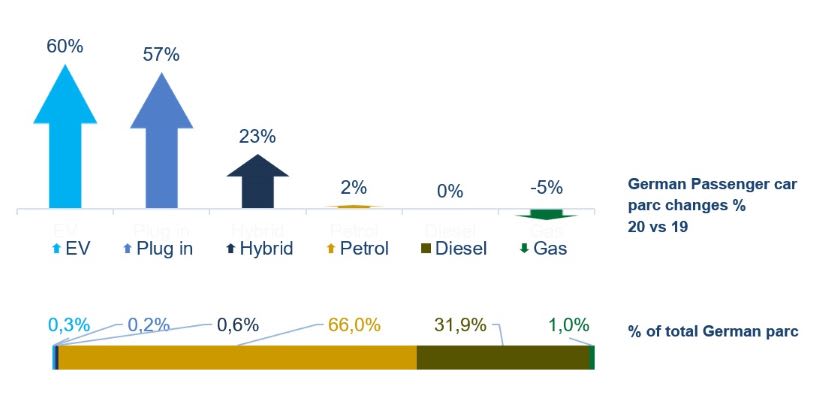
The amount of electric vehicles (EVs) and plug-in hybrids in operation in Germany grew 60% in 2020 when compared to 2019.
Photo: Dataforce
The amount of electric vehicles (EVs) and plug-in hybrids in operation in Germany grew 60% in 2020 when compared to 2019, according to Dataforce.
However, there is still a long way to go for electrification in the country, as the share of electric vehicles in the parc stands at 0.3%, Dataforce said. The expansion of EVs and plug-in vehicles in the country has been driven heavily with the introduction of incentives for these vehicle types in 2019.
Last year, Germany and automakers in the country agreed to raise a so-called environment bonus that would cover as much as 6,000 euros ($6,680) per electric vehicle, with the auto industry covering half the vehicle cost as well, according to a report from Bloomberg.
Meanwhile, the parc of vehicles powered by gasoline has been dropping steadily since 2014, according to Dataforce.
Looking at growth per brand, taking in account EV and plug-in combined, BMW has had the largest increase, hinging on their wide variety of electrified products.
Registration wise, 2019 has been the best year for the BMW i3 so far, resulting in half of BMW’s parc growth. One other was Tesla at No. 2 while we see Renault outperforming the other German brands, at a bit surprising No. 3 spot.
Originally posted on Automotive Fleet
More Electric Vehicles
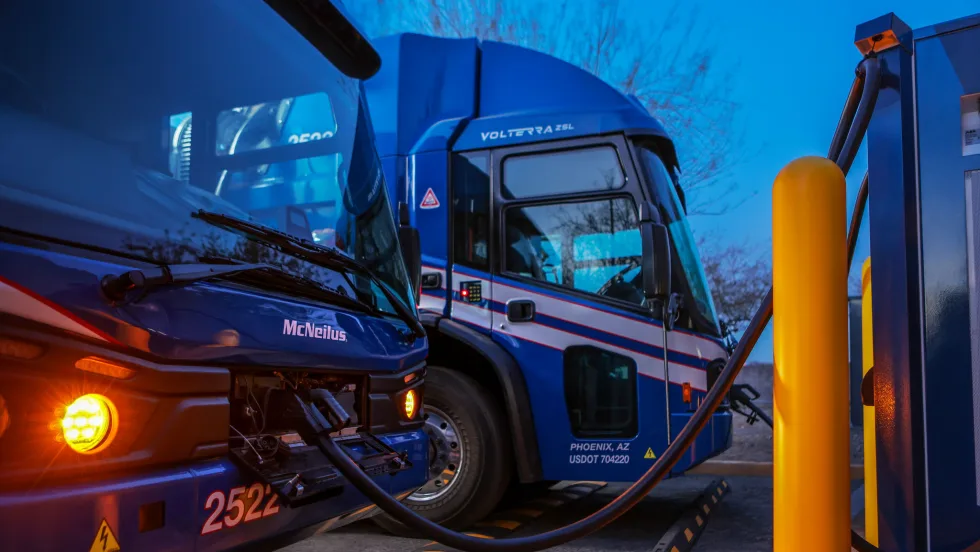
How Republic Services Decides Where Its Next Electric Trucks Can Go
With 250 electric collection trucks now in service, Republic Services is learning that scaling electrification depends less on proving the vehicle and more on whether each site can support what comes next.
Read More →
EV Charging Use Is Outpacing Infrastructure Growth
ChargePoint’s 2026 Charging Forward Report points to rising charger use, higher-powered charging, commercial vehicle electrification, and energy-management technology. Here’s what fleets should know.
Read More →
EV Realty Names Henrik Holland President as Charging Platform Expands
The former Prologis Mobility and Shell executive will help expand EV Realty’s truck charging business and move its power-first infrastructure model into autonomous vehicle depots and other fleet sectors.
Read More →
GreenPower Expands New Mexico EV Pilot With Larger Buses, V2G Testing
After logging more than 17,000 electric miles in the first year, New Mexico’s statewide pilot is moving into its second phase with larger vehicles, continued charging evaluations, and more.
Read More →
Can EV-as-a-Service Help Fleets Scale Electrification?
Sustainability Partners CEO Adam Cain explains how matching EVs, charging infrastructure, and duty cycles can help fleets scale electrification.
Read More →
How EV-as-a-Service Is Moving Fleets Beyond Pilots
Adam Cain, president and CEO of Sustainability Partners, explains how EV-as-a-service can help fleets scale deployments by addressing duty-cycle requirements and charging challenges.
Read More →
PowerFlex, The Mobility House Join Forces to Advance Fleet Electrification
Two EV charging providers are joining forces to deliver a broader portfolio of energy management and fleet electrification solutions.
Read More →
Ford Retools Louisville Plant for Fathom Electric Truck Production
Ford's $2 billion Louisville Assembly Plant overhaul introduces a three-part assembly process for the Fathom midsize electric truck, with production scheduled to begin in 2027.
Read More →
Merchants Fleet Reports 290M EV Miles as Fleets Navigate Changing Electrification Market
From millions in operating savings to hundreds of millions of EV miles, Merchants Fleet’s latest report reveals what’s working and what’s changing in fleet electrification.
Read More →
California District Commits to Electrify 25% of School Bus Fleet by 2028
One of the nation's largest school bus electrification projects to date demonstrates how grants, charging infrastructure, and public-private partnerships can help fleets transition to EVs at scale.
Read More →