


EV Prices Moving Up from March Bottom While Q2 EV Sales Hit Record
Q2 new electric vehicle sales are up 11% from EV sales in Q2 2023 due mostly to improved availability, higher discounts, and elevated levels of leasing.

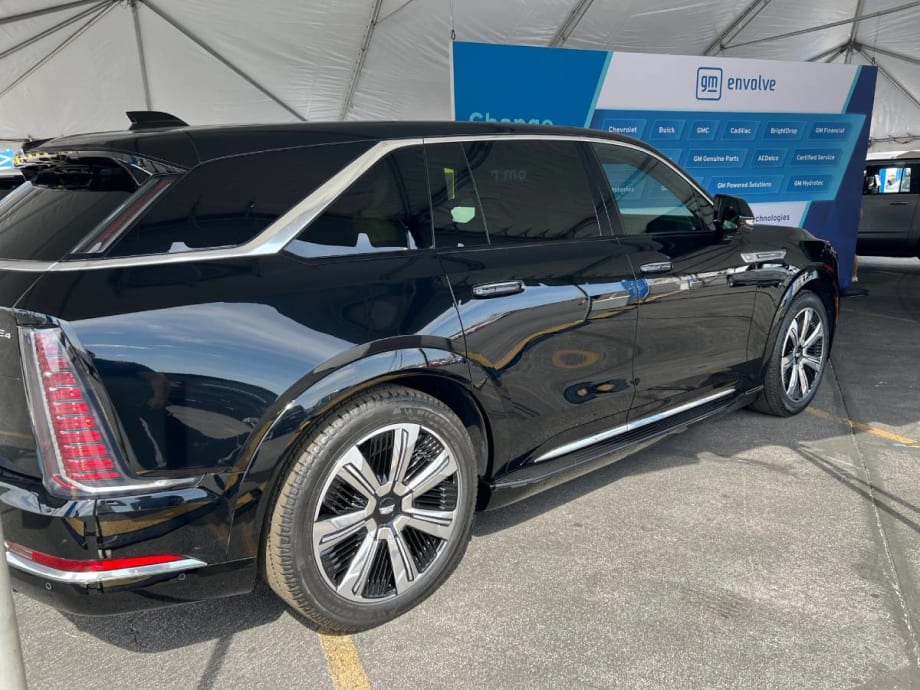
About 330,000 EVs were sold in Q2 in the U.S. Pictured: A Cadillac LYRIQ all-electric luxury vehicle.
Photo: Martin Romjue / Bobit
Electric vehicle sales in the U.S. grew by 11.3% year over year in the second quarter, reaching a record-high volume of 330,4631 units, according to new estimates from Kelley Blue Book released July 11.
This growth was driven partly by improved availability, higher discounts and elevated levels of leasing. Total EV sales last quarter were higher than Q1 sales by 23%.
The average price paid for a new electric vehicle in June was $56,371, an increase of 0.9% compared to May, which left EV prices lower by 2.5% versus June 2023, Kelley Blue Book data shows. New EV prices have been trending higher since the spring, when transaction prices fell to $53,235 in March. In large part, the higher prices for EVs are being driven by market leader Tesla, which has seen prices increase 13% since January.
By comparison, the average transaction price (ATP) for a new vehicle in the U.S. was $48,644. The June ATP was higher by $266 (0.6%) from the revised May ATP and lower by $307 (0.6%) compared to June 2023. In June, the new-vehicle ATP was lower year over year for the ninth straight month.
The sales estimates from Kelley Blue Book show that electric vehicles accounted for about 8% of total new-vehicle sales in the second quarter, higher than the 7.1% share in the first quarter of the year and higher than the 7.2% recorded in Q2 last year. Despite prices trending higher, EV sales in Q2 improved versus Q1 and were higher year over year by more than 11%. In fact, 330,000 EVs were sold in Q2 in the U.S., a record quarter for electric vehicle volume.
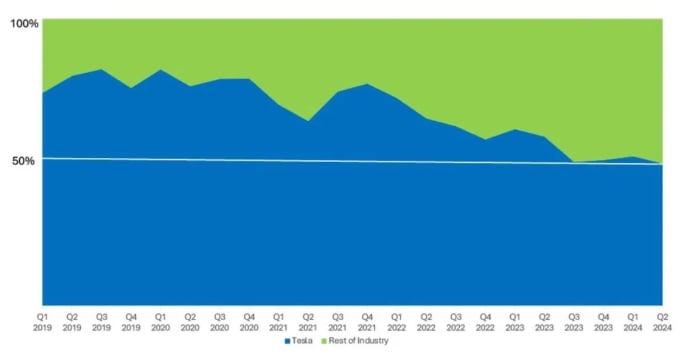
Despite Tesla’s declining sales, with its EV sales share now below 50% for the first time, the overall competitive landscape for electric vehicles is intensifying.
Graphic: Cox Automotive
While prices for the popular Model Y and Model 3 held relatively steady month over month in June – although both have increased significantly since January – the new Cybertruck is likely one reason Tesla ATPs have increased. In June, the Cybertruck was the best-selling vehicle priced over $100,000 – average transaction price: $112,696 – with more than 3,200 units sold.
Cox Automotive industry insights director Stephanie Valdez Streaty commented: “EV sales exceeded expectations during a record-breaking quarter. Despite Tesla’s declining sales, with its EV sales share now below 50% for the first time, the overall competitive landscape for electric vehicles is intensifying. This increased competition is leading to continued price pressure, gradually boosting EV adoption. Automakers that deliver the right product at the right price and offer an excellent consumer experience will lead the way in EV adoption.”
While Tesla remains the dominant player in the EV segment, new electric offerings by mainstream competitors – and more aggressive pricing – continue to provide shoppers with interesting alternatives. Notable new entries in Q2 include the BMW i5, Cadillac Lyriq, Honda Prologue, and Kia EV9 SUV. Higher volumes of the Ford Mustang Mach-E and F-150 Lightning helped the Ford brand retain its No. 2 position, behind Tesla, in the EV market.
New EVs from General Motors are also helping grow industry volume. In Q2, GM added more than 21,000 EVs to the market. New models include electric versions of the Chevy Blazer, Equinox and Silverado, which tallied more than 10,000 sales in Q2, although the extra volume was not enough to offset the discontinued Chevy Bolt. In Q2, Chevrolet’s EV sales were lower by 19% year over year. Other major players who lost ground year over year in Q2 include Mercedes-Benz, Polestar, Porsche, Volvo, and VW.
“We remain bullish on electric vehicle sales in the long term. The growth will, at times, be very slow, as all-time horizons in the automobile business are vast, but the long-term trajectory suggests that higher volumes of EVs will continue over time," Streaty added. "As EV infrastructure and technology improve, and more models are launched, many shoppers sitting on the fence will eventually choose an EV.”
More Electric Vehicles

EV Charging Use Is Outpacing Infrastructure Growth
ChargePoint’s 2026 Charging Forward Report points to rising charger use, higher-powered charging, commercial vehicle electrification, and energy-management technology. Here’s what fleets should know.
Read More →
EV Realty Names Henrik Holland President as Charging Platform Expands
The former Prologis Mobility and Shell executive will help expand EV Realty’s truck charging business and move its power-first infrastructure model into autonomous vehicle depots and other fleet sectors.
Read More →
GreenPower Expands New Mexico EV Pilot With Larger Buses, V2G Testing
After logging more than 17,000 electric miles in the first year, New Mexico’s statewide pilot is moving into its second phase with larger vehicles, continued charging evaluations, and more.
Read More →
Can EV-as-a-Service Help Fleets Scale Electrification?
Sustainability Partners CEO Adam Cain explains how matching EVs, charging infrastructure, and duty cycles can help fleets scale electrification.
Read More →
How EV-as-a-Service Is Moving Fleets Beyond Pilots
Adam Cain, president and CEO of Sustainability Partners, explains how EV-as-a-service can help fleets scale deployments by addressing duty-cycle requirements and charging challenges.
Read More →
PowerFlex, The Mobility House Join Forces to Advance Fleet Electrification
Two EV charging providers are joining forces to deliver a broader portfolio of energy management and fleet electrification solutions.
Read More →
Ford Retools Louisville Plant for Fathom Electric Truck Production
Ford's $2 billion Louisville Assembly Plant overhaul introduces a three-part assembly process for the Fathom midsize electric truck, with production scheduled to begin in 2027.
Read More →
Merchants Fleet Reports 290M EV Miles as Fleets Navigate Changing Electrification Market
From millions in operating savings to hundreds of millions of EV miles, Merchants Fleet’s latest report reveals what’s working and what’s changing in fleet electrification.
Read More →
California District Commits to Electrify 25% of School Bus Fleet by 2028
One of the nation's largest school bus electrification projects to date demonstrates how grants, charging infrastructure, and public-private partnerships can help fleets transition to EVs at scale.
Read More →
Aptera Orders Bodies and Chassis for Its First 40 Production Vehicles
Aptera Motors Corp. has issued purchase orders for the major structural components of its first 40 vehicles, and body and chassis components are expected to begin arriving in October.
Read More →