


Toolbox - When Do EVs Make Sense for Fleets?
A new program using actual drive-cycle data will help fleets answer this question from an economic standpoint.

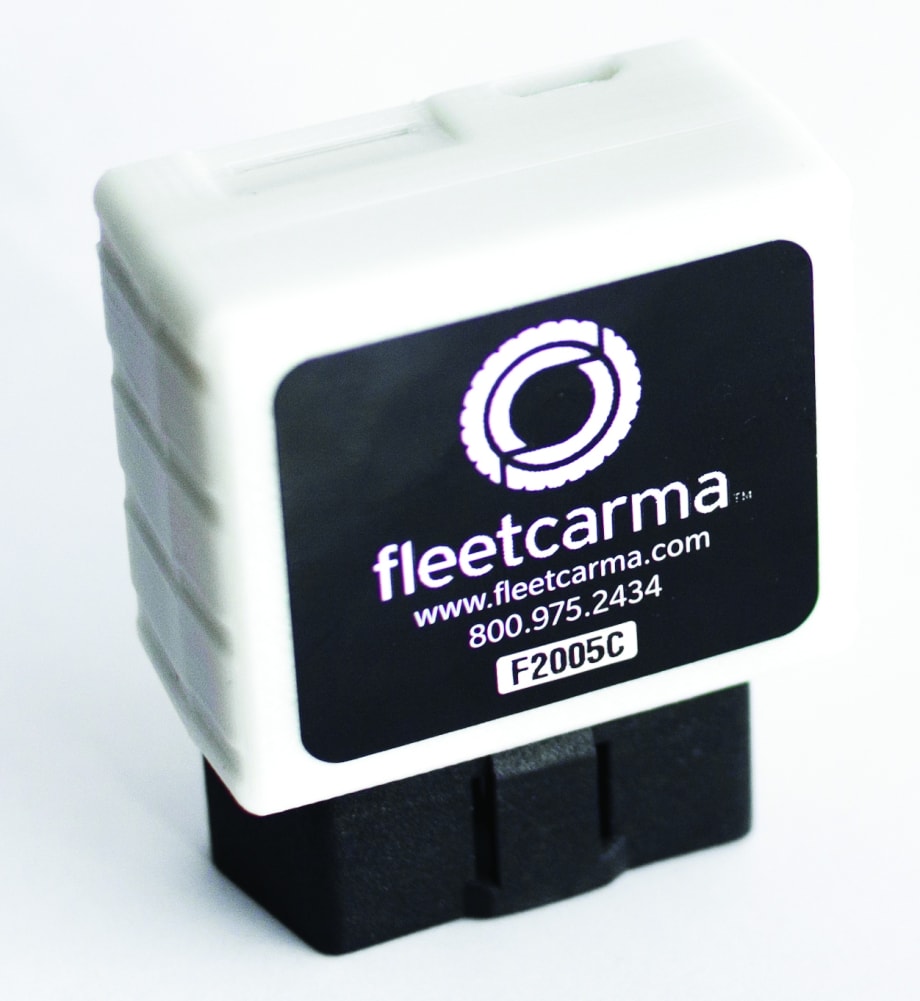
FleetCarma’s data logger.
FleetCarma’s data logger.
If you’re looking to “electrify” your fleet, the hard part comes when choosing from the myriad of plug-in hybrid (PHEVs) and battery-electric models (BEVs) on the market today. The decision becomes even harder knowing that lifecycle costs vary greatly on the range of the electric vehicle (EV), your fleet’s duty cycle and even driver behavior.
A new tool makes the job easier for fleets. FleetCarma uses real-world data from your vehicles to see which electric models would work for your fleet application.
“We’re trying to answer, reliably and quickly for fleet managers, is can the electric vehicle do the job, does it give them environmental benefits and does it fit in their budget,” says Eric Mallia, business development manager for FleetCarma.
The five vehicles in FleetCarma’s model are the 2012 Toyota Prius Plug-In Hybrid, 2011 Chevrolet Volt, 2011 Nissan Leaf, 2011 Mitsubishi i-MiEV and 2011 Ford Transit Connect Electric. The vehicle model library has already been expanded to include 27 additional vehicles, and that number will double by the end of 2012, according to Mallia.
The FleetCarma solution starts with a “data logger,” a matchbox-size device that plugs into a vehicle’s OBDII port. After a three-week test period, the data logger is removed and the data set is uploaded to the FleetCarma servers. Reports show the vehicle’s average fuel economy, miles traveled, when the vehicle was in operation and the duration of trips.
That data is then compared to the EVs’ capabilities to give a total cost of ownership (TCO) for each, as well as show whether the PHEV or BEV model would be range- and charge-capable based on the fleet vehicle’s duty cycle. Each EV is given a FleetCarma score, a ranking calculated on lowest TCOs, energy reductions and emissions reductions.
The system doesn’t depend on published fuel figures to determine the TCO and is customizable to individual fleets, Mallia says. More than 4 million data points are analyzed for each vehicle decision.
Our Test
We ran tests for three vehicles at Business Fleet. The tested vehicles were a 2005 Mazda3, 2006 Toyota 4Runner and 2012 Toyota RAV4. While the tests analyzed commuting and personal miles rather than fleet duty cycles, overall driving patterns varied, as did results.
The RAV4 traveled 1,295 miles, the longest distance in the three-week test. The 4Runner and Mazda3 traveled 873 total miles and 820 total miles, respectively. Daily utilization varied, with the owner of the RAV4 not commuting on Mondays.
The RAV4 averaged 29 mpg and idled only 9.7% of the travel time; the 4Runner averaged 19 mpg and idled 17.4%; while the Mazda3 averaged 27 mpg and idled 14.5%.
The Results
For the RAV4, the EV with the highest FleetCarma score was the Prius Plug-In (58), followed by the Volt (54), i-MiEV (10), Leaf (0) and Transit Connect Electric (0).
For the 4Runner, the Prius Plug-In (67) bested the Volt (65), Leaf (48), i-MiEV (42) and Transit Connect Electric (0).
The Mazda3 data ranked the Leaf (73) first, followed by the i-MiEV (61), Volt (60), Prius Plug-In (59) and Transit Connect Electric (30).
A Quick Analysis
After crunching the numbers, the vehicles most appropriate for each drive cycle became clear. The RAV4 cycle offered enough charge time for all vehicles; but none of the BEVs had enough charge to last the day without an “opportunity charge.”
All vehicles were charge-capable for the 4Runner cycle, yet none of the BEVs were in range all the time.
The Mazda3 cycle was within range for the Leaf, Volt and Prius Plug-In, but only charge capable for the Prius Plug-In and i-MiEV all the time. In this cycle, the more expensive PHEVs were penalized because the BEVs are cheaper, range-capable and almost charge capable.
The program also analyzed energy and emissions reductions. Generally, the BEVs offered the most savings, yet were not always practical for the RAV4 and 4Runner because of range. The PHEVs offered a compromise of range and “green” benefits that fit those vehicles’ duty cycles.
Fleets that would like to test drive the program can sign up for a free trial at www.FleetCarma.com/offer.
Read more articles from Business Fleet's September/October magazine issue here.
Originally posted on Work Truck Online
More Electric Vehicles

GreenPower Plans 50 Electric Shuttle Buses for Mexico
GreenPower plans to build 50 electric shuttle buses for Mexico using its EV Star Cab & Chassis platform, partnering with local body builders to expand its market reach.
Read More →
Who You Gonna Call? Rivian Turns Electric Vehicles Into Ghostbusters Rides
Rivian teams up with Sony Pictures for a Ghostbusters-inspired Halloween software update, complete with custom sounds, lighting effects, and a special Ecto-R1.
Read More →
Einride Electric Driverless Trucks Begin Daily Freight Operations in Ohio
Two cabless electric trucks are now moving freight between EASE Logistics facilities, putting autonomous EV technology into daily commercial operations.
Read More →
FedEx Orders 2,000 Harbinger Electric Trucks in $300 Million Deal
The Class 5 and 6 electric trucks are planned for delivery by the end of 2027 and will be deployed in FedEx pickup and delivery operations across the U.S. and Canada.
Read More →
Volvo Trucks’ Electric Range Named International Truck of the Year 2027
The award recognizes Volvo’s global heavy-duty electric lineup, while more than 750 VNR Electric trucks have accumulated nearly 37 million miles in U.S. and Canadian fleet operations.
Read More →
How Republic Services Decides Where Its Next Electric Trucks Can Go
With 250 electric collection trucks now in service, Republic Services is learning that scaling electrification depends less on proving the vehicle and more on whether each site can support what comes next.
Read More →
EV Charging Use Is Outpacing Infrastructure Growth
ChargePoint’s 2026 Charging Forward Report points to rising charger use, higher-powered charging, commercial vehicle electrification, and energy-management technology. Here’s what fleets should know.
Read More →
EV Realty Names Henrik Holland President as Charging Platform Expands
The former Prologis Mobility and Shell executive will help expand EV Realty’s truck charging business and move its power-first infrastructure model into autonomous vehicle depots and other fleet sectors.
Read More →
GreenPower Expands New Mexico EV Pilot With Larger Buses, V2G Testing
After logging more than 17,000 electric miles in the first year, New Mexico’s statewide pilot is moving into its second phase with larger vehicles, continued charging evaluations, and more.
Read More →
Can EV-as-a-Service Help Fleets Scale Electrification?
Sustainability Partners CEO Adam Cain explains how matching EVs, charging infrastructure, and duty cycles can help fleets scale electrification.
Read More →