


The Latest Developments in EV Battery Technology
Electric vehicle battery manufacturers are increasing research and development and looking at potential technologies.

Lithium-ion batteries have high power and energy.
When it comes to making electric vehicles (EVs) a viable, zero-emissions alternative for the mass market, the battery is the weakest link.
The challenge lies in the correlation between battery range and cost. For example, the all-electric Tesla Model S achieves an impressive range of more than 250 miles on a single charge. But, with a price tag starting at $70,000 and some configurations exceeding $100,000, the Model S is still out of reach of mainstream buyers. Yet, while the Nissan LEAF and Chevrolet Spark are more affordably priced (in the $20,000 range), it’s at the expense of total mileage, with the LEAF at 75 miles and the Spark at 82 miles.
What’s being done to solve the battery problem in a way that drives down cost and boosts range — to expand the market for EVs? The following battery research and development could pave the way for the EV’s widespread use.
Expanding Lithium-ion Production
Automakers and battery manufacturers are placing large bets on lithium-ion (Li-ion) to become the prominent battery chemistry because of its relatively high-energy density for the cost.
Even Toyota, which still uses nickel-metal hydride (NiMH) batteries in its latest Prius hybrid models in the U.S., is planning to increase production of Li-ion batteries by six times, according to Reuters, investing $194 million to build a new production line to increase Li-ion battery capacity by 200,000 units per year.

This prototype lithium-ion battery for automobiles has the advantage of being lighter and taking up far less room than the batteries now in hybrid cars.
According to a recent report from Navigant Research, this trend will likely continue. The firm predicts that total worldwide capacity of Li-ion batteries for transportation applications will increase more than tenfold, from 4,400 megawatt-hours (MWh) in 2013 to nearly 49,000 MWh by 2020.
“Li-ion technology continues to improve, as increased densities translate into smaller and lighter battery packs with more power. At the same time, leading battery cell manufacturers have built new factories utilizing the latest production techniques, including greater automation and faster throughput. This will lead to a reduction in the cost per kilowatt-hour (kWh) over the next few years, provided the volumes continue to increase,” said David Alexander, senior research analyst with Navigant.
In other words, the ramp-up in Li-ion battery production should bring the economies of scale needed to drive lower costs.
Increasing Commitment to Battery R&D
Production volumes alone can’t solve the battery problem. There must be improvements in the battery’s energy density, materials, weight, and safety for EVs to achieve massive scale.
In March 2012, the Obama Administration announced the “EV Everywhere Grand Challenge,” with an aim to produce EVs that are “as affordable and convenient for the American family as gasoline-powered vehicles by 2022.”
This Grand Challenge serves as a “blueprint,” outlining the U.S. Department of Energy’s (DOE) technical and deployment goals, which the DOE is pursuing in collaboration with public and private partners.
One of the key targets in the Grand Challenge Blueprint is to achieve a 280-mile range at a “levelized” cost to comparable conventional-fueled vehicles. (The DOE defines levelized cost as vehicle purchase cost plus operating cost.) To reach this goal, battery costs must be cut from the current $500/kWh to $125/kWh, a 75-percent reduction.
The DOE says there’s room to achieve these gains because current battery technology is far from its theoretical energy density limit. According to the Grand Challenge Blueprint, in the near-term (2012-2017), advances in Li-ion technology offer an opportunity to more than double the battery pack energy density from 100 Wh/kg to 250 Wh/kg through the use of new high-capacity cathode materials, higher voltage electrolytes, and the use of high-capacity silicon or tin-based inter-metallic alloy anodes. [PAGEBREAK]
For the longer term (2017-2027), the DOE sees potential for “beyond Li-ion” battery chemistries (such as lithium-sulfur, magnesium-ion, zinc-air, and lithium-air) to offer energy densities significantly greater than current Li-ion batteries, while reducing cost. But, the DOE also said that shortcomings in cycle life, power density, energy efficiency, and other performance parameters must be overcome by breakthrough innovation for “beyond Li-ion” battery systems to become a practical reality.
So, what types of technologies will shape the future of EV batteries?
The Blueprint’s recommendations for R&D investment allocation provide some insight into this question. The Blueprint calls for a “balanced research and development portfolio” focused on Li-ion (80 percent) and “beyond Li-ion” chemistries (20 percent), including the development of lower-cost processes for materials production for the cathode, anode, electrolyte, and separator — the components that represent the largest portion of battery cost.
Taking a Holistic Approach
Fitting nicely within the “EV Everywhere” framework is a new program launched in August by the U.S. Department of Energy’s Advanced Research Projects Agency-Energy (ARPA-E), which announced that 22 projects would receive a total of $36 million to develop “transformational electric vehicle energy storage systems,” using innovative chemistries, architectures and designs.
The program is called RANGE, for Robust Affordable Next Generation Energy Storage Systems, and aims to eliminate “range anxiety” by taking a more holistic, systems approach to improving battering performance and reducing costs with its investments.
“We are asking the [research] community to think more broadly about the form and function of the batteries themselves,” said ARPA-E Program Director Ping Liu, Ph.D., in an interview posted on www.energy.gov. “We can take an entirely new strategy, dividing batteries up and packing them into different form factors. Through this new approach, we hope to find new trade-off spaces in terms of weight, volume and cost with the same ultimate goal of delivering more favorable cost and range.”
Originally posted on Automotive Fleet
More Batteries/Tech
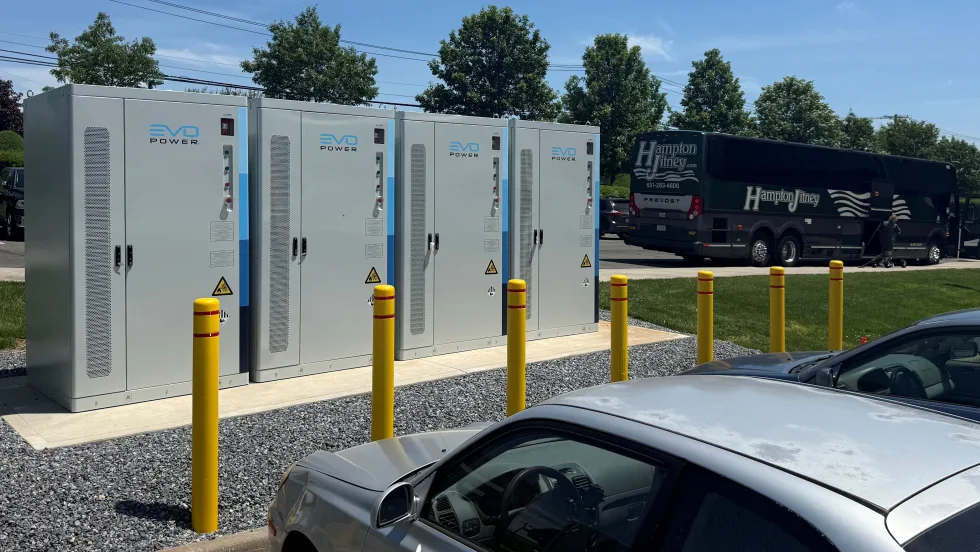
Hampton Jitney Deploys Microgrid to Support Fleet Electrification
The Long Island transportation provider is using solar generation and battery storage to manage charging costs, with plans to add 1 MW of DC fast-charging capacity as electric coaches enter service in 2027.
Read More →
Qnovo Pilots Battery Health Software for EV Residual Value Assessments
The Battery Genome application uses in-vehicle operating and cell-level data to identify battery aging and potential defects as automakers prepare for new battery passport requirements.
Read More →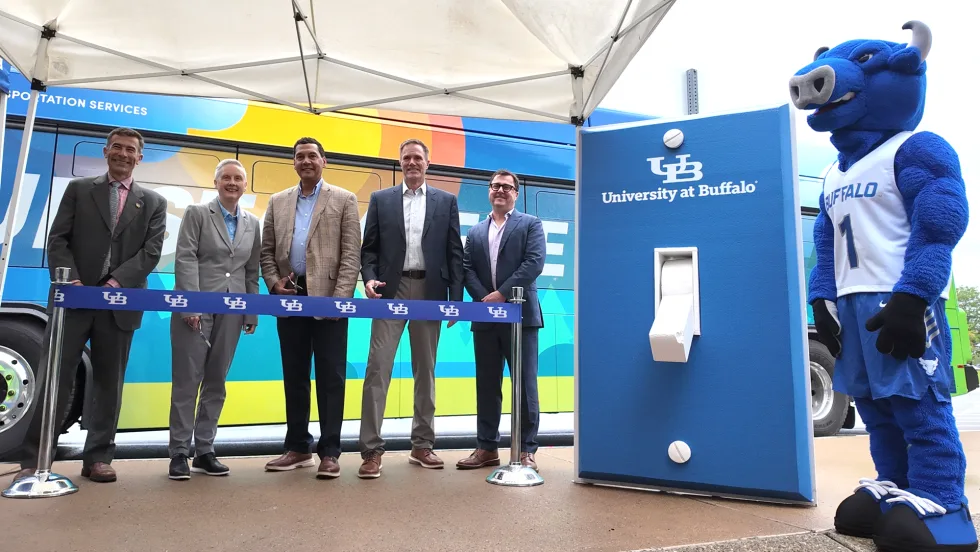
University at Buffalo Deploys 8 Electric Buses, 10 Chargers
The university, WeDriveU, and Zenobē welcomed the first electric buses to the school’s fleet under its zero-emissions roadmap.
Read More →
Samsung SDI Takes Full Control of GM Battery JV as Indiana Plant Pivots to Energy Storage
Samsung SDI is taking full control of its Indiana battery plant with GM, marking a major shift from the EV-focused joint venture Charged Fleet first covered in 2023.
Read More →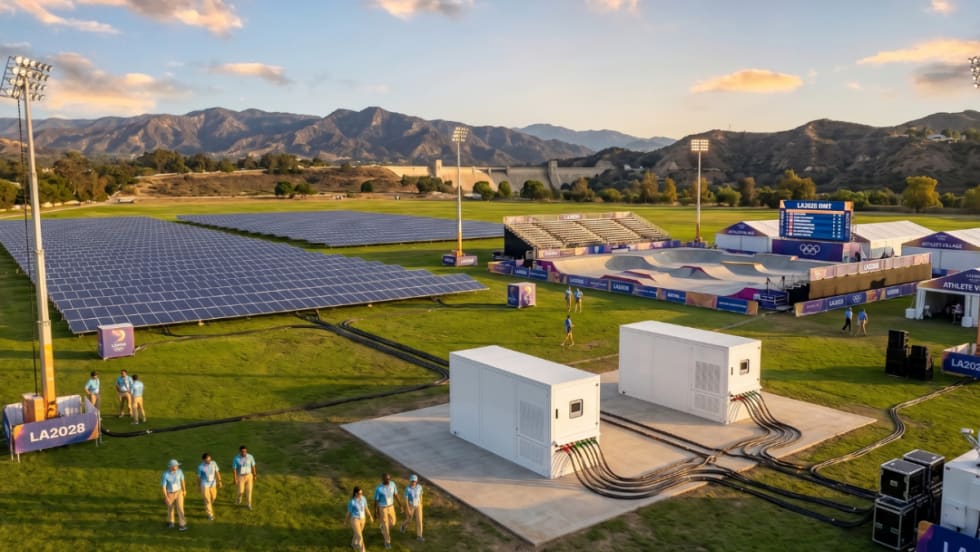
Xos White Paper Asserts LA Olympics Will Lack Enough EV Chargers
The commercial EV fleet company recommends some faster and more flexible remedies to relieve the anticipated shortfall.
Read More →
New EV and Hybrid Training Available For Auto Technicians
The curriculum covers those skill sets highly sought by electric fleet operations.
Read More →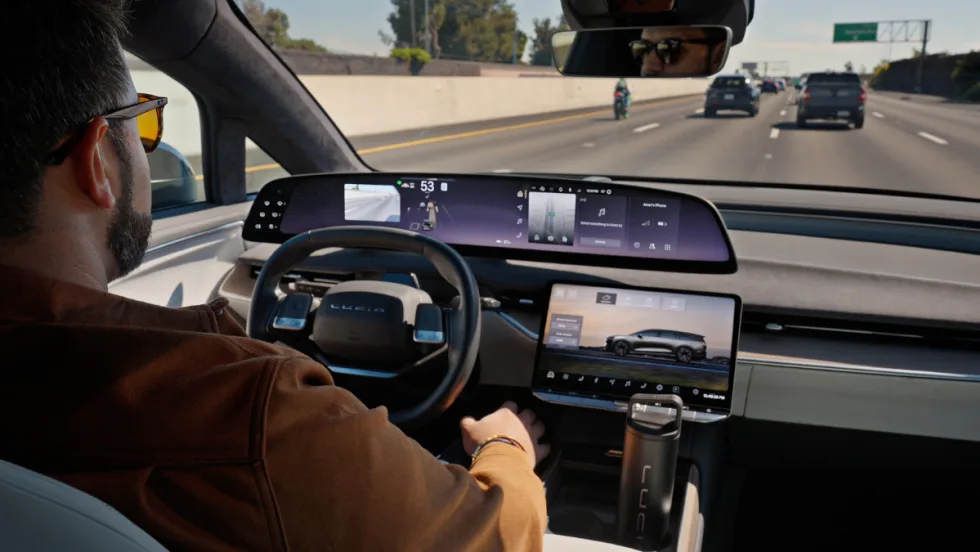
Lucid Adds Hands-Free Highway Driving, Software Updates To Gravity SUV
Hands-free drive assist makes highway driving more comfortable while keeping drivers attentive to the road.
Read More →
California Adopts Sweeping New Autonomous Vehicle Regulations
Updated DMV rules open the door for heavy-duty AV testing and deployment while strengthening safety standards, emergency response coordination, and manufacturer accountability.
Read More →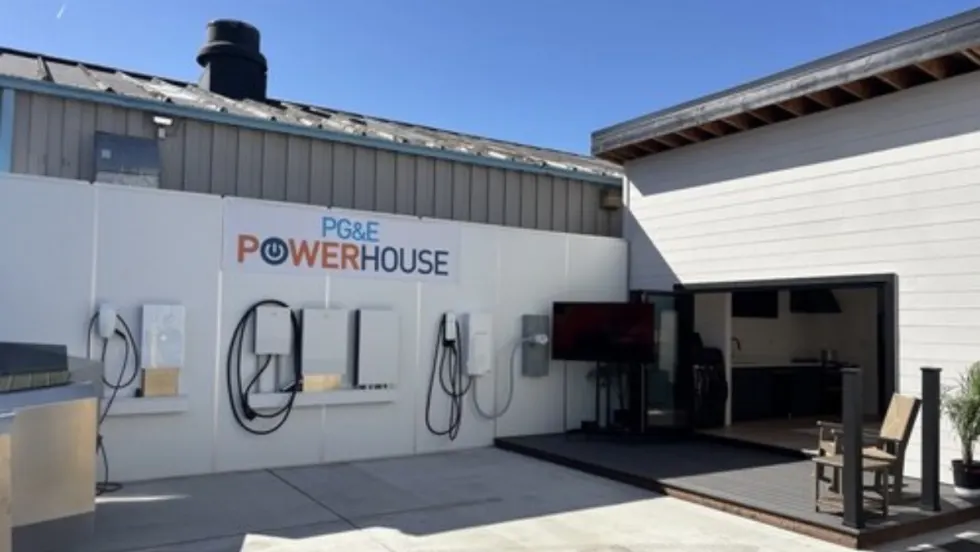
All Electric Test House Could Ease Path To EV Usage
An experimental model home shows how residential charging could enable electric fleet operations by allowing drivers to take EVs home.
Read More →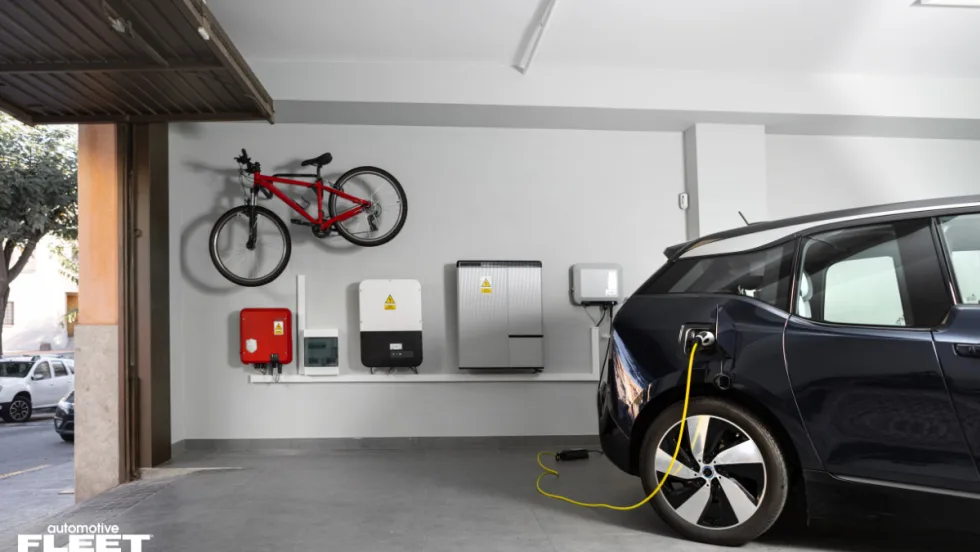
WEX Launches Solution to Close EV At-Home Charging Visibility Gap
At NAFA I&E 2026, WEX debuted an EV solution that adds a layer of verification to help fleets track, validate, and trust every at-home charging dollar.
Read More →