How Fleet Technician Roles Will Change in an Electrified Environment
As the fleet industry moves closer to electrification, knowing how to maintain electric vehicles will be key. Here’s what fleet managers need to know about servicing EVs and the training that's required for techs in this new future.
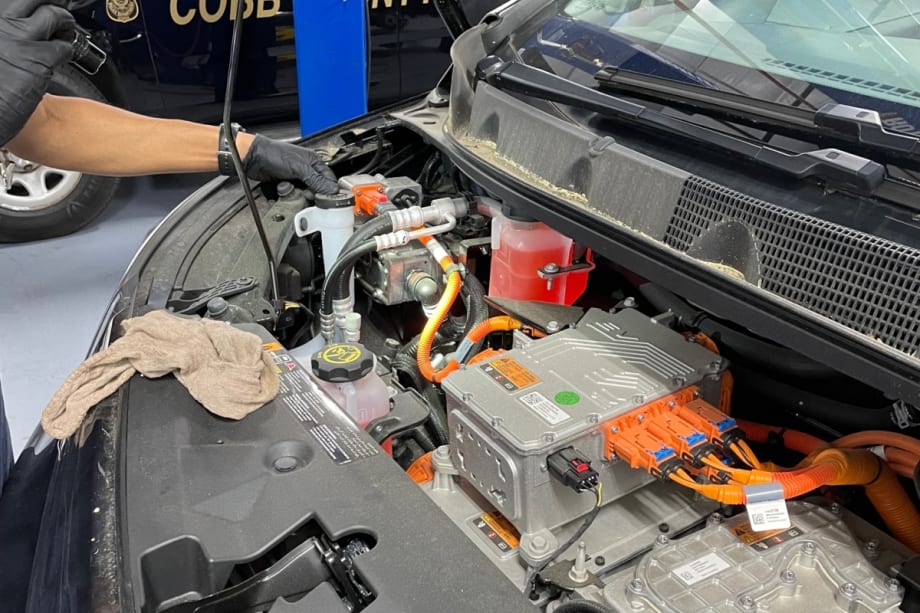
Since there are fewer moving parts in an electric vehicle, there are fewer maintenance needs. Here, Technician Aaron Kendrick is performing a PM inspection on a Chevrolet Bolt.
Photo: Cobb County
5 min to read
The role of the maintenance technician has always been key in keeping fleet vehicles running. But as the environment starts to shift from ICE engines and the industry looks more toward alternate-fuel and electric vehicles, what does that mean for the traditional tech?
The good news is that the position isn’t going anywhere — though it will need to evolve along with the industry. EVs have very different and unique maintenance needs, and training techs on how to service these vehicles will be imperative going forward.
Ad Loading...
Bobit Digital Editor Chris Brown sat down with Al Curtis, director of fleet management for Cobb County Georgia, about the importance of and investment in these new training and service needs, in a video episode of Fast Forward.
Watch the full video interview with Curtis here.
Curtis has already transitioned part of the county’s fleet to electric vehicles and spoke further about his experience and lessons learned in a session at the Fleet Forward Tour stop in Atlanta.
Maintenance Needs: EVs vs. ICE
Curtis noted that his technicians were apprehensive when the county first adopted electrification in its fleet (it started with 16 Nissan LEAFs eight years ago) and wondered if they would get electrocuted. But it’s important to note that techs will largely not have the need to touch any of the high-voltage components, so they can focus on standard maintenance.
“Because these vehicles don’t require a lot of maintenance, you go from 200 moving parts in an internal combustion engine vehicle to 20 in an electric vehicle,” Curtis explained. “So that’s really the nuts and bolts of it; they’re going to be doing less maintenance on these vehicles, which definitely is a total cost of ownership plus for any municipality.”
Ad Loading...
The electrical components identify themselves, he said. “They’re bright orange; that means don’t touch me. Your technicians are going to be not changing any oil. Basically, what they're going to be doing is rotating the tires, topping off the fluids, changing the cabin air filters, then they’re off and running.”
The other maintenance plus to EVs is that many of the batteries have a 100,000-mile warranty over 10 years, meaning that many of those high-voltage needs are covered and fleets can keep vehicles longer.
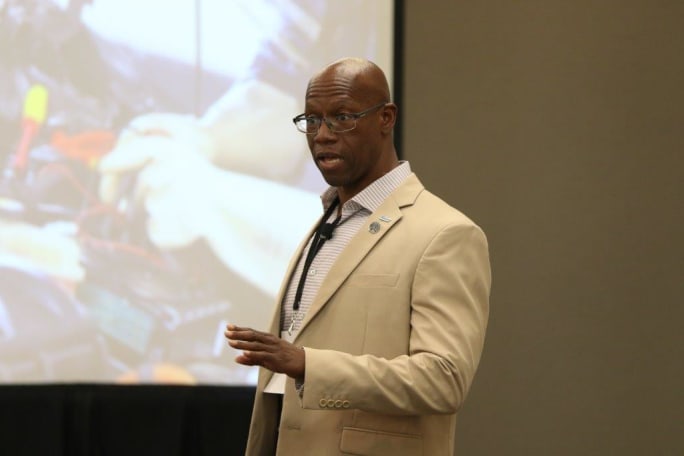
Al Curtis presented at Fleet Forward: The Tour in Atlanta on March 31 about Cobb County’s fleet electrification successes, offering convincing case studies for EVs in fleets and sharing current training opportunities for technicians.
Photo: Robb Cohen Photography & Video
“If the battery cells don’t degrade further down, or you’re not getting a good sense of charge or your range starts to degrade, you can continue to use the vehicle until the wheels fall off,” he added.
Training Needs & Reallocation of Techs
Curtis noted that Ford is investing over $90 million in training its own tech workforce on both the plant and dealer side to understand the needs of EVs. “They’re transforming the automotive technician to electronic technicians,” he said. “They’re investing in high-voltage training in these people because they know the movement is here. So we as fleets, we need to look at that from a training perspective and make sure that we align our technicians to get some of that training as well,” he said.
He also referenced the Department of Energy’s announcement that it is launching a pilot program to fund training for lithium battery jobs. “Hopefully with that, we’ll get more electrification training here in the States,” he commented, noting that many good training programs already exist in Europe and Canada. “That's something that we need to do, and hopefully, the Department of Energy pilot program will help initiate some of that.”
Ad Loading...
Current Training Programs
For techs that want to do a deep dive on the high-voltage components of EV and battery maintenance, there are options.
If you are a Ford fleet, you have access to the same training that a Ford technician at a dealership has, Curtis said. Called Ford Stars, it stands for Standardized Training and Resource System, and is free and available online. All of Cobb County’s fleet technicians are Stars. “There’s so many different modules, not just electrification, just everything technicians should learn and know,” he said.
There’s also a program in Chicago called Fast Lane Automotive Training. “That would give you from cradle to grave when it comes down to electrification,” he said. “What to do underneath the hood, what you can’t do underneath the hood, and how to replace the battery.”
Clean Tech is a California-based company that modifies EVs and offers training as well. “They put larger batteries in Nissan LEAFs and sell those vehicles for more extended range and more power,” Curtis explained.
Weber State University out of Ogden, Utah, also offers hands-on high-voltage vehicle training in its Automotive Services program.
But, with the current labor shortage, training techs may be easier said than done. Even though EVs require less maintenance, that may not mean fleets need fewer techs. “Based on the workforce right now, technicians are hard to come by,” Curtis said. “Most municipalities right now are short technicians.
If your fleet does have enough technicians, he recommends reallocating them to learning the heavy-duty side so you have technicians that can do maintenance on all types of vehicles.
Know Your Price
For fleets without their own in-house shops, Curtis recommends having staff educate themselves on the proper pricing of EV maintenance needs to avoid getting gouged from third-party resources.
“That training aspect for fleets that don't have their own facilities, it’s going to be crucial in order for them to stay afloat and maintain their profitability,” he said.
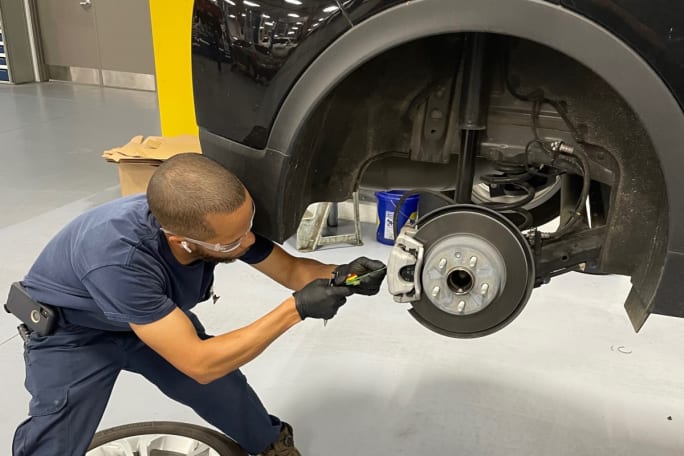
Al Curtis said technicians will largely not have the need to touch any of the high-voltage components, so they can focus on standard maintenance. Pictured is Aaron Kendrick, automotive technician 2.
Photo: Cobb County
Buy Smart: Fleet Management Systems and EVs
While some executives may issue directives to go ahead and buy EVs now and figure out what to do with them later, Curtis cautions against that approach. After all, we’ve all heard how important it is to plan proactively, taking into account your utilities, infrastructure, software, and financing.
Ad Loading...
“Telematics is a really good piece to determine what vehicles, from drive cycles and duty cycles, fit into the dynamic of your organization and your department,” he explained. “So to have open APIs to be able to integrate that data transfer from the telematics into asset management software, you can actually see the rate of charge and how often this vehicle is charged. It’s not just where it is on the map, it is knowing that is performing a specific duty and measuring the amount of charge.”
A good telematics platform can also help track maintenance needs, including dashboard notifications of check engine lights and component monitoring. But Curtis reminded that someone needs to manage that technology. “It can’t just be something that’s there. It’s not effective it’s if it’s not monitored and there’s not action points that you can move on.” In Cobb Country, a fleet administrator is tasked with monitoring the duty cycle and other data.
See Cobb County's EVs up close in this video.
Curtis also noted the importance of having a platform with an open API so data can be integrated into other managed software without manual entry. For instance, this can increase uptime and efficiency when check engine lights come on and a service request is automatically created.
Curtis pointed to telematics as another way to sell the idea of EVs’ value to skeptics. Looking at Cobb County’s data proved that actual miles driven was under the real-world range of the early LEAF battery. And 150,000 miles later, not a single brake has needed repair or replacement, and each battery is still the original.
Ad Loading...
Educating Management
To ensure success with electrification initiatives, an entire organization must be on board with plans. Curtis recommends meeting with all stakeholders on a regular basis to communicate current vehicle statuses and review replacement vehicle options.
To close, Curtis noted that electrification and charging technology is moving at lightspeed now. And the key to staying on top of this new world is by investing in education and training for all involved.
The former Prologis Mobility and Shell executive will help expand EV Realty’s truck charging business and move its power-first infrastructure model into autonomous vehicle depots and other fleet sectors.
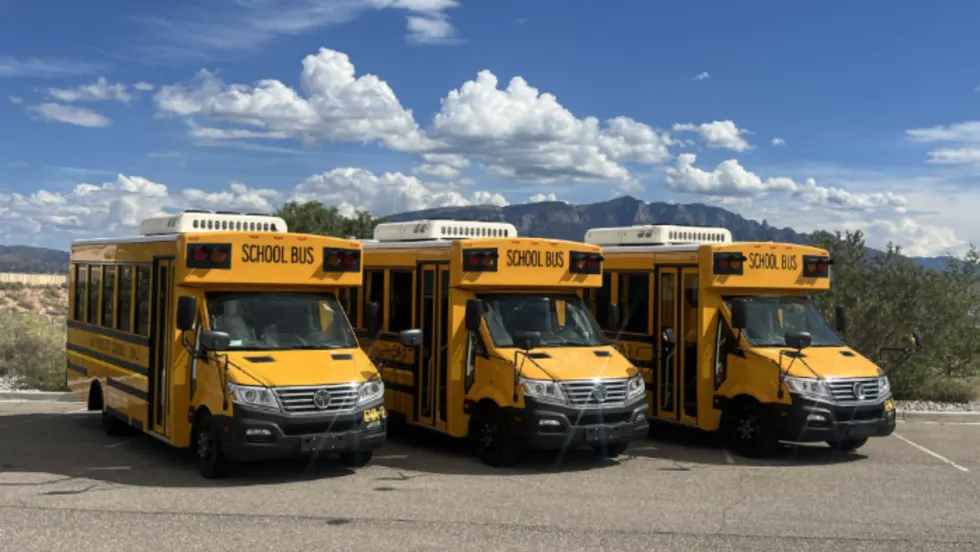
After logging more than 17,000 electric miles in the first year, New Mexico’s statewide pilot is moving into its second phase with larger vehicles, continued charging evaluations, and more.
Adam Cain, president and CEO of Sustainability Partners, explains how EV-as-a-service can help fleets scale deployments by addressing duty-cycle requirements and charging challenges.
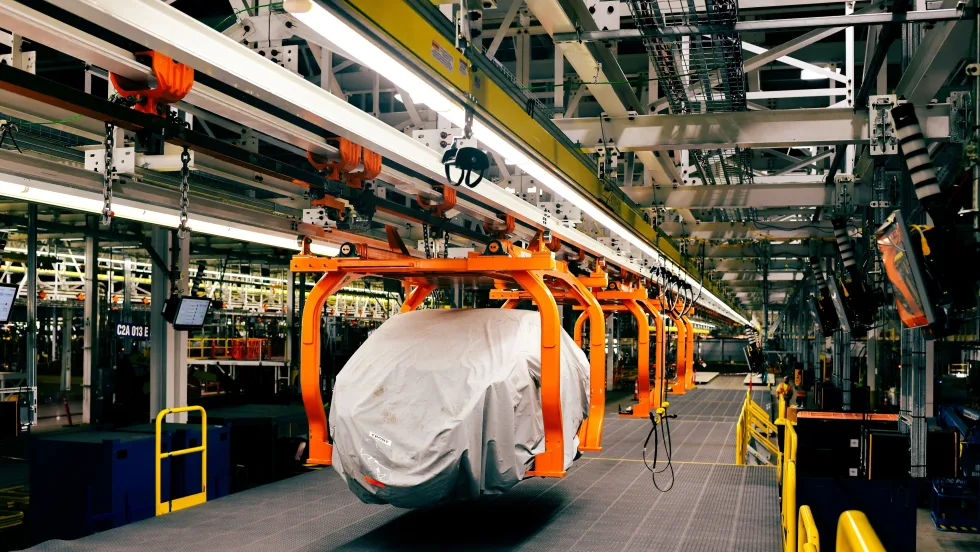
Ford's $2 billion Louisville Assembly Plant overhaul introduces a three-part assembly process for the Fathom midsize electric truck, with production scheduled to begin in 2027.
From millions in operating savings to hundreds of millions of EV miles, Merchants Fleet’s latest report reveals what’s working and what’s changing in fleet electrification.
One of the nation's largest school bus electrification projects to date demonstrates how grants, charging infrastructure, and public-private partnerships can help fleets transition to EVs at scale.
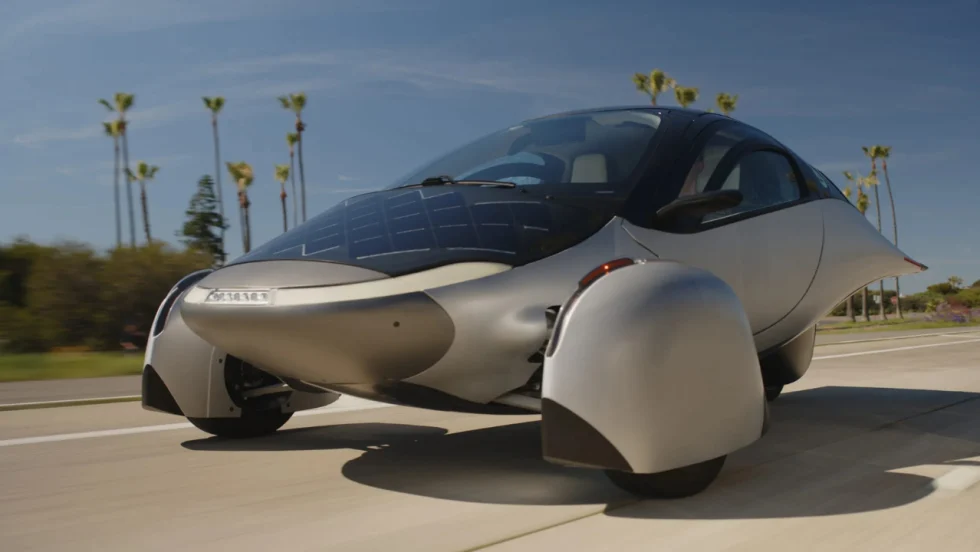
Aptera Motors Corp. has issued purchase orders for the major structural components of its first 40 vehicles, and body and chassis components are expected to begin arriving in October.