



Deeper Dive:Top Questions for Fleet Managers Pursuing Electrification
Home Charging Proves Ideal Approach for Electric Fleet Adoption
Companies that invest in home-charging programs for their EV-driving employees see more informed fleet usage and tracking.
February 19, 2024

Companies choosing at-home charging need a consistent way to reimburse employees for expenses. Consider that most employees will want to separate their business and personal travel charging expenses.
Photo: Bullet EV Charging Solutions
7 min to read
Three options answer the overriding question confronting fleet owners and managers about electrification: Depot, public, and/or at-home charging?
While fleets with EVs often choose a combo approach, first wave adopters are finding that at home-charging leads to the most stability and data accuracy for an electric fleet.
Three experts shared their findings and insights at the most recent Fleet Forward Conference in November 2023 in Santa Clara, California:
Aleece Beaulieu, US Pharma fleet manager, Genentech
Ken Sapp, senior vice president of business development, Qmerit
Dave Lewis, founder and CEO, MoveEv
In sum, the panelists’ insights point to a core reality at this early stage of fleet electrification: The only way to decentralize the power grid and really scale EV adoption is to have a charging-at-home-first approach. It must be hyper-data focused so a fleet operation can accurately track electricity usage and costs on a simplified and coherent dashboard.
“We are learning all of the lessons, every step of the way,” Beaulieu said.
The panelists collectively asserted and discussed the following key points in three areas: Fleet home charging programs, charger installation, and employee reimbursement for EV power draws.
Building a Fleet At-Home Charging Program
Charging at home first is the least expensive way for a fleet to keep its vehicles regularly charged. They save time and motivate employees to be involved with a company’s sustainability goals.
If you run an at-home fleet, you need an at-home charger program. Drivers cannot rely on public infrastructure because they need a consistent, reliable way to charge their vehicles.
Companies with EV home-charge programs should thoroughly assess the readiness of individual employees to use and charge an EV. Possible tools include an employee’s survey documenting their types of homes, locations, and daily mileage averages; an EV readiness assessment quiz; a sustainability pledge to regularly plug-in the vehicle; and a full understanding of how range may vary against the full-range estimates from the manufacturers.
Users do not drive EVs under perfect conditions. As with any vehicle, some drivers have a lead foot, some like max A/C or heat, while no one always drives a vehicle under ideal conditions and good habits. That can cause EV range to vary, along with weather changes day to day. All these variables must factor into range calculations.
Operations should plan for Level 2 chargers to provide reliable consistent charging overnight. Data from telematics or connected fleet solutions can help fleets find the best charging infrastructure.
Company fleet managers must also identify uncertainties and pain points: When are the right times to order EVs and install chargers to avoid lag periods for either one? What is the quality of varying Wi-Fi providers at employee homes and how well do they sync? How do you detect and track gaps in data flows that may occur? What are the best cost reimbursement methods and/or subsidies for employees with EVs, such as for electric usage, charger installation, and related costs?
For EV driving employees in multi-family housing, there is no one-size-fits-all charging solution, given the differences among condominium, townhome, and apartment communities. In some instances, public charging may be available close to homes. The costs and access for each situation should be considered individually.
Charging once in public during the day is tolerable; more than once is not. Be aware of seasonal effects on range and the frequency of charging needs. Some daily duty cycles and mileage requirements may not be feasible in certain seasons. How much time are employees sitting during a charge? Basing fleet usage on a daily round-trip based on one home charge is ideal, with occasional public charging to fill any gaps.

A panel of EV home charging experts educated fleet managers about home-based charging at the Fleet Forward Conference in Santa Clara, California, on Nov. 8, 2023. (L to R): Aleece Beaulieu, US Pharma fleet manager, Genentech; Ken Sapp, senior vice president of business development, Qmerit; and Dave Lewis, founder and CEO, MoveEv.
Photo: Lauren Brooks / Monclay Media
A Must-Do List for Installing EV Chargers at Homes
One of the most important factors for a fleet operation is to ensure the process is convenient and smooth for the driver-employees since they have a day job to do.
Can the home handle the big new EV powering load, which can run for six to eight hours per day? This requires a lot of expertise. A certified licensed electrician must come out to the house for an assessment and price quote and to ensure it can be permitted.
Costs vary among homes even in the same neighborhood because houses may have different lots and configurations for electric supply and charger location.
Fleet owners should devise a centralized system to process and analyze all the price and work quotes that are placed in a consistent format for review and approval.
You need a firm price quote for a driver's home to install a Level 2 charging station that requires a 240-volt circuit on a dedicated circuit, which involves getting a local permit.
In many cases, electrical fuse boxes and panels will need to be upgraded, with varying costs. The EV charging power must be brought into the garage.
Drivers will occasionally pay part of the costs if they want specific changes to a standard installation that goes above the allowance for the project.
Even if employees want an EV and home charger, they may not be motivated to figure it out on their own. Companies should provide education and support through internal administrators who can respond to employee needs.
Calculating Usage Metrics and Reimbursement on Connected EVs
Fleet managers must decide whether to follow a charging plan that combines depot public, or at home chargers. The best option is home charging, as electric fleet vehicles using all three will require a method to accurately document and store the expenses at other charging stations for reimbursement. Consider that most employees will want to separate their business and personal travel charging expenses.
Companies choosing at-home charging need a consistent way to reimburse employees for expenses. The entire process of employee charging reimbursement requires “hyper-transparency” in methods, policy, and data to avoid a poor experience where employees feel they are paying out of pocket for power usage.
There are three options for covering employee charging costs: Do and pay for everything; don’t do anything and reimburse for everything; or you do nothing at all and rely on employees to use available outlets. Some companies want to avoid construction on employee homes and the risks that accompany that.
Fleet operations should make sure the reimbursement is fair and avoid just flat fees or allowances. Such payments could be subject to taxes. Kilowatt usage will vary, and you don’t want unhappy employees paying out of pocket for a service the company provides.
One option for a charging reimbursement program is to set up a dedicated meter, which requires figuring out how to get an accurate method or unit of multiple to calculate the kilowatt capture of how much energy went into the car, which can be done from the charger.
Another option is to do vehicle-based reporting and integrate the EV with an OEM-based or installed telematics solution.
Employers and drivers should be aware that Wi-Fi can be unreliable at times and raises the question of who pays for it. Nearby residents with EVs may also figure out a way to use the Wi-Fi to access charging. But reliable Wi-Fi can enable smart charging and tracking in real time for more regular reimbursement.
A thoughtful plan should consider geographic differences in utility electricity rates. The goal is to optimize usage to minimize costs for the company and employees. An energy audit can accurately track variances in usage, rates, and overall costs, and help the employee better understand the energy flow for an electric vehicle.
For employees who power their homes with full or part solar energy, a fleet operation should get specific information each month from the employee’s utility bill and derive a company policy that fairly compensates electric usage for the company vehicles.
Most employees will prefer a reimbursement formula that treats them as if they don’t have solar panels, since it has nothing to do with the actual kilowatt usage costs. They should be paid fairly like everyone else, while reaping the benefit of investing in solar panels and equipment.
A software-based tracking, accounting, and reimbursement approach is a must for medium to larger fleet. Burdening an HR department with EV reimbursements tasks for EVs will take too much time, beyond just a few vehicles.
Not all vehicles are created or work the same when interacting with telematics. A diverse fleet will see variations in performance and among model years.
While there is no perfect universal solution, the best approach to home charging reimbursement should be the simplest one. Over time, most charging station providers will be able to integrate their chargers with different telematics systems.
Topics:EV Home Chargingcharging infrastructureFleet electrificationElectric FleetEV ChargingFleet Forward ConferenceElectric VehiclesCharging
Originally posted on Automotive Fleet
Subscribe to Our Newsletter
More Electric Vehicles

EV Charging Use Is Outpacing Infrastructure Growth
ChargePoint’s 2026 Charging Forward Report points to rising charger use, higher-powered charging, commercial vehicle electrification, and energy-management technology. Here’s what fleets should know.
Read More →
EV Realty Names Henrik Holland President as Charging Platform Expands
The former Prologis Mobility and Shell executive will help expand EV Realty’s truck charging business and move its power-first infrastructure model into autonomous vehicle depots and other fleet sectors.
Read More →
GreenPower Expands New Mexico EV Pilot With Larger Buses, V2G Testing
After logging more than 17,000 electric miles in the first year, New Mexico’s statewide pilot is moving into its second phase with larger vehicles, continued charging evaluations, and more.
Read More →
Can EV-as-a-Service Help Fleets Scale Electrification?
Sustainability Partners CEO Adam Cain explains how matching EVs, charging infrastructure, and duty cycles can help fleets scale electrification.
Read More →
How EV-as-a-Service Is Moving Fleets Beyond Pilots
Adam Cain, president and CEO of Sustainability Partners, explains how EV-as-a-service can help fleets scale deployments by addressing duty-cycle requirements and charging challenges.
Read More →
PowerFlex, The Mobility House Join Forces to Advance Fleet Electrification
Two EV charging providers are joining forces to deliver a broader portfolio of energy management and fleet electrification solutions.
Read More →
Ford Retools Louisville Plant for Fathom Electric Truck Production
Ford's $2 billion Louisville Assembly Plant overhaul introduces a three-part assembly process for the Fathom midsize electric truck, with production scheduled to begin in 2027.
Read More →
Merchants Fleet Reports 290M EV Miles as Fleets Navigate Changing Electrification Market
From millions in operating savings to hundreds of millions of EV miles, Merchants Fleet’s latest report reveals what’s working and what’s changing in fleet electrification.
Read More →
California District Commits to Electrify 25% of School Bus Fleet by 2028
One of the nation's largest school bus electrification projects to date demonstrates how grants, charging infrastructure, and public-private partnerships can help fleets transition to EVs at scale.
Read More →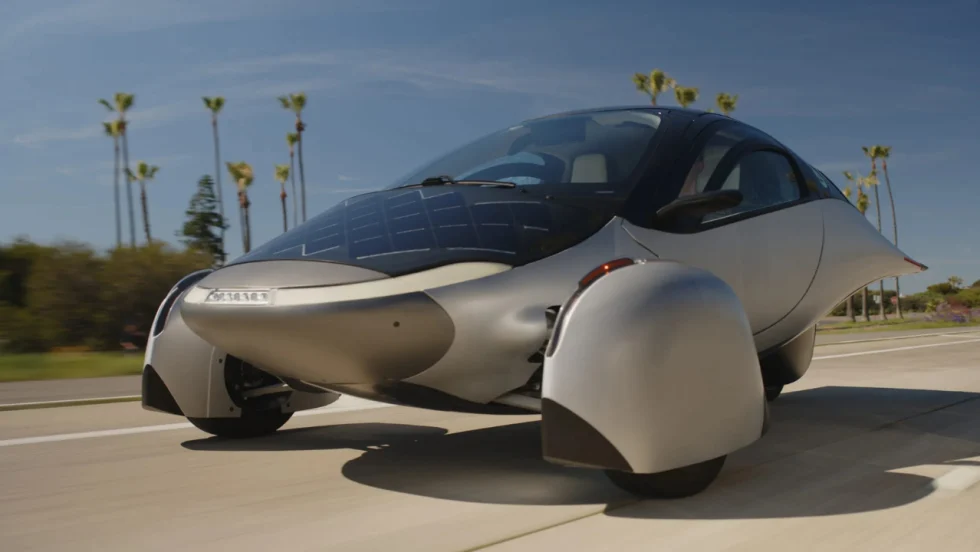
Aptera Orders Bodies and Chassis for Its First 40 Production Vehicles
Aptera Motors Corp. has issued purchase orders for the major structural components of its first 40 vehicles, and body and chassis components are expected to begin arriving in October.
Read More →