


Further Reading: Bridging the Gap from Traditional to Alt-Fuels
Flavor of the Decade: What if BEVs Aren't the Answer?
Suppose battery-electric vehicles (BEVs) are simply the flavor of the decade? What if electricity, as a motive power source, is only a “bridge” fuel placeholder until there is a better, more environmentally friendly, longer-range alternative?
by Bob Stanton
August 16, 2022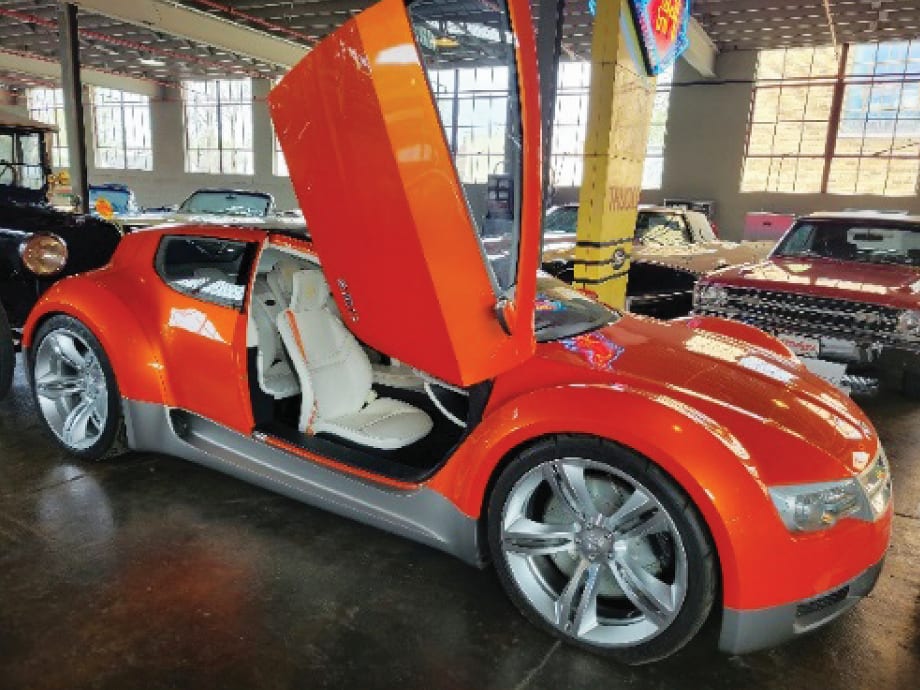
The 2008 Dodge Zeo concept car did not pan out.
Photo: Stellantis
6 min to read
What if BEVs are not the expected replacement for fossil fuels? What if they do not prove out as the anticipated solution to climate change? What if the automobile market becomes too populated with BEVs that the “demand” for an upwardly priced ($40K - $90K+) sedan or pickup dries up due to the lack of an affordable BEV for the rest of us? What if the general public fails to accept an expensive BEV that, even years from now, will only travel 300 miles, or less, without a recharge?
Suppose BEVs are simply the flavor of the decade? What if electricity, as a motive power source, is only a “bridge” fuel placeholder until a better, more environmentally friendly, longer-range alternative presents itself? Suppose, instead of relying on BEVs, a now proven technology but fraught with environmental challenges and limited range, a less challenging, alternatively fueled, longer-range internal combustion engine (ICE) becomes viable?

Bob Stanton is the founder and president of Stanton Consultants. He is widely recognized as a subject-matter expert in fleet operations and is a three-time recipient of the Larry Goill Award for Fleet Innovation presented by NAFA Fleet Management Association.
Photo: Stanton
Could this be our future? Is it less likely that BEVs, a currently trendy strategy employed by every OEM on the planet, will be in everyone’s future and more likely just one of many fueling alternatives sharing research space with current ICEs but powered by a multitude of fuels as the “bloom” comes off the rose when BEVs fail to satisfy, or be embraced by, the masses?
What a provocative concept!
Among the prevalent early facts related to battery electric vehicles are these:
Battery-electric power has limited range, regardless of the application. While we have been hoping that some new battery technology will rescue us from this reality, such is just not in the offing. Even current advertised range will deteriorate as batteries age.
Battery raw materials are now and will continue to become harder to source in the future and will have geopolitical complications far beyond those experienced in our fossil fuels history of the 1980s & 1990s. Raw materials may be the 21st century’s “blood diamonds.”
Vehicle/truck battery packs are heavy, limiting both range and operational capabilities, especially in heavy trucks where payload translates into real dollars.
Limited recharging infrastructure, while growing, will never be as readily available or convenient as a 10-minute refuel at the corner gas station.
For BEV owners, current recharging infrastructure lacks clarity, consistency, capability, and features confusing cost-of-service, charge voltages, and charge time allowances adding a completely new complexity to already existing range anxiety.
As to the future of BEVs in heavy trucks, according to the American Transportation Research Institute study and the research group’s Senior VP Daniel Murray, “There is just no business model to operate a Class 8 electric over the road today,” he told FleetOwner magazine in May.
So, if not battery electric, than what? The history of the demise of the battery-electric vehicle in the early 1900s may offer the strongest clues. BEV buggies replaced horse-drawn carriages because horses were…well…messy. Even then, BEVs did not last long as steam, diesel, kerosene, and finally gasoline offered greater range, power, flexibility, and a considerably higher power-to-weight ratio. Mr. Ford founded his company in 1903 producing Model T’s powered by gasoline. While predominant in 1900, by 1920, the viability of BEVs was over. Is history likely to repeat itself?
In spite of the hype, legislative impetus, and even the seemingly explosive growth of euphoric EV consumers, many alternatives are under furious development using either current or developing technologies; many of which include today’s venerable ICEs as their preferred platform.
And speaking of legislative impetus, while seemingly lost or drowned out by BEV momentum, many states are scrambling to become hydrogen hubs either hoping to score some of the $9.5 billion in newly available infrastructure funding and/or to spur local development and adoption of hydrogen as a fuel. For instance, Oklahoma, a state at the epicenter of the oil industry, employment, and activity, recently passed nine new laws creating a legal infrastructure for hydrogen fuel development.
Hydrogen fuel cell technology has much to recommend it (not the least of which is fast refueling) though still has its own challenges to overcome. There do, however, seem to be strong undercurrents of hydrogen support as a fuel source and is broadly recognized throughout our industry.
Regardless of the rush to electrify, the ICE will prevail for decades. Among the ICE technologies being studied is the implementation of a 98-Octane fuel standard. Combined with a 15:1 or higher compression ratio, 98 octane affords more energy and can result in downsizing engines for greater CO2 benefits. Other technologies such as cylinder deactivation, innovative supercharger or turbocharger designs, faster ignition systems, variable compression ratios, and opposed pistons are all under current development and testing. It would seem, given the level of activity, that the ICE will undergo continued efficiency improvements in the coming years underscoring its continued viability.
In addition to the advances in ICE technology, several fuel alternatives are also undergoing research. These include waste to energy, renewables, biofuels, and several companies are even hoping to bring fuels created from CO2 capture in the near-term future. Clearly, the interest and commitment to powering vehicles beyond the battery are in play worldwide. These technologies also use the venerable ICE as their preferred platform.
Like the demise of the battery-electric vehicle in the 1920s, many automakers (some truly legendary) produced vehicular works of art in the 1930s and 1940s which are preserved only in museums. Their emphasis on style, while truly beautiful, could not be sustained into profitability. Could the same fate be awaiting BEVs?
Recently, one of the first BEV vehicle start-ups, Electric Last Mile Solutions (ELMS), folded. Their short history begs the question, who’s next? Will the new start-ups have sufficient backing to produce at a scale high enough to remain in business and make a profit?
Can the market support even the plethora of new BEV models recently introduced and/or coming soon from traditional OEMs? Most agree that unless BEV prices decrease significantly, the market cannot be sustained as many consumers are already priced out. In June, Arnaud Deboeuf, Stellantis’ Chief Manufacturing Officer, predicted that the BEV market will collapse if prices do not go down.
Industry observers have noted conversely that BEV prices for Tesla, Rivian, and Ford are rising at a dizzying pace. That, combined with the current supply chain challenges and record inflation, does not bode well for vehicle price moderation regardless of the power source.
Stellantis, the parent company of Dodge, unveiled a BEV called the Dodge ZEO at the 2008 Detroit Auto Show. Interestingly, it featured 276 miles of range. Clearly, BEV ranges have not come very far (pardon the pun) in the last 15 years.
Fleets of all stripes would be wise to approach this segment with a high degree of objective due diligence. In addition to researching infrastructure requirements, long-term total ownership costs, and capital cost commitments, the growing population of BEVs offers a research opportunity and the ability to speak directly with both fleets and individuals who actually own and operate them. Many of the current benefits are clear; the future, however, is still very murky.
Fleets especially should approach a transition to BEVs with considerable moderation. Taxpayers and normal consumers — even those passionate about protecting the environment — are unlikely to support a rush to embrace the next “flavor of the decade” if it results in poor stewardship of the contents of their wallets.
Only time will tell.
Originally posted on Automotive Fleet
Subscribe to Our Newsletter
More Electric Vehicles
EV Charging Use Is Outpacing Infrastructure Growth
ChargePoint’s 2026 Charging Forward Report points to rising charger use, higher-powered charging, commercial vehicle electrification, and energy-management technology. Here’s what fleets should know.
Read More →
EV Realty Names Henrik Holland President as Charging Platform Expands
The former Prologis Mobility and Shell executive will help expand EV Realty’s truck charging business and move its power-first infrastructure model into autonomous vehicle depots and other fleet sectors.
Read More →
GreenPower Expands New Mexico EV Pilot With Larger Buses, V2G Testing
After logging more than 17,000 electric miles in the first year, New Mexico’s statewide pilot is moving into its second phase with larger vehicles, continued charging evaluations, and more.
Read More →
Can EV-as-a-Service Help Fleets Scale Electrification?
Sustainability Partners CEO Adam Cain explains how matching EVs, charging infrastructure, and duty cycles can help fleets scale electrification.
Read More →
How EV-as-a-Service Is Moving Fleets Beyond Pilots
Adam Cain, president and CEO of Sustainability Partners, explains how EV-as-a-service can help fleets scale deployments by addressing duty-cycle requirements and charging challenges.
Read More →
PowerFlex, The Mobility House Join Forces to Advance Fleet Electrification
Two EV charging providers are joining forces to deliver a broader portfolio of energy management and fleet electrification solutions.
Read More →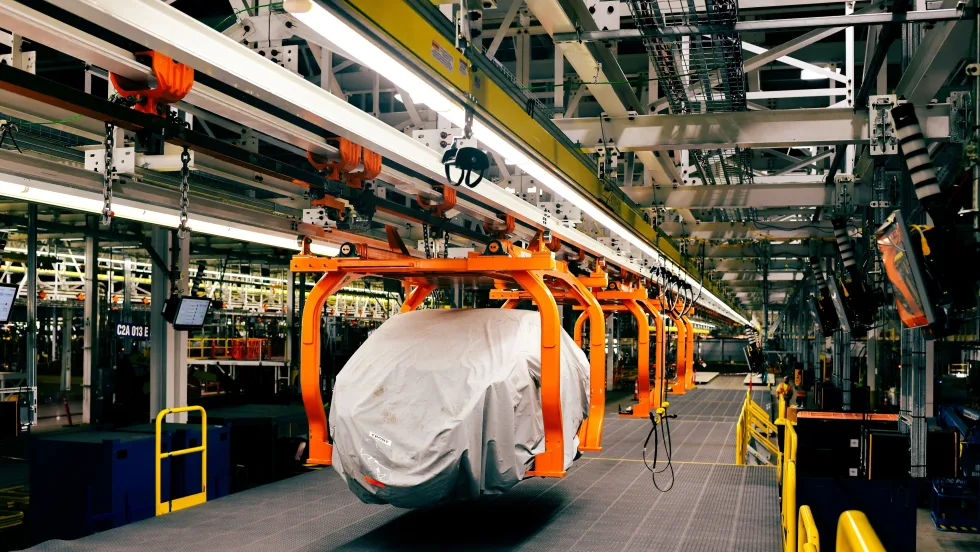
Ford Retools Louisville Plant for Fathom Electric Truck Production
Ford's $2 billion Louisville Assembly Plant overhaul introduces a three-part assembly process for the Fathom midsize electric truck, with production scheduled to begin in 2027.
Read More →
Merchants Fleet Reports 290M EV Miles as Fleets Navigate Changing Electrification Market
From millions in operating savings to hundreds of millions of EV miles, Merchants Fleet’s latest report reveals what’s working and what’s changing in fleet electrification.
Read More →
California District Commits to Electrify 25% of School Bus Fleet by 2028
One of the nation's largest school bus electrification projects to date demonstrates how grants, charging infrastructure, and public-private partnerships can help fleets transition to EVs at scale.
Read More →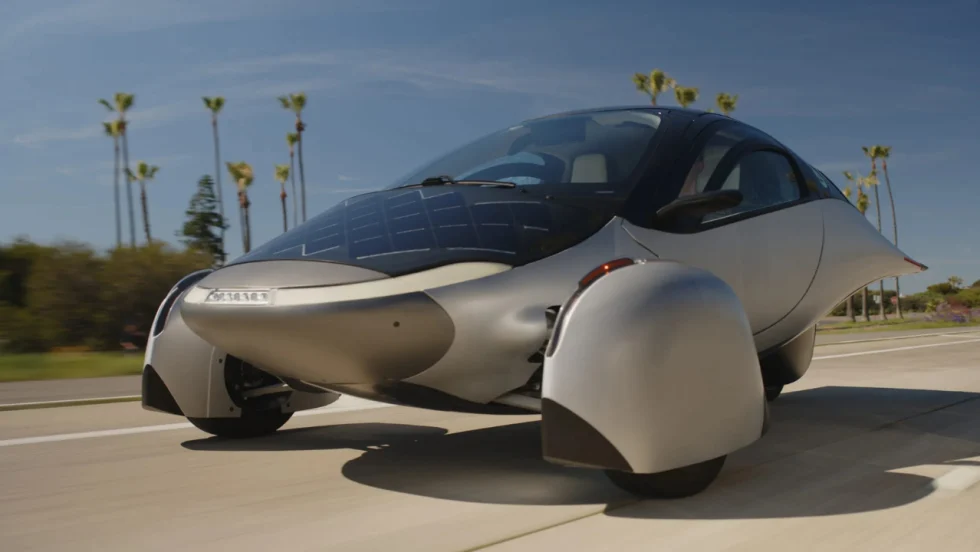
Aptera Orders Bodies and Chassis for Its First 40 Production Vehicles
Aptera Motors Corp. has issued purchase orders for the major structural components of its first 40 vehicles, and body and chassis components are expected to begin arriving in October.
Read More →