


Fast Forwarding The Limo Fleet
FEB LCT: Alternative energies and driverless features will be propelling the chauffeured vehicles of the future, likely in our lifetimes.


In the 1980s I had the opportunity to peek in the cockpit of a new Boeing 757 and was surprised when the captain told me the aircraft flies itself from right after takeoff to landing. “I’m basically along for the ride in case there is an emergency,” he said.
A bit unnerved back then that I was in the hands of computer chips at 35,000 feet, I would be antsier today if the plane did not rely on the latest technology to transport me safely from point A to point B. Of course, the private ground transportation industry has witnessed its surge of innovative technologies that have enhanced vehicle performance, navigation, luxury, entertainment and safety coupled with software-driven office systems and communication technologies of all sorts.
In addition, vehicle and motorcoach OEMs are rolling out more fuel-efficient vehicles that include hybrids, battery-propelled electric cars, solar vehicles and self-driving cars that are in the testing stages. However, a self-driving vehicle will first have to adroitly navigate the New Jersey Turnpike rush-hour circus before most clients will take a back seat in a chauffeur-less limousine.
So what lies ahead? How will technology and other innovations on the horizon shape the future of the industry? LCT Magazine posed the question to a number of industry vehicle manufacturers, coachbuilders, and technology suppliers to get their take on what we can expect to see in the near future — and beyond.
“It’s easy to envision a time when a driverless car will pick someone up at the click of an app,” says David Hirsch, president of Livery Coach Solutions. “That said, I believe there will always be a market for true luxury chauffeured transportation. A driverless car isn’t going to help with bags, or know a good restaurant, or be able to perform any of the myriad of services that a professional chauffeur performs today.
“To the extent that an automated driverless car can work, it will probably expand the market than take away existing business,” Hirsch says. “For example, if the price is right, parents would no longer have to stay up late to pick up their teenage kids from parties. Just as travel agents have survived Internet bookings (but now provide added value, such as planning dream vacations) the chauffeured transportation industry will survive and thrive — it just might look a bit different.”
Eddie McCoy, CEO of FASTTRACK Cloud, says the industry is getting a “much needed level of sophistication with respect to information technology.” McCoy sees more technologies being applied to operations that include tablet mobility, mobile and web app capability, and remote computing on any type of device that creates additional economies for small, medium and large operations.
In vehicles, McCoy expects to see more Internet integration that delivers entertainment streaming to passengers; and operations data and communications among dispatchers, chauffeurs and clients at all stages of vehicle runs.
In fact, Microsoft, Apple and Google are forming alliances with automotive OEMs to have their particular Internet software embedded in vehicles. Expect to see all vehicles incorporate Internet integration as a common driver/passenger app in the near future.
“These added technologies will bring opportunities for operations improvements especially in the area of paperless order taking, dispatch, logistical electronic communication, and collation and billing … This will also bring opportunities for better marketing and selling advantages to reach customers,” McCoy adds.
Vehicles of the Future
A January report from IHS Automotive, a global information company, forecasts total worldwide sales of self-driving cars will grow from 230,000 in 2025 to 11.8 million in 2035. Most will be used for commercial purposes. The report stated that several automakers have self-driving vehicles in the works and project delivery by 2020. Until that time decades from now when such vehicles may be applicable for mass transportation and the private transportation industry, there are more fuel-efficient alternative energy hybrid sedans — and more coming every year — as well as clean diesel vehicles. And Ford announced in January its first sun-powered concept vehicle, the C-Max.
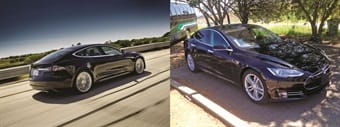
The all-electric Tesla S is gaining ground in the chauffeured transportation industry and with the wider public as a viable luxury sedan. With continued advancements coupled with driverless technology, such a vehicle could be a prototype for the future.
In the near future, many industry observers see the future as the Tesla S, the first all-electric car, which is gaining traction among operators. Frankfurt, Germany-based United Limousines recently added five Teslas to its fleet.
Company President and CEO Michael Oldenburg says the vehicles will first be used for events in Frankfurt then spread out across the country at the company’s other locations. With a gallon of gas in Germany averaging about $8 (U.S. equivalent), one can see the advantage of adding a Tesla that, according to company data, annually costs about $934 in electric recharging compared to $5,182 in gas, based on a national average of $3.80 cost per gallon.
In the U.S., Mosaic Express, Angel Worldwide Transportation and other operators are testing the Tesla as a potential addition to their fleets.
Of course, Tesla’s range of 300 miles (depending on driving conditions) and the availability of a national supercharging station network are deterrents, but the Tesla is a breakthrough with its performance, style, luxury and zero-emissions suitable to the chauffeured transportation industry. Expect to see all automotive OEMs ratchet-up R&D to produce new electric vehicles in the future.
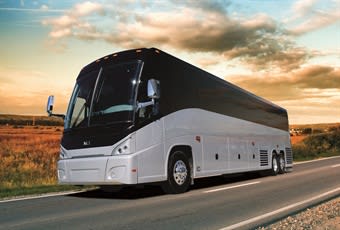
Motorcoaches of the future will be safer and more technologically rich, as manufacturers include the latest safety improvements, such as three-point seatbelts, and more integrated electronics, such as plug-ins for passenger personal electronics and Internet Wi-Fi access.
Motorcoaches
Envisioning the motorcoach of the future, expect to see more integration of electronics — especially safety technology — as well as plug-ins for passenger personal electronics and Internet Wi-Fi access, says Dan Ronan, senior director of communications for the American Bus Association. Regarding safety, Ronan said all motorcoaches coming off the assembly line now are equipped with three-point seat belts and improved stability systems that make motorcoaches safer and provide a more comfortable ride.
Regarding alternative energy, Ronan said diesel fuel will continue to be the predominant fuel for some time, but the industry is intrigued with compress natural gas (CNG) as an alternative. “The problem with CNG right now is storage for long trips. In order to make CNG viable, the holding tanks would have to be bigger and would take away space in the baggage compartment … but there are smart people out there working on the solution,” he adds.
Eco-Stretch
Among the boldest steps toward the future is the potential for more stretch hybrid and electric limousines. For Royale Limousine Manufacturers in Haverhill, Mass., produced a limited number of stretched Lincoln MKZ hybrid sedans that turned in 41/city 36/hwy mpg. The Royale Hybrid L MKZ was extended six inches and rear legroom was within 2.5 inches of the Lincoln Town Car L Series, notes Steve Edelmann, director of sales.
“People seemed to like them because of the great gas mileage and substantial savings in fuel costs,” he says.
One of the more creative concept vehicles engineered was a project that extended the all-electric Nissan LEAF into a limousine. Electric Car Company, an electric vehicle conversion company, took on the project with its subsidiary, Springfield, Mo.-based Imperial Coach Builders. Electric CEO Gary Spaniak said the project was an experiment with Nissan to see if the all-electric vehicle actually could be stretched while maintaining the car’s original integrity.
Although many doubted the vehicle could be extended (including Nissan), the project succeeded and the vehicle was delivered to a hotel in Nashville, Tenn., near Nissan’s U.S. headquarters to transport Nissan visiting executives and hotel guests.
The LEAF was extended 70 inches, seated eight passengers, and was outfitted with wood trim, CD player and other amenities. Extending the actual vehicle was not the biggest hurdle, but re-wiring its electrical systems was the big challenge.
“The vehicle performed like it was originally designed to perform even after we stretched it,” Spaniak says. “Of course its range is only 70 to 100 miles per charge, but we now know that an electric vehicle can be extended and maintain all of its integrity.” Spaniak says he believes the industry will see more hybrid vehicles in the future, and possibly stretched electric limousines if the batteries are improved to increase range.
More Electric Vehicles
EV Charging Use Is Outpacing Infrastructure Growth
ChargePoint’s 2026 Charging Forward Report points to rising charger use, higher-powered charging, commercial vehicle electrification, and energy-management technology. Here’s what fleets should know.
Read More →
EV Realty Names Henrik Holland President as Charging Platform Expands
The former Prologis Mobility and Shell executive will help expand EV Realty’s truck charging business and move its power-first infrastructure model into autonomous vehicle depots and other fleet sectors.
Read More →
GreenPower Expands New Mexico EV Pilot With Larger Buses, V2G Testing
After logging more than 17,000 electric miles in the first year, New Mexico’s statewide pilot is moving into its second phase with larger vehicles, continued charging evaluations, and more.
Read More →
Can EV-as-a-Service Help Fleets Scale Electrification?
Sustainability Partners CEO Adam Cain explains how matching EVs, charging infrastructure, and duty cycles can help fleets scale electrification.
Read More →
How EV-as-a-Service Is Moving Fleets Beyond Pilots
Adam Cain, president and CEO of Sustainability Partners, explains how EV-as-a-service can help fleets scale deployments by addressing duty-cycle requirements and charging challenges.
Read More →
PowerFlex, The Mobility House Join Forces to Advance Fleet Electrification
Two EV charging providers are joining forces to deliver a broader portfolio of energy management and fleet electrification solutions.
Read More →
Ford Retools Louisville Plant for Fathom Electric Truck Production
Ford's $2 billion Louisville Assembly Plant overhaul introduces a three-part assembly process for the Fathom midsize electric truck, with production scheduled to begin in 2027.
Read More →
Merchants Fleet Reports 290M EV Miles as Fleets Navigate Changing Electrification Market
From millions in operating savings to hundreds of millions of EV miles, Merchants Fleet’s latest report reveals what’s working and what’s changing in fleet electrification.
Read More →
California District Commits to Electrify 25% of School Bus Fleet by 2028
One of the nation's largest school bus electrification projects to date demonstrates how grants, charging infrastructure, and public-private partnerships can help fleets transition to EVs at scale.
Read More →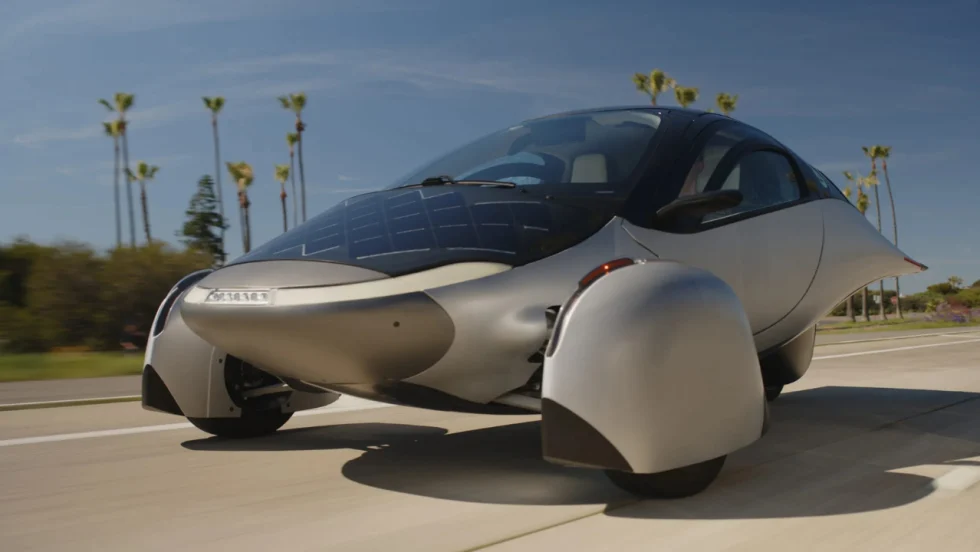
Aptera Orders Bodies and Chassis for Its First 40 Production Vehicles
Aptera Motors Corp. has issued purchase orders for the major structural components of its first 40 vehicles, and body and chassis components are expected to begin arriving in October.
Read More →