


DHL Delivers Telematics Companywide
DHL implemented telematics to gather big data from its fleet, benefiting various departments and the company as a whole.
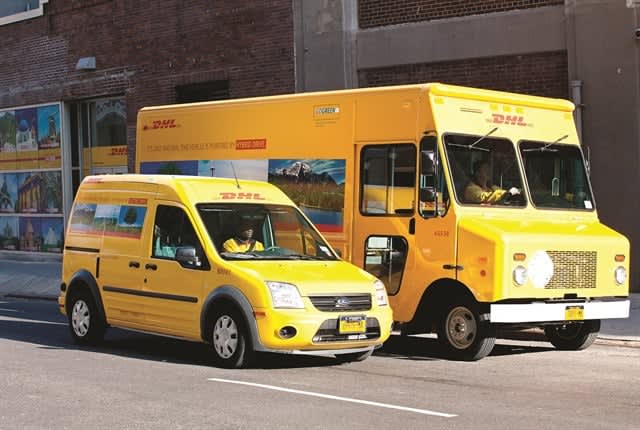
To help manage its alternative-fuel fleet, particularly hybrid and electric vehicles, DHL is using telematics to configure the best routes most fitting for each type of drivetrain.
DHL Express rolled-out telematics throughout 1,400 of the fleet’s vehicles — well more than half of the total fleet. The telematics system combines GPS as well as information from the vehicle’s onboard systems to report vehicle activity and performance. According to Greg Miller, director of fleet for DHL Express U.S., the system captures speed, direction, braking, performance of specific parts as well as components of the engine and drivetrain.
What makes DHL’s approach to its fleet implementation unique is that the company integrated the system in a “big bang” method — applying this new system company- and nearly fleet-wide, all at once.
How Telematics Works For DHL
Miller explains that with telematics the company was hoping for a long-term solution rather than looking at it just as a way to improve fuel economy. The company wanted to see an integrated product that would improve business in aspects such as route efficiency, fuel tracking and maintenance, while also working with departments outside of fleet to leverage the data as much as possible.
The incubation for the implementation happened in the boardroom rather than with a single department spearheading the project. In fact, the incubation period of examining different telematics companies was exhaustive and lasted for six months, according to Miller. DHL had very specific requirements for its new system and worked hard to find one that matched its needs. The company wanted a provider with a tremendous amount of diverse experience with at least 10,000 units installed over the last three years. DHL also wanted a company with experience with the types of vehicles its fleet operates.
Miller says that once the company reached that point of implementation on the road map it seemed best to do a wide implementation. “You can’t measure one or two vehicles in a service center with 100. The mystery around the 98 vehicles you aren’t measuring will become the greater question,” he explains.
DHL also understood that certain departments within an organization tend to do what he refers to as a “one-dimensional implementation.” For example, the safety department would employ the use of telematics to help reduce accidents, while other departments would see later that they could also benefit from this product but in other ways. Miller says, “It wasn’t [decided] in isolation so we had a very large cross-functional group that was a part of the implementation planning.”
With this cross-functional group, each department already had requirements laid out. “There were very clear expectations that other areas would benefit from it,” Miller says. In fact, the only reason the telematics system was led by the fleet group was because the system “touched” the vehicles.
A Successful Rollout
DHL’s “big-bang” rollout had several components. The first was a strategic location-by-location implementation rather than one or two vehicles at every location.
Additionally, with every department ready for the implementation, DHL was able to prepare and train the staff about how the system was going to be used. According to Miller, there was a certain level of culture change involved. “You can’t just install this stuff and then expect people to just understand it,” he says.
In fact, Miller explains that DHL employed a top-down training method beginning with managers because educating management could prove more difficult. The managers needed to have extreme confidence in the product before they could have an intelligent conversation with the drivers. “There was a lot of data being shared long before we had those conversations about very specific numbers with very specific drivers and very specific routes,” Miller says.
DHL also had a re-fleeting strategy that included a fleet investment plan coinciding with the telematics installation. Since the company was going to replace 400-600 vehicles at a time, Miller realized he could get the installation done at the upfitter or as the vehicles were being introduced into the system. This would leave only a small portion to be retrofitted at the service center. Miller explains that anyone in the fleet business has to be extremely disciplined in terms of execution — and this type of technology is no different.
Finding Success
According to Miller, telematics is the future. He says, “It really is the next Internet, the next dot com, the next industry lever. It’s not going away.” The company immediately began to see results but Miller says he knows the true payback will be seen after a long-term deployment.
The first aspect DHL focused on was observing vehicle utilization in real-time. Miller saw what vehicles needed to be on what routes and on what days, and was able to leverage that information into “right-fleeting.” He explains that he didn’t anticipate having as much of a win there as he did. For example, he was able to reassign less efficient vehicles in ways that better fit their sizes and applications. “Without doing a whole lot of vehicle engineering, you could basically relocate one vehicle for another type of vehicle and see a 10-15% fuel economy gain,” he says.
The company was able to use that new data and parlay it into coaching better driver behavior. Miller explains that once he was fairly convinced that the company had done a reasonably good job of putting the right vehicle on the right route, he could assess the operation of that vehicle by route so he and his team could start determining whether they had some opportunity to improve their driving for “eco-driving.”
Finally, the last piece the company is able to focus on is route efficiency. Miller explains that this is the most difficult because it requires a tremendous amount of integration by the all the various business units. But, it harmonizes with safe driving. He says that by routing vehicles in the most efficient way, the company also takes drivers out of unsafe conditions. Right-hand turns are much safer than left-hand turns, for example, and you spend less time idling in waiting to turn.
Routing around extreme traffic conditions is also much safer than routing through a really bad section of traffic. That’s where the company is able to see the maximum benefits with dramatic increases in fuel economy. Plus, packages are being delivered earlier.
DHL is also measuring miles per day as a key performance indicator, examining miles both before and after the installation of the telematics system. Telematics has alleviated DHL from having to manually calculate MPG since it sends real-time data.
Additionally, the company is keeping an eye on vehicle maintenance trouble codes, which is helping determine if certain drivers exhibiting poor eco-driving are simply trying to overcome a vehicle malfunction.
DHL’s Sustainability Practices
According to Miller, if miles are reduced, not only is the customer experience improved through faster service, but vehicle emissions improve and dependence on any fuel type is reduced.
Additionally, Miller explains, if a company is going down the path of using alternative fuels, the company better know what the drive cycles are and what the opportunity is for success in that particular fuel. He uses the example of hybrid technology, “If you don’t put a hybrid vehicle in the right environment, you’ll never know or use the capability. It’ll basically just be a regular vehicle that you spent extra money on and get no benefit for.”
With telematics, DHL can look at very specific drive cycles to identify the perfect opportunity to implement one of the several alternative fuels. “It’s not making a broad brush approach that says downtown New York would be perfect for XYZ technology,” Miller says. “Now we can say there are 17 routes in downtown New York that are perfect for this technology. You can’t do that and get that specific without telematics.”
Editor's Note: This article was originally published in Leading Fleets magazine. Click here for the digital edition.
Originally posted on Automotive Fleet
More Legal/Legislative

California Governor Approves Instant ZEV Rebates For First-Time Buyers
That instant rebate is the centerpiece of a broader $600 million package Governor Newsom signed into law, keeping California active in the global clean transportation race.
Read More →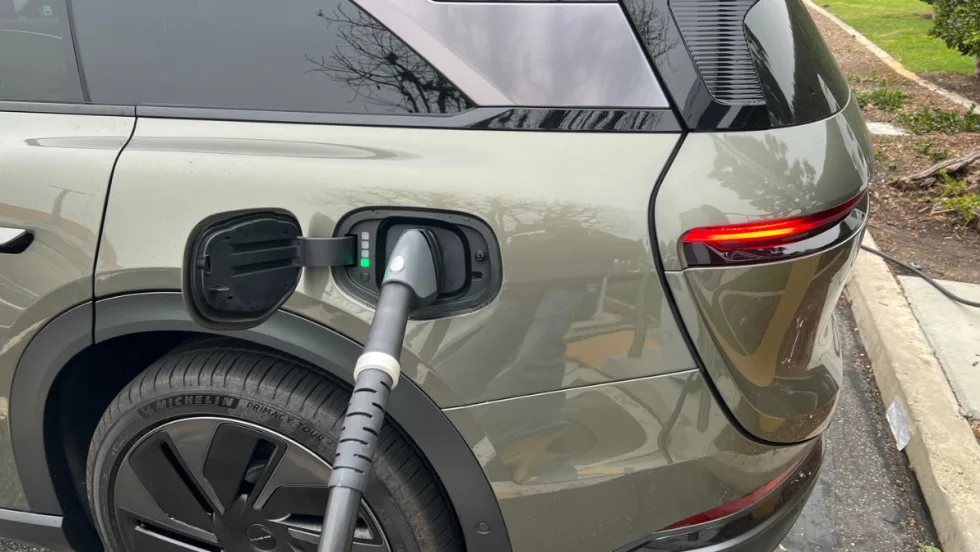
Used EVs Set Wholesale Sales Record In Q1
Rising gas prices may have boosted demand last month, as dealers pursued potential opportunities with more affordable used EVs.
Read More →
OEMS Expose Overdue EV Truths
Recent announcements from two automakers underscore a significant shift in the electric vehicle market, driven by EV losses and changing strategies. [VIDEO}
Read More →
The Freedom Era For Electric Vehicles
Season 2 Episode 1 of The Off-Peak premieres as the electric vehicle market no longer benefits from federal tax credits that expired at the end of Q3 2024. What does this mean for the future appeal of EVs?
Read More →
New Research Shows Renewed Potential And Tolerance For EVs
A new EV consumer survey finds partisan resistance is easing, but concerns around cost, incentives, and charging access still shape buyer interest.
Read More →
2025 Generated Big Headlines In The EV World
The EV industry entered a new more nuanced phase defined by realities and practical outcomes after a few years of grand visions, media hype, and bold investments.
Read More →
John Boesel Recognized at 2025 Fleet Forward Conference
Bobit recognized John Boesel, CEO of Calstart, who is retiring after over three decades of service.
Read More →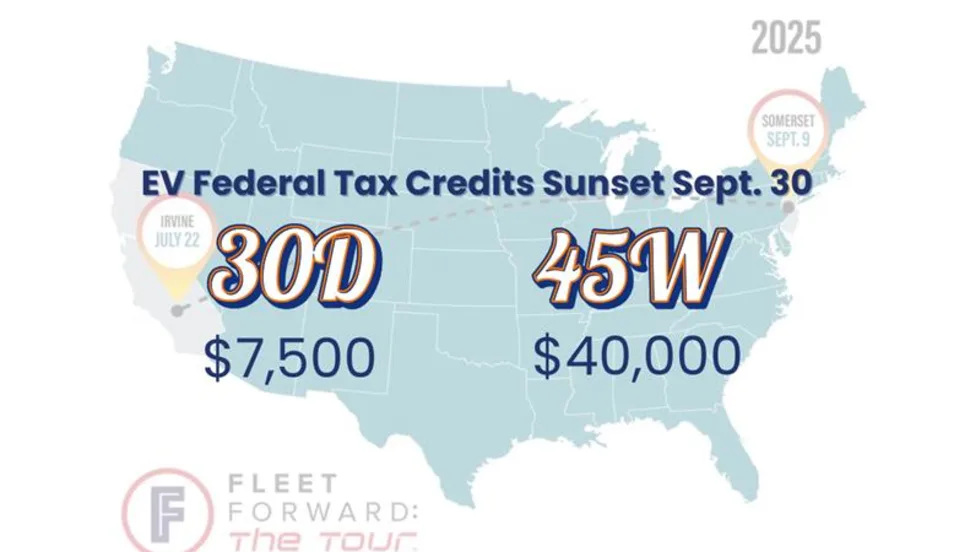
Final Push for Federal EV Incentives Highlighted at Fleet Forward Tour NJ Stop
Fleet managers in the Northeast will have a timely opportunity to take action on electric vehicle purchases at the upcoming Fleet Forward Tour stop in Somerset, NJ, on Sept. 9.
Read More →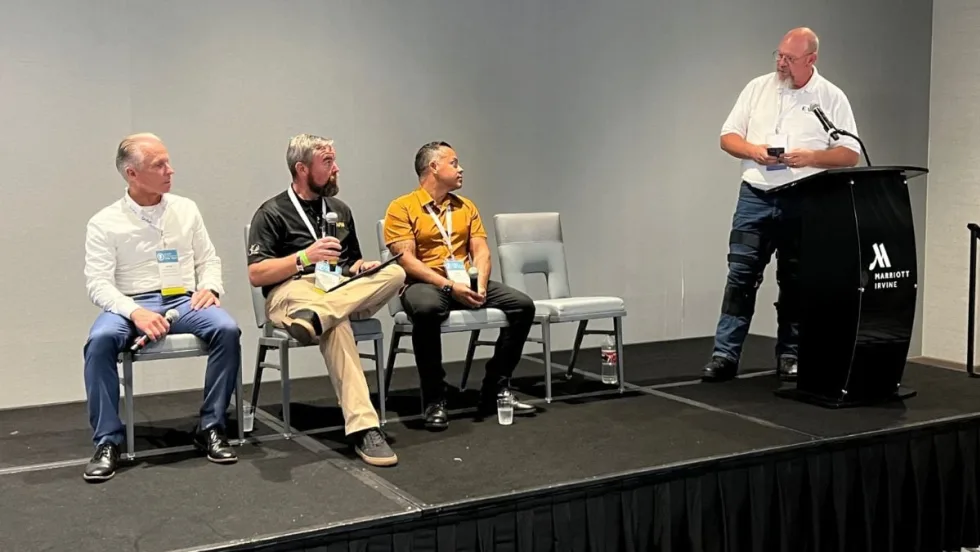
Latest Hard Realities, Top Pressures For Electric Fleets
Speakers and experts at Fleet Forward: The Tour shared hands-on, hard-won insights on how fleet operations are handling tariffs, EV charging, rules and regs, and safety issues.
Read More →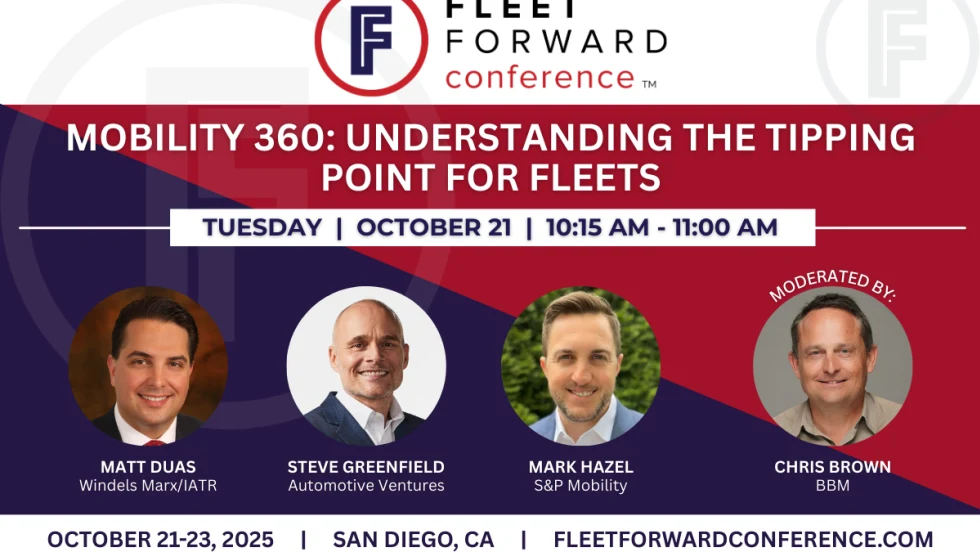
Mobility 360 Panel to Define the Fleet Industry’s Next Tipping Point
At the 2025 Fleet Forward Conference, experts in capital, policy, and data will assess which trends are transforming fleet.
Read More →