


Developer Provides Reliable, Efficient Fleet EV Charging
A new real estate company that builds charging depots for lease can enable fleet operations to avoid the lengthy and costly process of building infrastructure.

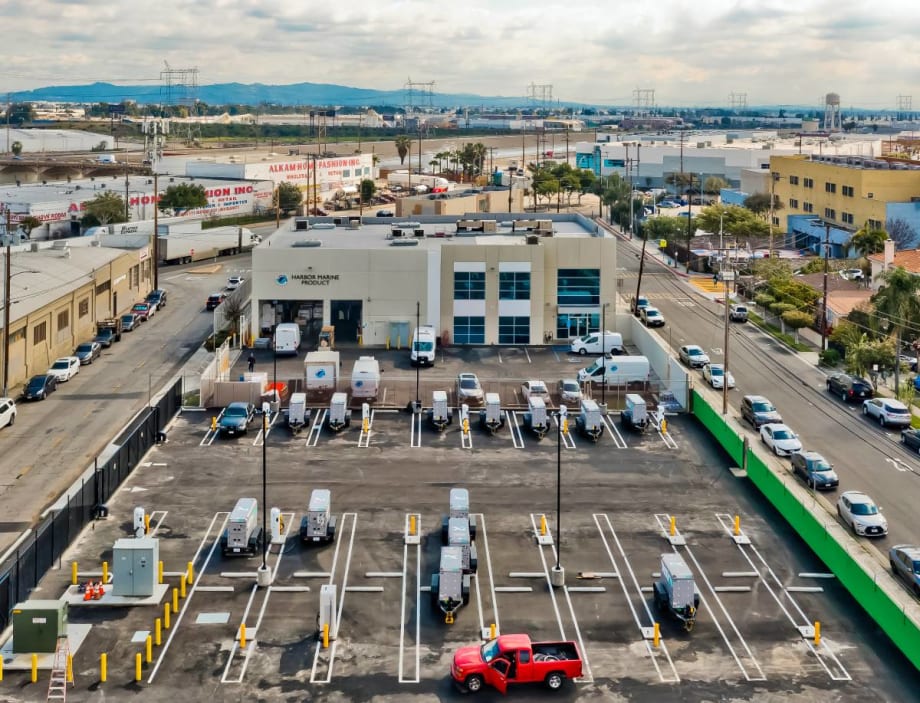
The AXIS IOS site in Vernon, California is suited to fleet operations that prefer to lease charging stations for light- to medium-duty vehicles. It is located a half-mile from four major Southern California freeways (5, 10, 110 and the 710), a major freight corridor leading from the Ports of Los Angeles and Long Beach to the south, and within range of numerous and massive distribution and logistics centers oriented to long- and short-haul trucking and last-mile delivery.
Photo: AXIS IOS
Once a fleet operation starts planning to add electric vehicles, it must pursue the easy and hard parts of the process.
Easy involves choosing and acquiring the electric vehicles. The hard part, at least compared to buying EVs, is setting up the infrastructure to charge them, which typically can take two to three years.
One company following a new business model recently opened a solution: A turnkey EV charging depot that spares fleets the complicated route of investing capital, siting and building charging stations, and navigating the utility and regulatory hurdles to deployment.
New Alternative for EV Charging
AXIS IOS, a real estate investment platform that acquires, develops, and manages industrial outdoor storage (IOS) nationwide, last month opened a charging depot in Vernon, California, just south of downtown Los Angeles. The site is suited to fleet operations that prefer to lease charging stations for light- to medium-duty vehicles. It is located a half mile from four major Southern California freeways (5, 10, 110 and the 710), a major freight corridor leading from the Ports of Los Angeles and Long Beach to the south, and within range of numerous and massive distribution and logistics centers oriented to long- and short-haul trucking and last-mile delivery.
AXIS IOS started in Vernon in 2022, bought the site in May 2023, and opened it in February 2024 – a rapid timeline made possible in part by working closely with Vernon Public Utilities. The company, which also focuses on equipment rentals and truck parking lots, formed an exclusive development with the Moxion Power company, which provides battery power units commonly used in the construction and entertainment industries.
As Moxion’s real estate partner, AXOS IOS finds the best-access locations, develops the property, manages construction, and runs the long-term ownership of the EV charging site.
A Growing EV Market
Through that process, AXIS IOS learned Moxion wasn’t the only end user that needs well-located zoned yard space combined with heavy power and charging capacity, said Joe Killefer, a partner at AXIS IOS, in an interview with Automotive Fleet.
“We are targeting the daily route vehicles that conduct business during the day and come back at night,” Killefer said. “We’re going after vans and box trucks. The ideal tenant is Walmart, Amazon, UPS, and last-mile users who want private yards.”
While the concept initially aims toward last-mile delivery fleets and fleets with medium-duty vehicles, such leasable facilities can serve commercial and light-duty vehicle fleets as well.
AXIS is building another such charging yard facility for Moxion in the San Fernando Valley that should open by March 2025. Moxion will then move from the Vernon facility, thereby freeing it up for light- to medium-duty EV fleet tenants.
The goal for AXIS is to sign long-term leases for EV fleet or equipment tenants. It’s developing a similar facility in Newark, New Jersey, and has plans to build truck and fleet vehicle parking facilities and trailer yards in Texas while buying properties along the U.S. Mexican border for parking, repair and maintenance, truck terminals, and supply-chain related infrastructure.
Sparing Fleets Long Delays
Killefer explained the advantages of fleets being able to rent private, “behind-the-fence” charging depots.
“If you are a fleet and you are renting a parking facility, are you going to pay to improve a property you don’t even own?” he said. “Why put all that capital into a property you will lease, or try to convince your landlord to do it? It would be expensive and time-consuming. The utilities can take one to three years because they are so bogged down with the rise in AI data centers coupled with EV charging for consumer vehicles. These utility companies are just completely slammed. They don’t have the capacity to process these projects in addition to the grid not having capacity.”
What’s more EV fleets and equipment providers would need engineers with the right technical knowledge to carry out the project, he added.
In choosing sites, AXIS IOS looks for infill property close to highways and interstates, major industrial and commercial areas, and utility access for heavy charging.
Powering a Clean Energy Supply
That turns out to be the right fit for Moxion Power, a manufacturer of mobile battery energy storage systems, also known as (BESS). The generators supply what is known as the temporary power industry. Moxion’s all-electric battery-powered generator, called the MP-75, can be trucked, or pulled on a trailer to locations where it may be used up to several weeks depending on power demand.
The types of customers include:
Construction sites and companies.
Major movie studios and entertainment production companies shooting on location.
Live events, festivals, and concerts.
Electric vehicles requiring mobile onsite temporary charging outlets.
State and municipal government facilities and operations.
Emergency services following a natural disaster.
Underserved areas that still need permanent charging infrastructure.
“Eventually the electric battery generators will be a charging solution for the entire construction industry because temporary power cuts across quite a few uses,” Killefer said.
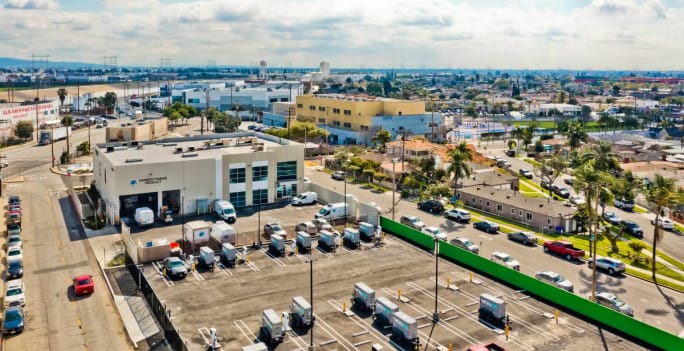
Moxion has developed software to monitor and optimize power levels and charging needs for its generator units, seen here in the foreground at the AXIS IOS EV charging depot. That software coordinates with the charging facility software to figure out which available charger to plug into and how much time/energy is required.
Photo: AXIS IOS
Serving Hollywood Clients
In one leading example, the BESS generators replace the noise and emissions of diesel generators that often must run blocks away from outdoor movie shoots to avoid disrupting the audio, said Paul Huelskamp, CEO of Moxion Power, in an interview with Automotive Fleet. They are quiet enough to even run indoors next to a shoot going on.
The Richmond, California-based company started in 2020 to develop full-electric alternatives to conventional powering equipment.
“There is a massive market opportunity for temporary clean quiet 100% electric products with commercial industrial applications,” Huelskamp said. “The electric option had been around for decades, but we saw very little innovation. Why not create a cleaner, more reliable option for temporary power?”
The Los Angeles region, for example, has tens of thousands of generators often hidden out of site, Huelskamp said. “The number will only increase with fleet electrification. The size of the temporary power market will mushroom in the next 3-5 years because of fleet charging challenges. If utilities are adding EV charging, they need to think about resiliency solutions if the power goes down for several hours.”
Better Than Diesel Options
By cycling through the AXOS IOS Vernon charging depot, the Moxion BESS generators provide more energy mobility and flexibility than diesel generators that must be refilled via a roving fuel truck. The all-electric generators can run 24/7 or intermittently depending on power demand. Some need to be recharged after days, but most can last a few weeks before being swapped out.
“With most applications we see, you don’t need nearly as much power as provided by a diesel generator that you are renting,” Huelskamp said. “They are oversized and run at low load factors.”
Batteries have a unique advantage in power applications, he added. “You turn it on, plug in, and draw power. If not, you don’t, so you have near-perfect load flexibility.”
Because BESS generators run only when electricity is being drawn, they don’t spend any time idling, wasting fuel, and belching fumes like diesel generators. Diesel generators “are also a huge problem with creating pollution and wear and tear on the engine component,” Huelskamp said. “So, they are difficult and expensive to maintain and start breaking down.”
With diesel generators, large rental companies supply thousands of generators across country, and arrange separate contracts with mobile refueling companies. That requires driving to a terminal, filling the truck tank, and then driving around to generator sites delivering fuel.
Efficiency Through Smart Tech
The Moxion generators use a 600-kwh battery that can draw 20 kilowatts per hour from a Level 2 charger, requiring a maximum of about 32 hours to charge from 0 to 100%. At the AXOS IOS facility, dual chargers are available that can supply 40 kwh per hour.
Moxion also has developed software to monitor and optimize power levels and charging needs for each unit. That software coordinates with the charging facility software to figure out which available charger to plug into and how much time/energy is required.
“It automates decision-making,” Huelskamp said. “Every technician and driver who touches the unit will know what they need to do based on the software. We are creating the ‘Uber’ or ‘Door Dash’ type software layer that powers our energy solutions business.”
The average load for a job site ranges from about 500 watts on the low end to 1,000 to 2,000 kilowatts on the high end.
The Vernon depot supplies up to 75 Moxion units with 24/7 access. RFID readers allow only Moxion employees to access the depot. The generators use universal CCS standard charging ports.
“We remotely monitor units so when they run low, we can dispatch the driver to drop off a new unit, plug it in, and then unplug and take back the used unit to recharge,” Huelskamp said. Moxion occasionally incorporates public charging near customer locations into their recharging cycles.
Recent market analyses show a surge in demand for medium-duty electric vehicles from fleets, with a 640% jump in orders in 2022 and several major regulations coming down the way including the Advanced Clean Fleets Rule in California and the Advanced Clean Trucks Rule in 14 states and the District and Columbia, according to AXIS IOS.
“Many fleets in California have ambitious ESG goals and ZEV compliance requirements,” Killefer said in a recent news release. “However, they grapple with the cost, delays, siting, and power procurement challenges associated with charging infrastructure. Our Vernon site provides a solution, enabling swift deployment of electric vehicles (EVs).”
Originally posted on Automotive Fleet
More Electric Vehicles

EV Realty Names Henrik Holland President as Charging Platform Expands
The former Prologis Mobility and Shell executive will help expand EV Realty’s truck charging business and move its power-first infrastructure model into autonomous vehicle depots and other fleet sectors.
Read More →
GreenPower Expands New Mexico EV Pilot With Larger Buses, V2G Testing
After logging more than 17,000 electric miles in the first year, New Mexico’s statewide pilot is moving into its second phase with larger vehicles, continued charging evaluations, and more.
Read More →
Can EV-as-a-Service Help Fleets Scale Electrification?
Sustainability Partners CEO Adam Cain explains how matching EVs, charging infrastructure, and duty cycles can help fleets scale electrification.
Read More →
How EV-as-a-Service Is Moving Fleets Beyond Pilots
Adam Cain, president and CEO of Sustainability Partners, explains how EV-as-a-service can help fleets scale deployments by addressing duty-cycle requirements and charging challenges.
Read More →
PowerFlex, The Mobility House Join Forces to Advance Fleet Electrification
Two EV charging providers are joining forces to deliver a broader portfolio of energy management and fleet electrification solutions.
Read More →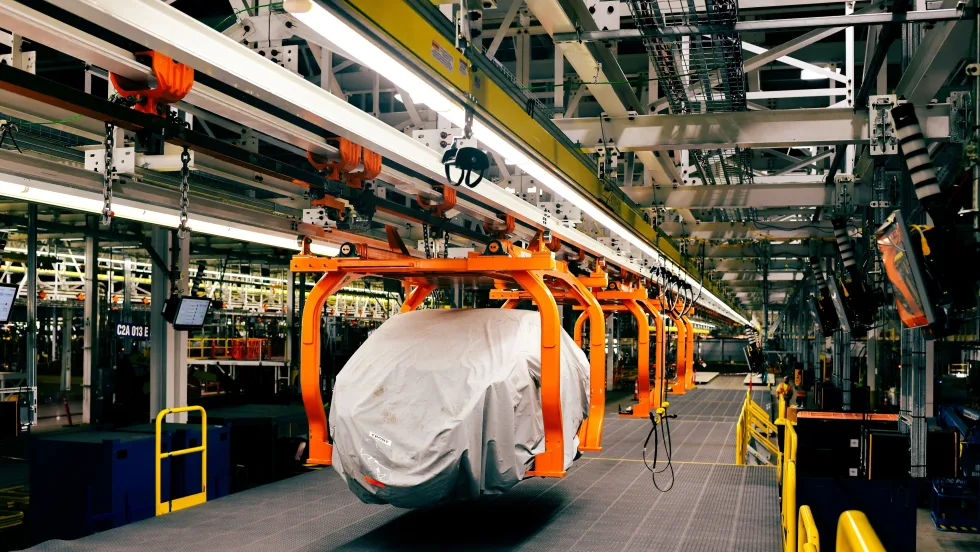
Ford Retools Louisville Plant for Fathom Electric Truck Production
Ford's $2 billion Louisville Assembly Plant overhaul introduces a three-part assembly process for the Fathom midsize electric truck, with production scheduled to begin in 2027.
Read More →
Merchants Fleet Reports 290M EV Miles as Fleets Navigate Changing Electrification Market
From millions in operating savings to hundreds of millions of EV miles, Merchants Fleet’s latest report reveals what’s working and what’s changing in fleet electrification.
Read More →
California District Commits to Electrify 25% of School Bus Fleet by 2028
One of the nation's largest school bus electrification projects to date demonstrates how grants, charging infrastructure, and public-private partnerships can help fleets transition to EVs at scale.
Read More →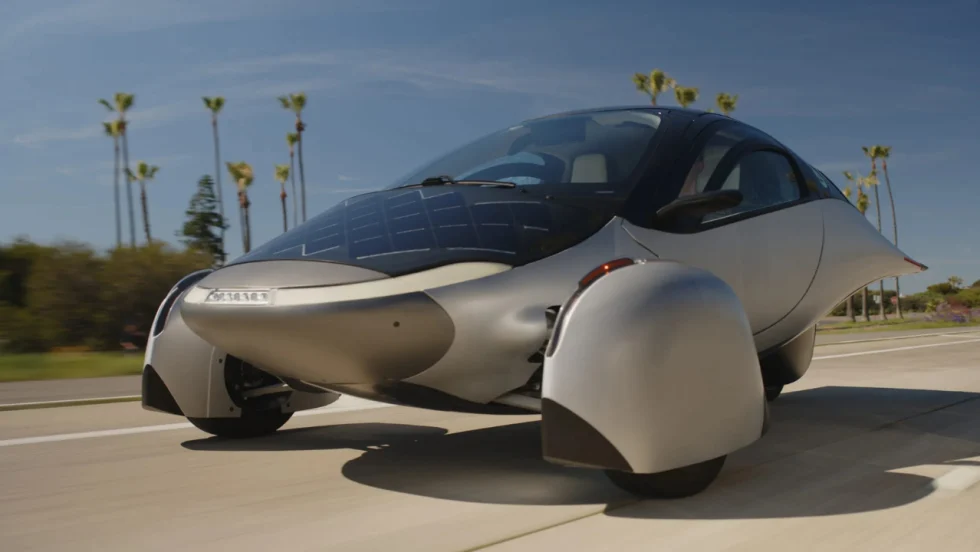
Aptera Orders Bodies and Chassis for Its First 40 Production Vehicles
Aptera Motors Corp. has issued purchase orders for the major structural components of its first 40 vehicles, and body and chassis components are expected to begin arriving in October.
Read More →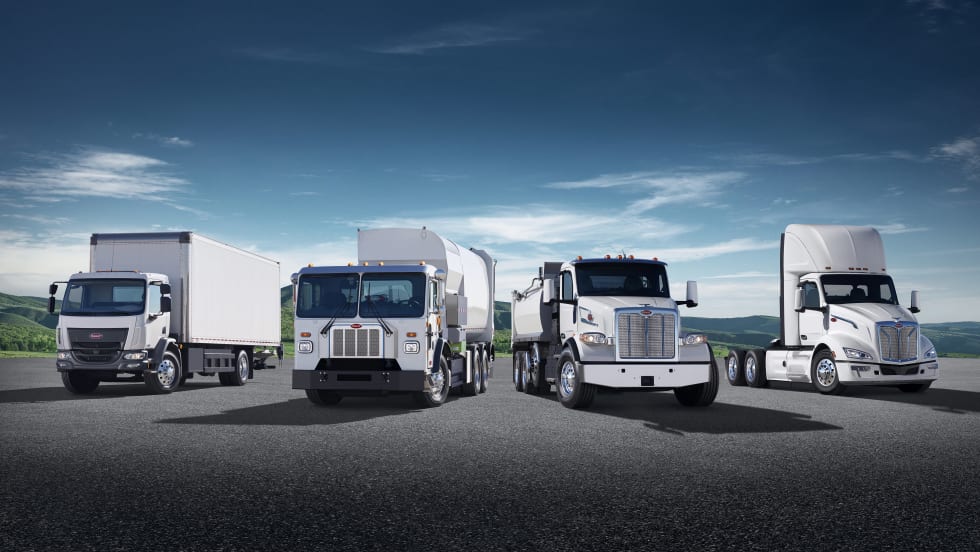
Peterbilt Expands Sourcewell Purchasing Agreement to Include Electric Trucks
The cooperative purchasing contract, now extended through July 2028, adds Peterbilt's battery-electric lineup for eligible government, education, nonprofit and tribal organizations.
Read More →