


Putting EV Battery Risks and Safety into Perspective
Electric vehicles can burn at twice as hot as magma, but advances in battery technology and operational practices will further reduce the chances of a catastrophic fire.


Matt Davis, senior engineering manager of EV battery solutions at Spiers Technology (L), and John White, director of environmental, health and safety at Cox Automotive, outlined critical steps for EV battery safety and fire prevention during a recent session.
Photo: NAAA
The downstream market for electric vehicles will only grow as the first major wave of newly bought EVs starting in 2020 winds its way into the wholesale and used markets.
That means auctions, dealers, reconditioners, vehicle logistics services, and related remarketing businesses will be handling a subset of damaged EVs that bring fire risks. EV fires can burn bright and long, ignite and consume surroundings, and require valiant efforts to extinguish.
The good news lies in the statistics to date: EVs catch fire at a rate of .03% of every 100,000 cars, gasoline vehicles at a rate of 1.53%, and hybrids at 3.47%.
“The government stats show that combustible engines are 100 times more likely to catch fire than an EV,” said John White, director of environmental, health and safety, at Cox Automotive.
White spoke on Sept. 27 at a session, “EV Management: Safety Best Practices for Auctions and Remarketers,” during the annual National Auto Auction Association Convention in Chicago. “Mass hysteria about electric vehicle fires has burst into the media,” he said. “EVs are only a small percentage of fires that occur on the road.”
In one indicator, Manheim reports 43% more EV sales year-over-year at its auctions, which means EVs are more common on the road and hence more fires.
Battery fires caused by damage are referred to as “thermal events,” since the elements can cause a combustible reactive sequence that results in a fire.
“If you puncture a battery cell, you get a short, which generates heat, then causes off gassing, combusts, and leads to arcing,” which spreads the fire beyond the EV, said co-panelist Matt Davis, senior engineering manager of EV battery solutions at Spiers Technology, which is owned by Cox. “If you treat batteries right, you can avoid situations from happening 99% of the time.”
EV fires can burn at 5,000 degrees Fahrenheit. That is double the temperature of volcanic magma and half the temperature of the sun. Once an EV fire occurs, the car cannot be repaired or restored.
“We do not want employees to interact with [damaged] electric vehicles at all,” White said. “They get so hot so quickly and put out a toxic type of vapor with carcinogenic effects on the nervous system.”
Extinguishing an EV fire can take an average of 20,000 gallons of water to control, equal to the volume in a large backyard swimming pool. Despite that dousing, the fire could still reignite and re-energize the heat. Even trained professionals are taught to let EV fires burn if the heat risks are too high.
White and Davis outlined best practices on how auctions and remarketers can look for EV fire warning signs, respond to fires, and deter them:
Detecting EV Battery Fires:
Warning signs of a fire include a fruit-like smell during the initial stage of the thermal event.
A thermal detection system can detect a fire hazard, especially from minor damage caused by a small fender-bender that cracks a battery cell and increases the risk of a thermal event.
Dashboard warning lights can indicate high battery temperatures.
A runaway thermal event results from a damaged lithium-ion battery cell that emits gas and spreads vapors that hit other cells, causing a chemical reaction that starts a fire. A gray vapor cloud amid hissing and popping sounds are clear signs that an EV battery is under intense pressure and a fire growing underneath.
Best Practices for Handling EV Fires:
In the event of a fire, employees should call the fire department and not approach the fire. Move other cars if possible. Try to keep at least 50 feet away from the hazardous area, and protect your eyes from vapor, smoke, and wind.
Be aware that shocks and tires can explode because of compressed air.
A specialized fire blanket will contain the flames long enough for firefighters to arrive, but the smoke fumes can be as dangerous as the intense heat.
To combat the fire, firefighters look for the puncture in the battery cell and spray high pressure water into the module.
An EV can be placed in an enclosed dumpster for a week or buried in the ground to prevent reignition.
Battery Safety and Fire Prevention:
Avoid overcharging or discharging batteries. Overcharging can make the cell pouch swell and contract, causing rips in the cell tab welding. That sets off the gases and expands the unit. If this repeatedly happens, the cell can rupture internally which causes a separation that leads to the thermal event.
When storing an EV long-term, the state of the battery charge should be about 30% to 50% to keep its health.
Do not leave EVs plugged in and avoid lengthy overnight charging that can overcharge a vehicle.
Another cause of EV fires is dendrites, which can incur an internal short. Dendrites are projections of metal that can build up on the lithium-ion battery surface and penetrate the solid electrolyte, eventually crossing from one electrode to the other and shorting out the battery cell, according to MIT News. Lithium dendrite growth is influenced by multiple factors, such as electric current density, temperature, electrolyte, and electrolyte convection, MIT News reports.
EVs should have rigid underbody protection to minimize the risk of punctures, scrapes, and dents from roadway bumps or erratic driving.
If you have damaged EVs on a lot, keep them at least 50 feet away from buildings, and park them near an entrance or exit to make them easily accessible to responding fire departments.
Flag damaged vehicles and park them at least 25 feet from other vehicles.
Train employees on awareness, warning signs, and emergency response. Determine who would flag down arriving firefighters and direct them to the hazardous area.
Check the National Fire Protection Association website at www.nfpa.org to learn more about emergency responses to EV fires and for specs and details on each EV model.
Originally posted on Automotive Fleet
More Electric Vehicles
EV Charging Use Is Outpacing Infrastructure Growth
ChargePoint’s 2026 Charging Forward Report points to rising charger use, higher-powered charging, commercial vehicle electrification, and energy-management technology. Here’s what fleets should know.
Read More →
EV Realty Names Henrik Holland President as Charging Platform Expands
The former Prologis Mobility and Shell executive will help expand EV Realty’s truck charging business and move its power-first infrastructure model into autonomous vehicle depots and other fleet sectors.
Read More →
GreenPower Expands New Mexico EV Pilot With Larger Buses, V2G Testing
After logging more than 17,000 electric miles in the first year, New Mexico’s statewide pilot is moving into its second phase with larger vehicles, continued charging evaluations, and more.
Read More →
Can EV-as-a-Service Help Fleets Scale Electrification?
Sustainability Partners CEO Adam Cain explains how matching EVs, charging infrastructure, and duty cycles can help fleets scale electrification.
Read More →
How EV-as-a-Service Is Moving Fleets Beyond Pilots
Adam Cain, president and CEO of Sustainability Partners, explains how EV-as-a-service can help fleets scale deployments by addressing duty-cycle requirements and charging challenges.
Read More →
PowerFlex, The Mobility House Join Forces to Advance Fleet Electrification
Two EV charging providers are joining forces to deliver a broader portfolio of energy management and fleet electrification solutions.
Read More →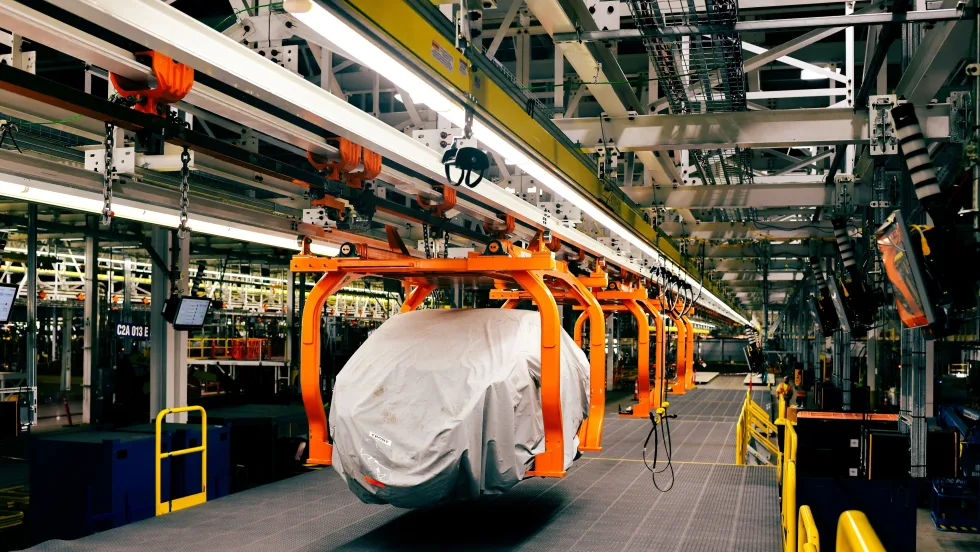
Ford Retools Louisville Plant for Fathom Electric Truck Production
Ford's $2 billion Louisville Assembly Plant overhaul introduces a three-part assembly process for the Fathom midsize electric truck, with production scheduled to begin in 2027.
Read More →
Merchants Fleet Reports 290M EV Miles as Fleets Navigate Changing Electrification Market
From millions in operating savings to hundreds of millions of EV miles, Merchants Fleet’s latest report reveals what’s working and what’s changing in fleet electrification.
Read More →
California District Commits to Electrify 25% of School Bus Fleet by 2028
One of the nation's largest school bus electrification projects to date demonstrates how grants, charging infrastructure, and public-private partnerships can help fleets transition to EVs at scale.
Read More →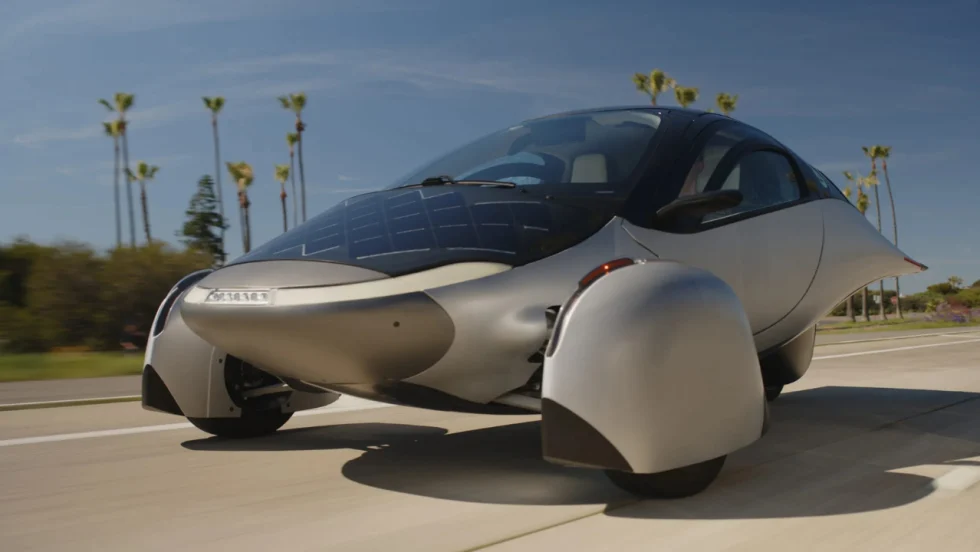
Aptera Orders Bodies and Chassis for Its First 40 Production Vehicles
Aptera Motors Corp. has issued purchase orders for the major structural components of its first 40 vehicles, and body and chassis components are expected to begin arriving in October.
Read More →