


Related: Understanding the Critical Role of the Utility in Fleet Electrification
Tritium Opens R&D Facility in Los Angeles
The Australia-based company opened a manufacturing and research-and-development facility in Torrance, Calif. which will allow automakers to test vehicles for DC charger interoperability.
by Staff
September 23, 20193 min to read
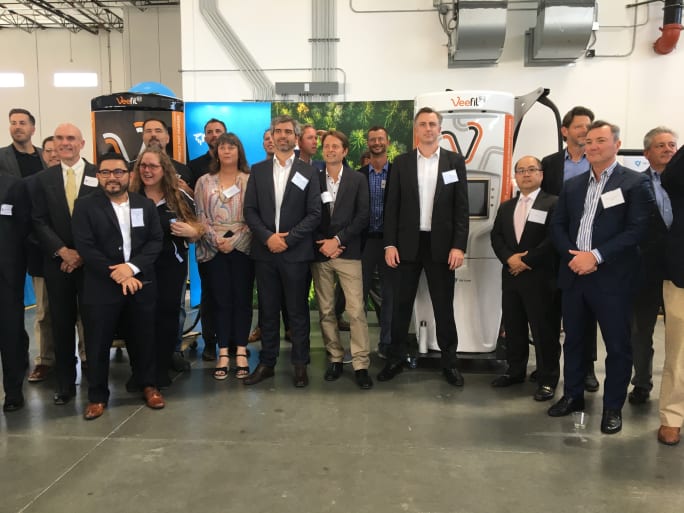
Photo by Chris Brown.
Tritium announced the opening of a new facility in Los Angeles which will enable the company to increase production to cater to growing sales in North America. Along with the expansion, the company will also launch a new high-power charger for the U.S. Market.
The Tritium E-Mobility Innovation Center in Los Angeles will feature a testing facility to allow automotive manufacturers in the US to test vehicles for DC charger interoperability with the suite of advanced Tritium DC chargers. It will also provide expanded manufacturing and logistics capabilities for Tritium, along with a customer-focused Research and Development (R&D) facility to enable the company to create customized solutions to meet unique customer requests.
The company has also launched the RT175s DC High Power Charger (HPC), which was designed specifically for the United States Market.
“We outgrew our previous facility in Torrance faster than we ever expected, which is a testament not only to the team we have and the technology we can produce but also to the growing demand for electric vehicle infrastructure in the United States and in particular California,” said Jeff Wolfe, President, Americas, Tritium. “We are seeing greatly increased product demand, both with our award-winning Veefil-RT50 product and with the upcoming US availability of our RT175s DC HPCs towards the end of the year.
At 175kW, the RT175s can add 110 miles of range to an electric vehicle in 10 minutes. The RT175s are ideal for urban areas and vertical industry deployments, they are based on the Veefil-PK concept currently being installed across Europe with the IONITY network. Which is involved in a joint venture with BMW Group, Daimler AG, Ford Motor Company and the Volkswagen Group including Audi and Porsche.
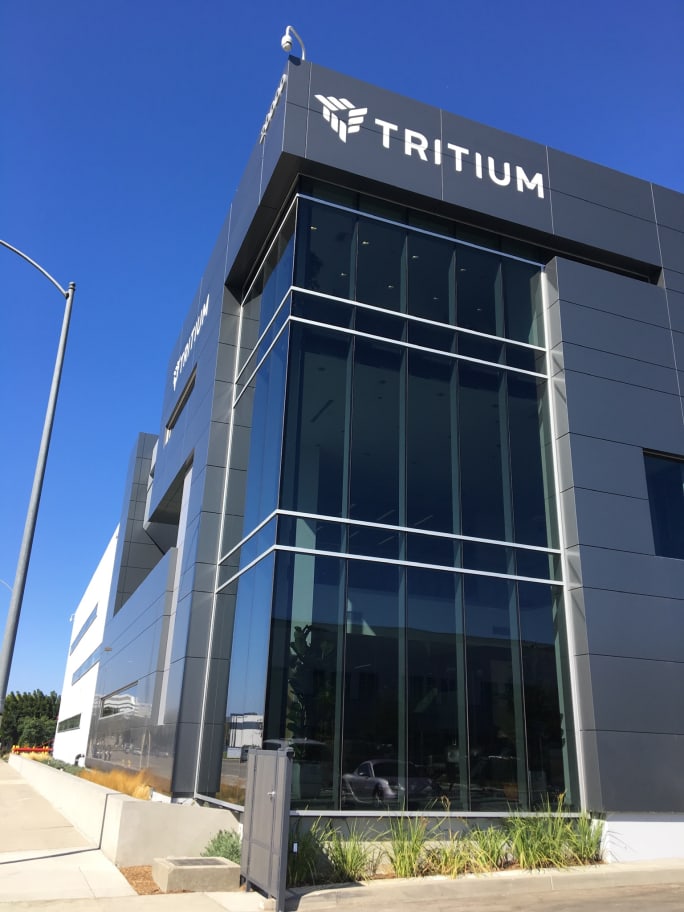
Photo by Chris Brown.
As part of the opening of the new facility in Los Angeles, Tritium is expected to increase staff numbers in the areas of logistics, engineering, sales, administration and manufacturing in the coming months.
The shift to a new, larger facility follows on the heels of a deal with SSA Marine to supply the Port of Long Beach in California with 33 modified RT175s HPCs – which will be equipped with Stäubli’s Quick Charging Connector (QCC) – to enable the fast charging of the port’s entire fleet of electric-drive terminal tractors automatically and simultaneously.
Last year, the company announced it was receiving a portion of $3.2 million in federal funding awarded to Electric Power Research Institute (EPRI) by the Department of Energy, to develop an extreme fast-charging system that can connect directly to the distribution grid. EPRI allocated about $400,000 for Tritium to develop a custom version of its Veefil-PK high-powered charging head, along with providing input for system design and testing.
As part of the opening of the new facility in Los Angeles, Tritium is expected to increase staff numbers in the areas of logistics, engineering, sales, administration and manufacturing in the coming months.
Originally posted on Automotive Fleet
More Electric Vehicles
EV Charging Use Is Outpacing Infrastructure Growth
ChargePoint’s 2026 Charging Forward Report points to rising charger use, higher-powered charging, commercial vehicle electrification, and energy-management technology. Here’s what fleets should know.
Read More →
EV Realty Names Henrik Holland President as Charging Platform Expands
The former Prologis Mobility and Shell executive will help expand EV Realty’s truck charging business and move its power-first infrastructure model into autonomous vehicle depots and other fleet sectors.
Read More →
GreenPower Expands New Mexico EV Pilot With Larger Buses, V2G Testing
After logging more than 17,000 electric miles in the first year, New Mexico’s statewide pilot is moving into its second phase with larger vehicles, continued charging evaluations, and more.
Read More →
Can EV-as-a-Service Help Fleets Scale Electrification?
Sustainability Partners CEO Adam Cain explains how matching EVs, charging infrastructure, and duty cycles can help fleets scale electrification.
Read More →
How EV-as-a-Service Is Moving Fleets Beyond Pilots
Adam Cain, president and CEO of Sustainability Partners, explains how EV-as-a-service can help fleets scale deployments by addressing duty-cycle requirements and charging challenges.
Read More →
PowerFlex, The Mobility House Join Forces to Advance Fleet Electrification
Two EV charging providers are joining forces to deliver a broader portfolio of energy management and fleet electrification solutions.
Read More →
Ford Retools Louisville Plant for Fathom Electric Truck Production
Ford's $2 billion Louisville Assembly Plant overhaul introduces a three-part assembly process for the Fathom midsize electric truck, with production scheduled to begin in 2027.
Read More →
Merchants Fleet Reports 290M EV Miles as Fleets Navigate Changing Electrification Market
From millions in operating savings to hundreds of millions of EV miles, Merchants Fleet’s latest report reveals what’s working and what’s changing in fleet electrification.
Read More →
California District Commits to Electrify 25% of School Bus Fleet by 2028
One of the nation's largest school bus electrification projects to date demonstrates how grants, charging infrastructure, and public-private partnerships can help fleets transition to EVs at scale.
Read More →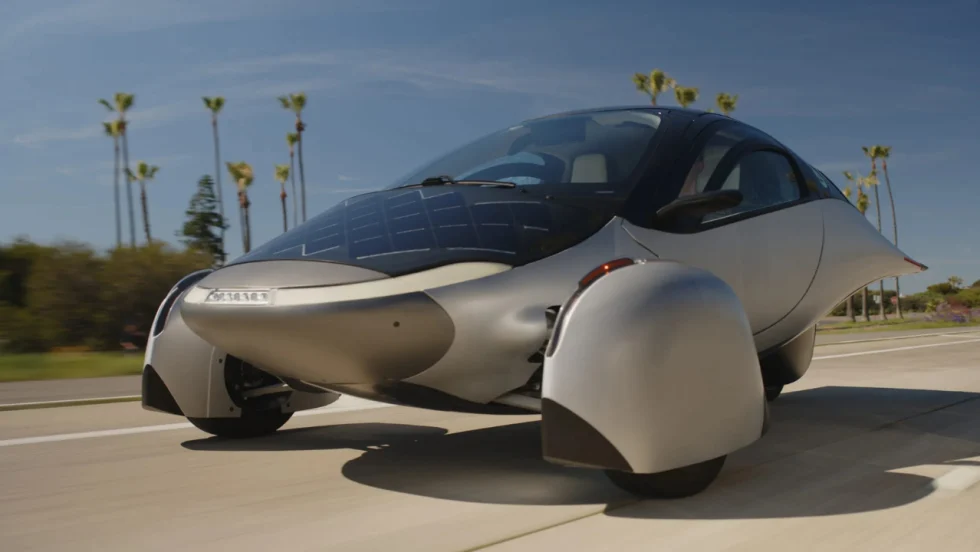
Aptera Orders Bodies and Chassis for Its First 40 Production Vehicles
Aptera Motors Corp. has issued purchase orders for the major structural components of its first 40 vehicles, and body and chassis components are expected to begin arriving in October.
Read More →