


Learn More: What to Look For When Spec’ing a Bucket Truck
The Best Impact Wrenches for Linemen: A Balance of Power and Ergonomics
The life of the battery and power impact wrenches deliver are key considerations when selecting what's best for your operation.
by The Utility Expo
August 30, 2021
The life of the battery and power impact wrenches deliver are key considerations when selecting what's best for your operation.
4 min to read
Battery‐powered impact wrenches have largely replaced hydraulic and gas‐powered models in the utility market. Improvements in battery life and power mean linemen no longer have to carry long hydraulic hoses on the job or carry fuel to run their tools. The life of the battery and power it delivers are key considerations when selecting an impact wrench.
“Batteries today are much improved,” says Andrew Condino, account manager for Utilities at Makita. “They are lighter, charge faster, and hold more power than they did in the past.”
Condino says a big consideration for linemen is the battery platform.
“Utilities don’t want to keep four different chargers on the truck.” To solve that pain point, all of Makita’s utility tools use the same battery platform.
Users also compare how fast the impact wrench will charge and how it holds up over time. The newest batteries on the market use larger 21700 lithium cells while keeping the battery size small. These cells produce higher capacity and output per cell while running cooler.
Hilti offers three classes within their 22‐volt platform – a compact, advanced compact, and power class. “While the V22 8.0 Ah Li‐ion battery power class battery offers the most run time, we find users look for a balance of weight, size, and run time,” says Kevin Stahler, segment manager for Hilti North America‐ Power. “Most linemen choose the V22 4.0 Ah and find that work per charge is plenty to get them through the day with maybe one charge.”
Makita’s 18‐volt options include a 4.0 Ah Li‐ion battery that weighs in at 1.5 pounds while the 8.0 ah industrial battery weighs 2.5 pounds. Condino says whether or not a battery will last all day is dependent on the task. “If a lineman is drilling holes all day, it’s likely they are going to have to change out batteries a couple of times.”
Lighter Tools Reduce Injuries
Utilities today are increasingly paying attention to the role of ergonomics in improving worker productivity and avoiding lost time to due to work‐related musculoskeletal disorders – injuries of the muscles, tendons, joints, and nerves. The weight of the tool and distribution of the load within the tool are important considerations when linemen work with a tool like an impact wrench all day. It affects the way an operator holds the tool.
“While we strive to make the lightest tool possible, larger, more demanding applications require larger tools to achieve the desired performance in the application,” says Stahler. “Designing the tool to be well balanced and reduce operator fatigue is important.”
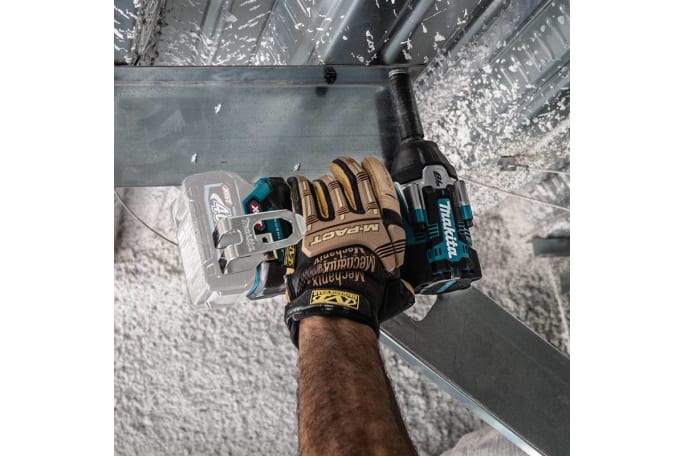
All of Makita’s utility tools use the same battery platform.
Photo: Makita
Match Torque To The Job
The impact wrenches linemen use today are equipped with brushless motor technology that prevents the tool from losing power when it comes in contact or proximity of an energized line. According to Cordino, linemen often call the high‐torque impact wrench – “the hard money gun.” It has the most power and is designed to work as fast as possible. Torque is measured in foot pounds and manufacturers have several options depending on the power needed. Both Cordino and Stahler believe the mid‐torque category is growing as linemen recognize lighter weight tools have the power to get the job done.
“Torque and speed go hand in hand,” says Stahler. “You get the job done faster with more torque.” But too much power can also be a problem. “Some connectors may only need 20‐foot pound,” says Condino. “A lineman puts a tool on at full speed and overtightens and strips the threads on the bolt.” Makita’s solution to the problem is a torque‐limiting feature called an “auto‐stop” that gives utilities more control over fastening.
Lifetime Cost Of Ownership
Determining what impact wrench will be the lowest cost over the life the tool requires tracking maintenance and repair costs, along with battery life.
“Makita impact wrenches feature seals and gaskets that keep water and dirt from damaging the motor and core components,” says Condino. “The tools keep on working and are more reliable.” The company also offers a three‐year warranty.
Hilti’s ON!Track software solution provides tool and asset tracking to help customers manage costs by asset, job, and time. “Hilti covers wear and tear for two years when the tool, batteries, and charger are purchased or three years when the tool is purchased with the Fleet Management program. Hilti Tool Fleet Management provides tools at a fixed monthly rate for a defined usage period, eliminating up‐front capital investment.
Originally posted on Work Truck Online
Subscribe to Our Newsletter
More Electric Vehicles
PowerFlex, The Mobility House Join Forces to Advance Fleet Electrification
Two EV charging providers are joining forces to deliver a broader portfolio of energy management and fleet electrification solutions.
Read More →
Ford Retools Louisville Plant for Fathom Electric Truck Production
Ford's $2 billion Louisville Assembly Plant overhaul introduces a three-part assembly process for the Fathom midsize electric truck, with production scheduled to begin in 2027.
Read More →
Merchants Fleet Reports 290M EV Miles as Fleets Navigate Changing Electrification Market
From millions in operating savings to hundreds of millions of EV miles, Merchants Fleet’s latest report reveals what’s working and what’s changing in fleet electrification.
Read More →
California District Commits to Electrify 25% of School Bus Fleet by 2028
One of the nation's largest school bus electrification projects to date demonstrates how grants, charging infrastructure, and public-private partnerships can help fleets transition to EVs at scale.
Read More →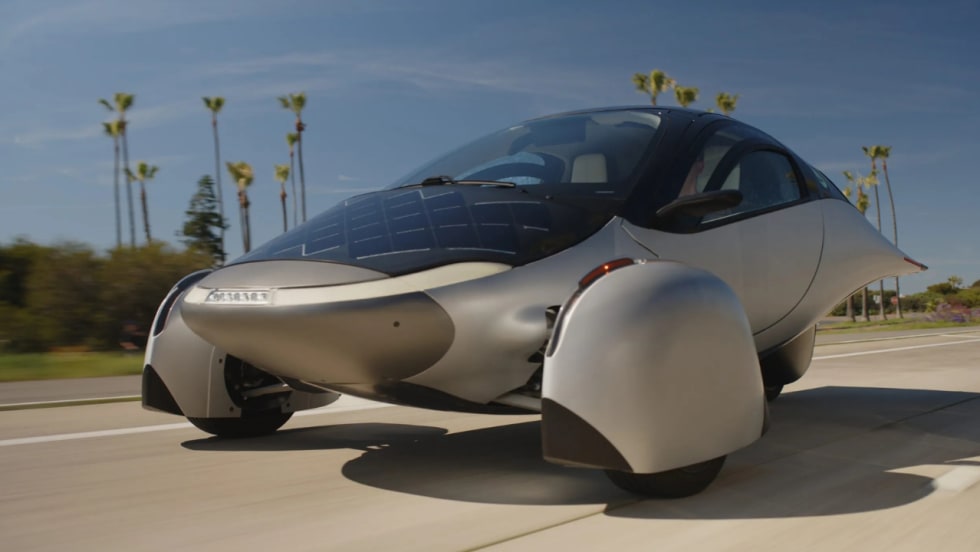
Aptera Orders Bodies and Chassis for Its First 40 Production Vehicles
Aptera Motors Corp. has issued purchase orders for the major structural components of its first 40 vehicles, and body and chassis components are expected to begin arriving in October.
Read More →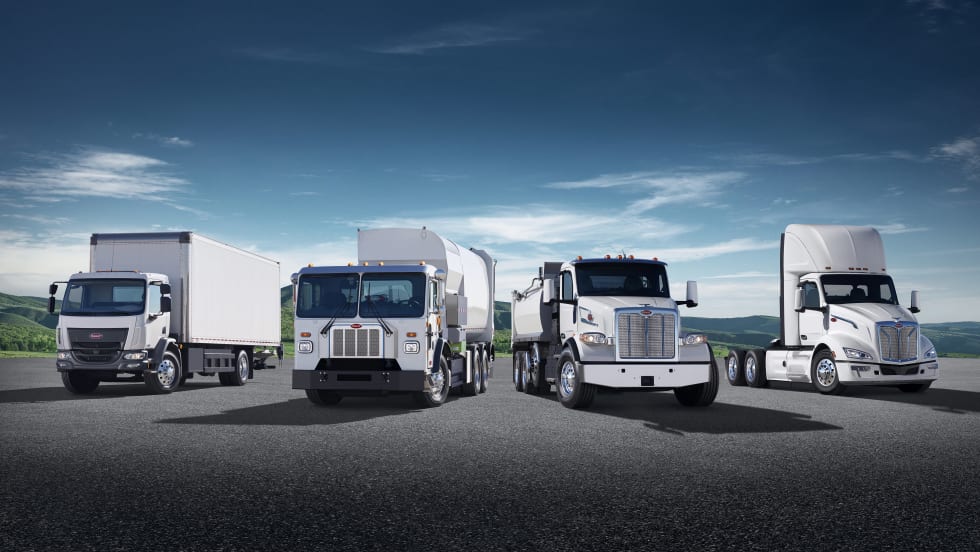
Peterbilt Expands Sourcewell Purchasing Agreement to Include Electric Trucks
The cooperative purchasing contract, now extended through July 2028, adds Peterbilt's battery-electric lineup for eligible government, education, nonprofit and tribal organizations.
Read More →
PITT OHIO Donates DC Fast Chargers to Community College of Allegheny County
The logistics company donated two 75-kW DC fast chargers to CCAC to support electric vehicle education and workforce training programs.
Read More →
California Governor Approves Instant ZEV Rebates For First-Time Buyers
That instant rebate is the centerpiece of a broader $600 million package Governor Newsom signed into law, keeping California active in the global clean transportation race.
Read More →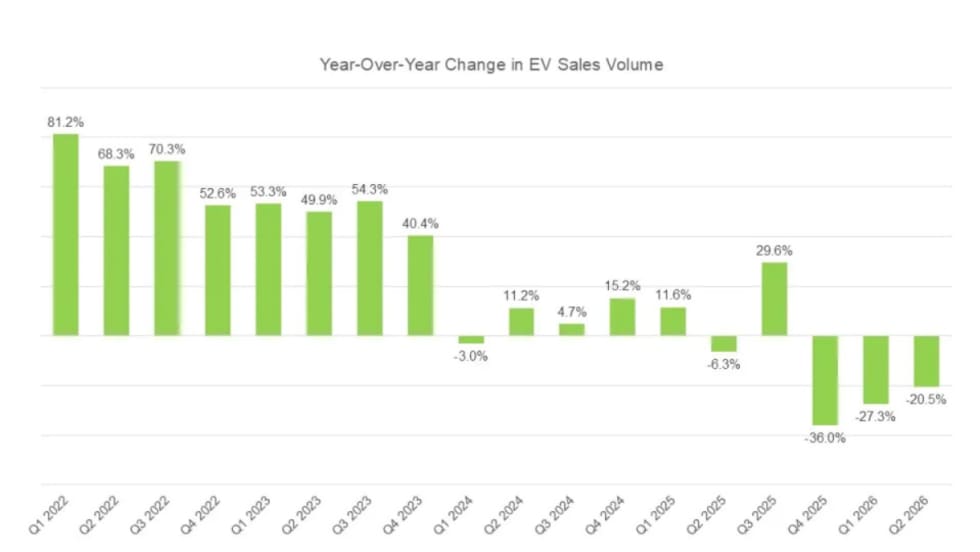
New Vehicle Models Stabilize Electrified Market In Q2
But more credit goes to hybrids than to all-electric vehicles, as more buyers look for fuel-efficient alternatives amid high gas prices.
Read More →
Xos White Paper Asserts LA Olympics Will Lack Enough EV Chargers
The commercial EV fleet company recommends some faster and more flexible remedies to relieve the anticipated shortfall.
Read More →