


Six Steps to Spec for Green
Can you green your fleet and not break your budget? You can, by spec’ing for function, price and gas mileage.
You’ve heard all the reasons for jumping on the “green” bandwagon: to reduce our dependence on foreign oil, the obligation of corporate stewardship, pressure from employees and vendors and a genuine concern for the environment.

However, an increasingly important factor driving green initiatives is the most compelling one for fleets—skyrocketing fuel prices.
“We’re actually showing that some fleets’ fuel costs have eclipsed depreciation as their number one expense,” says Herb Wamboldt, account manager and practice leader for fleet leasing company Wheels’ EcoWheels environmental fleet program. “We expect this to continue over the next several years if the price of fuel continues to trend upwards.”
It’s all about fuel economy: one gallon of gasoline equals 19.4 pounds of CO2.
Therefore, spec’ing your fleet to maximize miles per gallon is also a practical solution to help the environment. There are sensible steps you can take now that will make a difference without breaking your budget.
Step 1: Set Your Goal
Determine your company’s goals for a greener fleet. An important—and easily identifiable—measuring stick is your fleet’s carbon dioxide emissions.
Set a realistic goal. Consider that if you turn your fleet every four years, you can only impact 25 percent of your fleet per year. A 10-percent reduction in carbon emissions in your first year is overly ambitious; that same reduction over four years is realistic.
Hold yourself and others accountable. Put this goal in writing and make it available to your company. Eventually, add environmentally friendly driving expectations to your fleet policy.
Step 2: Calculate Your Emissions
Evaluate the environmental performance of your present fleet vehicles. If your fleet is growing or your miles per vehicle are increasing out of necessity, a fair analysis would be to calculate your fleet’s average carbon output per vehicle rather than an aggregate output.
First, identify the makes/models in your fleet and calculate annual miles driven for each vehicle. For this article we’ll concentrate on passenger cars and SUVs.
Next, identify your fleet vehicles’ carbon emissions using the Environmental Protection Agency’s Green Vehicle Guide at http://www.epa.gov/greenvehicles/Index.do, or the Department of Energy’s fuel portal, www.fueleconomy.gov.
The Green Vehicle Guide scores all greenhouse gases emitted from vehicles. The value shown gives tons of greenhouse gases emitted by the vehicle if it were driven 15,000 miles per year. Fueleconomy.gov offers emissions outputs with a personalized mileage scale.
Carbon offset organizations also offer carbon emissions calculators. Try www.TerraPass.com or www.driveneutral.com.
[PAGEBREAK]
Step 3: Analyze Your Fleet Needs
Analyze your fleet usage. Have the parameters changed since you last spec’d your vehicles?
- What are your passenger, space and cargo considerations?
- Analyze driving patterns. Do you do a lot of city driving, ideal for hybrids?
- How many miles a year are required to do the job?
Step 4: Spec Your Vehicles
Define a set of vehicles that will accomplish your job within your specifications, environmental goals and budget.
- Can you “right size” any vehicles in your fleet? Can the same job be done with a smaller (i.e. more fuel efficient) vehicle?
Research the greenhouse gas emissions for these new vehicles in the Green Vehicle Guide.
- Which vehicles have better emissions ratings than your present vehicles? A check of the list shows that many non-hybrids have very good emissions!
Determine your costs using a lifecycle cost analyzer.
- For ballpark figures, Intellichoice.com and Edmunds offer total costs of ownership for each vehicle. For a fee, Vincentric (vincentric.com) offers a fleet-specific calculator that measures eight cost factors for more than 2,000 vehicle configurations and 12 different mileage/lifecycle timeframe scenarios.
Are you leasing through a fleet management company? Consult them for lifecycle costs—that’s what you hired them for.
Step 5: Revise Your Selector
Here’s where you learn to juggle: Which vehicles offer improved emissions within your specs and budget?
Revise your vehicle selector with this new range of green vehicle choices. Avoid non-green options when possible.
“If you put a small hybrid on the selector next to a larger sedan with some muscle, the sedan will have all the orders,” says Wamboldt. “Keep in mind that most drivers, using a fuel card, don’t think about the price of fuel. They are going to select the nicest option, in their opinion, which is typically the costliest car.”
[PAGEBREAK]
Step 6: Incorporate Your Drivers into the Program
It’s time to incorporate your fleet drivers’ needs and get buy-in for your program.
Impart the importance of your company’s new environmental goals to your drivers. This is best done immediately after you’ve set your goals, to address their needs before it comes time to create a new selector list.
Set performance benchmarks for fuel economy using the miles-per-gallon reports from your fuel card. (You don’t have a fuel card, you say? Get with the program!) Rank your drivers and make the list available to all.
Give your drivers an incentive to select the “greenest” choice (i.e. more options or a higher trim level than they’re used to).
Establish an incentive/rewards program for fuel savings. This can get tricky, especially with different driving patterns. One fair way is to judge the greatest miles-per-gallon improvement over a determined period.
Step 7: Replace Your Vehicles
Now you’re ready to cycle out your present vehicles and into newer, greener choices.
“Look first at replacing the vehicles with the poorest gas mileage,” Wamboldt says. “For instance, if you replace your old small vans that achieved about 15.5 mpg with a new minivan, which gets 18.5 MPG, you’ve just increased your fuel economy by almost 20 percent! Target those easy ones first and then move forward with the rest of the fleet.”
Now Spread the Good News
Lastly, tell somebody! Communicate your success throughout the company and to clients and vendors.
Given the enormity of global warming, “going green” can seem like a daunting task. By following these sensible procedures you can make a difference—and we didn’t make you rig your work truck with solar panels or beg a restaurant chef for used cooking oil.
This is a good start, but only a start.
Consider other ways to green your fleet such as optimizing routing, minimizing idling, keeping strict preventive maintenance schedules and looking into alternative fuels. Look to make further cuts in your fleet’s carbon emissions year over year.
[PAGEBREAK]
Real-World Example: The Care of Trees
A Midwestern tree care service switched successfully from a reimbursement program to leasing with a green initiative.
When the mayor of Chicago announced that the people who work to beautify the city must also ensure that they’re not polluting the city, Scott Jamieson, president and CEO of tree care company The Care of Trees, was prompted to kick start a green initiative.
Through their partnership with Wheels, a fleet leasing and management provider, The Care of Trees has implemented a green fleet program that allows its 75-person sales and management team to have the option of driving a more fuel efficient vehicle while saving the company money.
“Through company culture and pressure from our staff and clients, we wanted to be a role model within the community and take steps toward using green technology,” Jamieson says. “We knew if we could incorporate that green piece into the fleet program, it would really fit our needs quite well.”
Prior to consulting with Wheels, The Care of Trees employed a reimbursement program for personal vehicles. Jamieson said the employees didn’t benefit from it and insurance and fuel costs continued to creep up year after year.
“It was the worst of both worlds: the employees hated it and we were paying through the nose,” Jamieson says.
While spec’ing to green its fleet, The Care of Trees primarily focused on the fuel efficiency and residual value of the vehicles. Initially, they looked to implement E85 Flexfuel vehicles but due to the lack of convenient fueling stations decided that hybrids were a more viable option.
Within each of four vehicle classes offered by the company, the employees have at least one hybrid and one ultra-low emission vehicle option. With three-year leases, The Care of Trees is rotating its employees into the program.
All 10 mid-level managers chose the Toyota Hybrid Highlander. A handful of employees chose the other hybrid option, the Toyota Prius.
“Most of the employees understood that the choice worked for the company, themselves and the environment, so they took it,” Jamieson says.
However, Jamieson had to address entrenched vehicle mindsets first.
“There has been a pickup truck mentality in our company over the years, because they are not only selling our services but they’re sometimes helping to deliver the services to the clients,” Jamieson says.
When a hybrid pickup option becomes available, he’ll take it.
With the new green-minded program, employees have a fuel card, which makes monitoring costs much easier—another employee benefit.
Jamieson says the next step is to implement environmental initiatives in the company’s service fleet.
Originally posted on Automotive Fleet
More Legal/Legislative

California Governor Approves Instant ZEV Rebates For First-Time Buyers
That instant rebate is the centerpiece of a broader $600 million package Governor Newsom signed into law, keeping California active in the global clean transportation race.
Read More →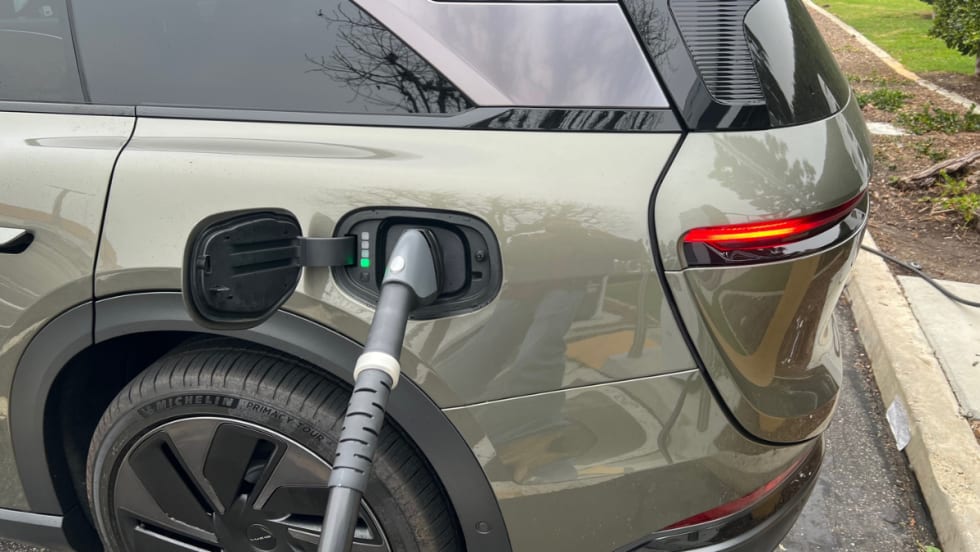
Used EVs Set Wholesale Sales Record In Q1
Rising gas prices may have boosted demand last month, as dealers pursued potential opportunities with more affordable used EVs.
Read More →
OEMS Expose Overdue EV Truths
Recent announcements from two automakers underscore a significant shift in the electric vehicle market, driven by EV losses and changing strategies. [VIDEO}
Read More →
The Freedom Era For Electric Vehicles
Season 2 Episode 1 of The Off-Peak premieres as the electric vehicle market no longer benefits from federal tax credits that expired at the end of Q3 2024. What does this mean for the future appeal of EVs?
Read More →
New Research Shows Renewed Potential And Tolerance For EVs
A new EV consumer survey finds partisan resistance is easing, but concerns around cost, incentives, and charging access still shape buyer interest.
Read More →
2025 Generated Big Headlines In The EV World
The EV industry entered a new more nuanced phase defined by realities and practical outcomes after a few years of grand visions, media hype, and bold investments.
Read More →
John Boesel Recognized at 2025 Fleet Forward Conference
Bobit recognized John Boesel, CEO of Calstart, who is retiring after over three decades of service.
Read More →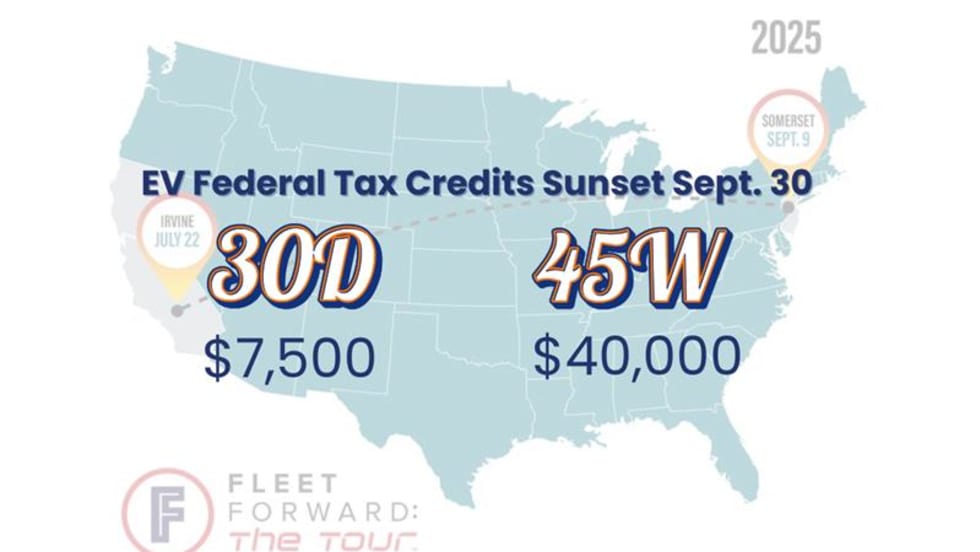
Final Push for Federal EV Incentives Highlighted at Fleet Forward Tour NJ Stop
Fleet managers in the Northeast will have a timely opportunity to take action on electric vehicle purchases at the upcoming Fleet Forward Tour stop in Somerset, NJ, on Sept. 9.
Read More →
Latest Hard Realities, Top Pressures For Electric Fleets
Speakers and experts at Fleet Forward: The Tour shared hands-on, hard-won insights on how fleet operations are handling tariffs, EV charging, rules and regs, and safety issues.
Read More →
Mobility 360 Panel to Define the Fleet Industry’s Next Tipping Point
At the 2025 Fleet Forward Conference, experts in capital, policy, and data will assess which trends are transforming fleet.
Read More →