



Watch This: Taking Isuzu Work Trucks for a Test Drive
Isuzu SEE Technology: Safety, Econony, Environment
SEE Technology is the basis of all of Isuzu’s product development. Isuzu’s goal is to incorporate three core areas — safety, economy, and environment — in all future products. WT recently traveled to Japan to get a first-hand look.
April 22, 2009
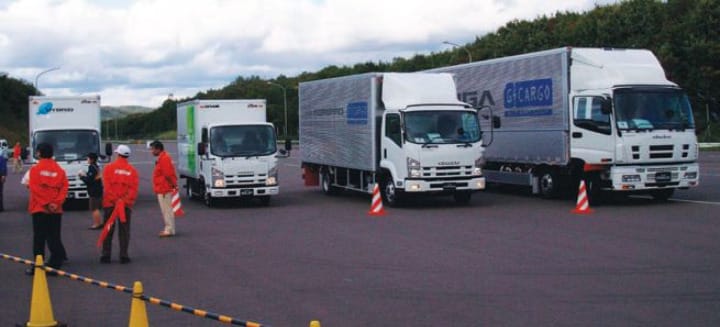
Work Truck magazine participated in the Isuzu Fuel Economy Challenge at the company’s proving ground in Hokkaido. More than 10,000 drivers over the past 10 years have visited the proving ground to participate in the Fuel Economy Challenge.
Photo: Isuzu
9 min to read
Today’s global business environment for truck fleets is typified by cost reduction demands, coupled with increased corporate focus to implement green fleet and sustainability initiatives.
These challenges are at the heart of Isuzu’s product development strategy known as SEE Technology, which stands for Safety, Economy, and Environment. According to Isuzu, these three core areas are the basis of all its product development initiatives. Isuzu says its corporate goal is to build advanced technologies in each of these core areas to design products that combine safety and economy with a reduced environmental footprint.
To learn more about SEE Technology, Work Truck magazine traveled to Japan as a guest of Isuzu Commercial Truck of America. The three-day visit included participation in a fuel economy challenge at the company’s proving ground on the island of Hokkaido, a tour of the Fujisawa assembly plant for a briefing on the Isuzu Manufacturing Management quality control system, and a meeting with Isuzu President Susumu Hosoi and his senior management team at Isuzu’s corporate headquarters in Tokyo.
Safety Technology Initiatives
Commercial vehicle hours of operation and driving distances differ significantly from those of passenger vehicles. Moreover, trucks are responsible for delivery even during poor weather conditions to maintain just-in-time distribution systems. If an accident occurs, there is a far greater danger of major damage due to the weight of the vehicle and its payload.
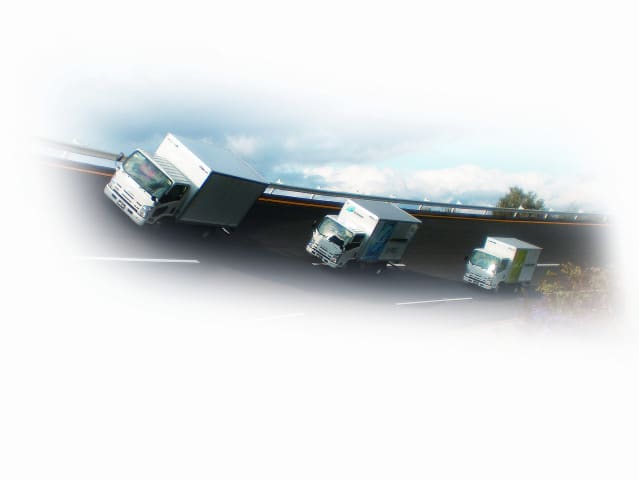
Isuzu has focused on reducing driver fatigue and improving visibility and driver ergonomics.
Photo: Isuzu
These factors, Isuzu says, require advanced safety measures to prevent accidents from occurring in the first place. Isuzu has focused on reducing driver fatigue and improving visibility and driver ergonomics. In the Japanese market, it equips the GIGA model, its heavy-duty truck, with cutting-edge View Assist Technology (VAT), which uses millimeter waves in an extremely high frequency range to monitor distances.
Another safety feature pioneered by Isuzu is a retarder system to assist with braking and Hill Start Aid (HSA) for easier starts on slopes.
Additionally, an electronic immobilizer locking system is now standard, a class first, as Isuzu seeks to improve the security of trucks and cargo.
Isuzu’s Telematics Initiative
Isuzu employs its Mimamori-kun Online Service (a telematics system) in the Japanese market. Mimamori-kun online service is a full-scale telematics system for commercial vehicles that dramatically improves fleet operations. The system analyzes huge quantities of data on driving operations and vehicle status collected from an onboard control computer, and links trucks, the fleet department, and Isuzu via state-of-the-art communication technology.
The Mimamori-kun telematics system allows fleet managers to request weekly, monthly, or yearly driver performance reports, warnings when a driver deviates from preset operating guidelines, or incidents when the computer senses an impending crash or other dangerous situation. Reports can be sent to personal computers or cell phones. Driver printouts show actual driving practices in easy-to-comprehend graphics and offer advice to improve driving habits. Bad drivers can be identified before accidents occur, and good drivers can be rewarded.
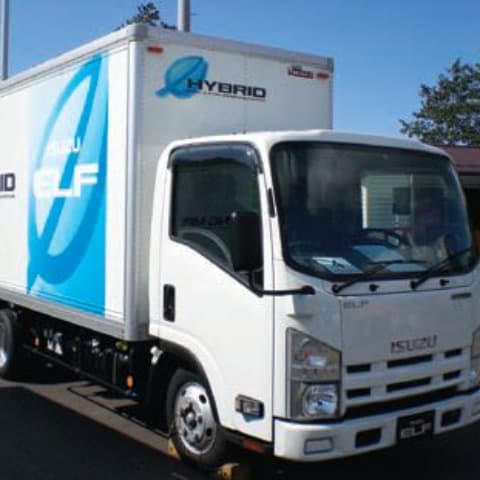
Isuzu markets a hybrid-powered Elf (N-Series) truck in the Japanese market. Isuzu says it has no plans to import a hybrid N-Series truck to the U.S.
Photo: Isuzu
In 2007, the Mimamori-kun system was dramatically enhanced to provide interactive data communications between vehicles and the fleet department. A message function and driving journal are standard features and can significantly improve operational efficiency. Messages can be sent to an onboard display screen from a PC at the base site. However, for safety purposes, the received message cannot be displayed while driving.
The Mimamori-kun system also functions as a theft deterrent system. If the driver does not enter a predetermined password upon inserting the ignition key, the system reports the risk of theft with a message displayed on a PC screen at the fleet administrator’s base site.
Since its release in February 2004, the Mimamori-kun online service has earned the reputation in Japan as an advanced vehicle diagnostic and information system that supports fuel savings and driving safety by allowing real-time access to driving status.
In some Isuzu models, the system provides predictive maintenance by monitoring parts wear based on vehicle load and provides an optimal maintenance schedule for each specific vehicle. The system automatically determines the replacement timing of 10 vehicle components, such as oil, tires, and air filter. This information is displayed on the on-board display screen and a PC at the base site. A predictive maintenance program allows efficient use of parts and, through proactive maintenance service, helps minimize unexpected catastrophic problems on the road.
Mimamori-kun has been in service in Japan for five years. Isuzu plans to introduce the system to North America in the near future.
SEE Environmental Initiatives
In applying SEE technology to engineer environmentally friendly diesel-powered vehicles, Isuzu has adopted two broad directions: decrease emissions and reduce fuel consumption to the lowest levels possible. To attain these goals, Isuzu established eight priority tasks:
Improve fuel efficiency and reduce CO2 emissions.
Make exhaust gases cleaner.
Develop clean energy vehicles.
Reduce vehicle noise.
Reduce use of substances with an environmental impact.
Improve recyclability.
Reduce air conditioner refrigerants.
Reduce volatile organic compounds (VOC) in the vehicle cabin.
As a global manufacturer, Isuzu’s commercial vehicles and diesel engines must meet common global standards. For example, Isuzu’s environmental performance must extend beyond its national borders and not be limited to the Japanese domestic market. To achieve this, Isuzu shifted its product development focus to a global design perspective. According to Isuzu, environmental regulations in individual countries are no longer a factor as it develops diesel engines to meet future regulations in all markets worldwide as part of a global product development strategy.
Isuzu to Use SCR to Meet 2010 Emissions Requirements
Isuzu Commercial Truck of America announced it intends to use selective catalytic reduction (SCR) in the U.S. to meet the 2010 diesel emission standards for nitrogen oxides (NOx).
SCR is an after-treatment technology that involves injecting a water-based solution containing urea into the hot exhaust stream of an engine. This diesel exhaust fluid (DEF), working with a catalyst in the exhaust after-treatment system, breaks down the NOx into harmless nitrogen and water vapor.
The diesel exhaust fluid contains an organic nitrogen compound used as a fertilizer in agriculture. It is classified as a non-hazardous substance by the U.S. Environmental Protection Agency.
According to Shaun Skinner, executive vice president, general manager, “Isuzu has been developing after-treatment technology in Japan for many years. We’ve studied different systems and found SCR to be highly reliable under even the most extreme applications and conditions.”
Next-Generation Diesels
The D-CORE series are Isuzu’s next-generation of diesel engines. Isuzu’s engine development strategy focuses on lowering emissions and increasing fuel efficiency through small displacement, turbocharged engines. The goal is to increase engine performance and fuel economy by increasing output and torque per unit of emissions and making engines as light and compact as possible. Isuzu is designing the upcoming D-CORE engine series to embody these goals.
The D-CORE engines also incorporate Isuzu’s next-generation clean technology, known as I-CAS (Isuzu Clean Air Solutions). The I-CAS system combines Isuzu’s three key next-generation technologies — optimal combustion technology, after-treatment technology for exhaust gases, and electronic control technology — to reduce the engine’s overall environmental footprint. By integrating these three technologies, Isuzu says it will lower exhaust and CO2 emissions, cut fuel costs, and enhance engine performance.
One technology critical to the development of super-clean diesels is homogeneous premix combustion, which relies on precise control of the electronic common rail fuel injection system. Electronic control software is designed to precisely control the combustion being repeated every 1,000th of a second. This technology drastically cuts particulate matter and NOx in diesel emissions.
Isuzu’s Fuel Economy Challenge
The Isuzu fuel economy driver training program educates drivers on how to dramatically improve fuel economy with hands-on training and classroom instruction.
While in Japan, Work Truck magazine participated in the Isuzu Fuel Economy Challenge at the company’s proving grounds in Hokkaido.
Vehicle operation costs can account for nearly one-third of a company’s overhead. Almost three-fourths of that can be attributed to fuel costs. To help business owners learn how to be more fuel efficient, Isuzu hosts interactive fuel economy challenges across the U.S. and Japan. Since November 2007, Isuzu has held four fuel economy challenges in the U.S. In addition to its own vehicles, Isuzu also uses customer vehicles to track fuel economy improvements via Vehicle Health Reports. Over the past 18 months, approximately 150 fleet managers and drivers have attended Isuzu fuel economy challenges in the U.S. More than 10,000 drivers over the past 10 years have visited the proving grounds in Hokkaido to participate in the Isuzu Fuel Economy Challenge in Japan.
These fuel economy events show how much fuel can be saved when employees practice fuel-conscious driving habits. Participants of these events find an average fuel savings of 33 percent. They learn tips in four key areas:
Driving speed.
Acceleration.
Deceleration
Idling.
The first tip is to slow down. When traveling at highway speeds, fuel economy can be improved 12 percent by reducing speed 5-10 mph. Over the course of a month, this can save hundreds of dollars in fuel costs for a single vehicle. Also, participants are instructed to maintain a steady, consistent highway speed. Avoid frequent acceleration and deceleration, which decreases fuel efficiency.
Tip 2 is to avoid jackrabbit starts. The accelerator pedal should be depressed gradually from a full stop. This allows the transmission to shift into the next gear at a lower rpm, which reduces fuel consumption.
Tip 3 is to avoid unnecessary or excessive use of the exhaust brake. A fleet’s fuel economy can be increased by having drivers turn off exhaust brakes and plan decelerations in advance. Using the compression of the engine alone to brake the vehicle requires a longer distance, but does not consume fuel.
The fourth tip is to reduce unnecessary idling. Engine idling reduces fuel economy, especially if the air conditioner is on. It can add up to hundreds of dollars a year of wasted fuel that doesn’t move the truck one inch. The advice is to turn off the engine at service stations, pickups and deliveries, and other destinations.
According to Isuzu, these fuel-conscious driving tips may seem simple, but used together can translate into substantial savings. In fact, tests show that a single truck, averaging 35,000 miles a year can reduce fuel consumption by more than 1,200 gallons by simply using these techniques. At $2.50 per gallon for No. 2 diesel, that would translate into a savings of $3,000 per year. For a fleet of 10, that would be $30,000. For a fleet of 50, it would be $150,000 annually.
The key points taught in the Isuzu Fuel Economy Challenge:
Shift up at low engine rpm.
Maximize high-speed gear use.
Drive at a constant speed.
Use the engine brake effectively.
Release accelerator pedal earlier than usual.
Implementing such driving habits can improve everyday driving by as much as 35 percent. This demonstrates the impact drivers have on fuel economy. Isuzu also offered other tips to encourage economic driving practices, such as target setting, and a reward system that shares results and rewards top performers with cash prizes, gift certificates, or merchandise.
To help monitor and manage the operation of fleet trucks, all Isuzu-built diesel-powered vehicles since 2008 are equipped with an onboard recording and diagnostic system. This proprietary system generates detailed reports called Isuzu Vehicle Health Reports. These reports make key vehicle operation information available to a fleet manager, such as the condition of the engine, transmission, emissions, and brakes, plus fuel economy and driver operating habits. The system contains a computerized module that records a variety of vehicle data.
This information can help a fleet manager better understand the operation of vehicles and drivers’ operating habits. It also provides technicians with key information to help make accurate diagnoses and efficient repairs, which results in reduced operating costs and vehicle downtime. There are nine reports altogether, including fuel consumption, acceleration habits, braking frequency, idling, and advanced diagnostics.
Originally posted on Work Truck Online
Subscribe to Our Newsletter
More Legal/Legislative
California Governor Approves Instant ZEV Rebates For First-Time Buyers
That instant rebate is the centerpiece of a broader $600 million package Governor Newsom signed into law, keeping California active in the global clean transportation race.
Read More →
Used EVs Set Wholesale Sales Record In Q1
Rising gas prices may have boosted demand last month, as dealers pursued potential opportunities with more affordable used EVs.
Read More →
OEMS Expose Overdue EV Truths
Recent announcements from two automakers underscore a significant shift in the electric vehicle market, driven by EV losses and changing strategies. [VIDEO}
Read More →
The Freedom Era For Electric Vehicles
Season 2 Episode 1 of The Off-Peak premieres as the electric vehicle market no longer benefits from federal tax credits that expired at the end of Q3 2024. What does this mean for the future appeal of EVs?
Read More →
New Research Shows Renewed Potential And Tolerance For EVs
A new EV consumer survey finds partisan resistance is easing, but concerns around cost, incentives, and charging access still shape buyer interest.
Read More →
2025 Generated Big Headlines In The EV World
The EV industry entered a new more nuanced phase defined by realities and practical outcomes after a few years of grand visions, media hype, and bold investments.
Read More →
John Boesel Recognized at 2025 Fleet Forward Conference
Bobit recognized John Boesel, CEO of Calstart, who is retiring after over three decades of service.
Read More →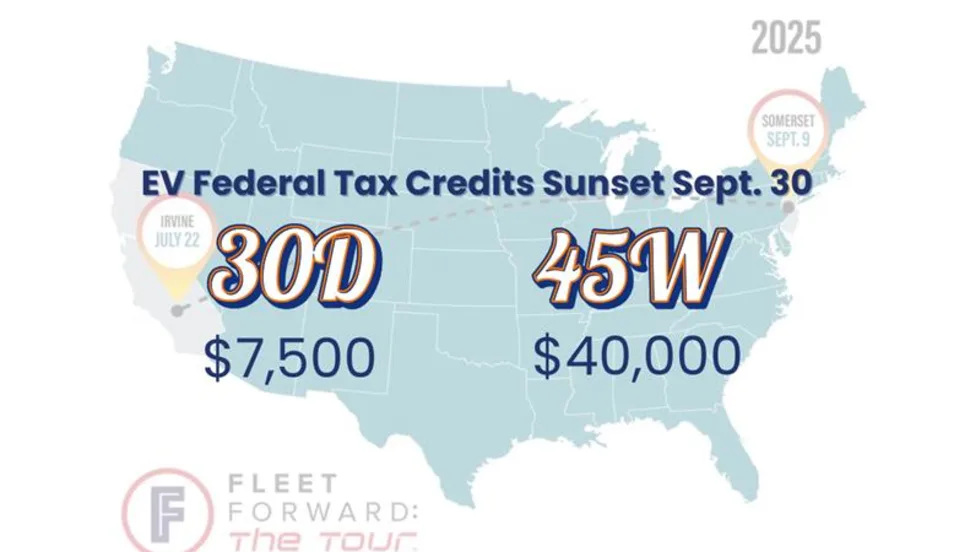
Final Push for Federal EV Incentives Highlighted at Fleet Forward Tour NJ Stop
Fleet managers in the Northeast will have a timely opportunity to take action on electric vehicle purchases at the upcoming Fleet Forward Tour stop in Somerset, NJ, on Sept. 9.
Read More →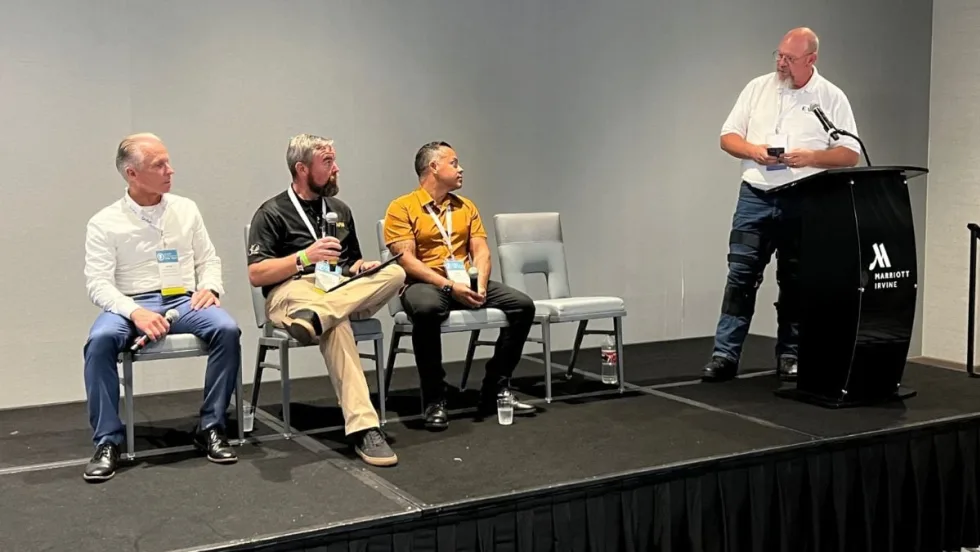
Latest Hard Realities, Top Pressures For Electric Fleets
Speakers and experts at Fleet Forward: The Tour shared hands-on, hard-won insights on how fleet operations are handling tariffs, EV charging, rules and regs, and safety issues.
Read More →
Mobility 360 Panel to Define the Fleet Industry’s Next Tipping Point
At the 2025 Fleet Forward Conference, experts in capital, policy, and data will assess which trends are transforming fleet.
Read More →