


Bakery Goes Green and Saves Green
For Rossmoor Pastries, converting from gasoline-powered delivery vans to a fleet fueled by clean-burning compressed natural gas is saving the company $4,000 per month.
Charles Feder, owner and operator of Rossmoor Pastries in Signal Hill, Calif., fortuitously stumbled upon a goldmine when he purchased his first natural gas vehicle (NGV) at auction in April 2006. The dedicated compressed natural gas (CNG) Dodge van, with only 14,000 miles, cost $4,300, while the gasoline-fueled vans were going for around $7,000. Although he wasn’t familiar with NGVs and how they worked, it was a deal he could not pass up.
But the deal did not end there; he saw the major savings potential when he went to a local CNG station. It cost $1.50 per gallon to fill up on CNG, while gasoline was about $2.50 per gallon. As the bakery used up 70 gallons a day on deliveries around Southern California, Feder realized a CNG fleet would immediately realize a savings of $70 per day.
Impressed by the figures, Feder and his business partner Janice Ahlgren went out and bought eight additional CNG vehicles. They also figured out that they would save big bucks by getting their own fueling system, because the local gas company would sell them natural gas for less than $1 per gallon.
Although the company had to make the initial investment to purchase the vehicles and set up fueling capability at the business, those costs were recovered by April 2007.
While most people in California fret as the price of gasoline glides past the $3 mark, Feder smiles on the future. “I’m saving a ton of money, I’m green, and I feel good about what I’m doing,” he says.
Environmentally Friendly Refleeting
Feder found his dedicated CNG vehicles at regular and government auto auctions, which are open to the public. Government vehicles typically have low miles and are well maintained. He purchased six 1999 Dodge passenger vans and two 1998 Ford E-350 vans, each with an average of 30,000 miles. He also bought a CNG Crown Victoria. After buying the NGVs, he sold off his old fleet of Dodge vans for $18,000.
Some minor modifications were made to the vans. The seats were removed, a one-inch insulated floor was installed, and racks were installed in the back to carry the bakery items. As for the exterior, he tinted the windows and added the company’s logo on the sides of the vans.
Feder anticipates running these vans for a long time, particularly because the fuel burns clean.
“These engines last forever; they can go 500,000 miles because they run so clean,” Feder says. “And I don’t burn any oil. The oil lasts 10,000 miles if you want it to.”
Because natural gas vehicles have some unique systems, it is crucial to work with a good certified CNG mechanic. The National Institute for Automotive Service Excellence (ASE) has a certification test for CNG technicians.
Vehicle manufacturers typically offer the support of trained technicians. Local Clean Cities Coalition offices as well as community colleges and auto mechanic schools may also be able to refer a CNG mechanic.
The vehicle’s manual should include an inspection schedule. Natural gas tanks need to be checked regularly and certified by a CNG mechanic, particularly if the vehicle is in an accident. As well, “the gap setting is different on the spark plugs, and the O2 sensor must be checked and working properly,” Feder says.
According to Feder, the only roadblock to using a CNG fleet is the limited supply of vehicles. While Honda still sells the Civic GX NGV, most manufacturers are no longer producing them commercially.
The upside is that any vehicle can be converted into a dedicated or bi-fuel NGV. A dedicated vehicle runs exclusively on natural gas while a bi-fuel vehicle has two tanks to run on both gasoline and natural gas. All that is needed, Feder explains, is “a fuel rail, a tank, and a regulator and you’re in business.”
It would cost around $1,800 to get a car converted, he says. However, a converted CNG vehicle , may suffer a power loss of 10 to 15 percent.
Fuel Factor
When thinking through his fueling needs, Feder considered how many miles his vehicles would go in one trip. CNG tanks are smaller than gas tanks and his vans can go about 200 miles in one trip. Feder says drivers average between 130 and 170 miles a day delivering cakes, cookies and sweets around Southern California, allowing a full day of travel without refueling.
“If the vehicles have to go out long distances, then they have to be in areas where there are refueling stations along their routes,” Feder says. The U.S. Department of Energy has a Web site to locate alternative fueling stations (See “Useful Links”).
“My drivers carry a card that has a list of the stations in the area, and most of the trucks have maps of where the stations are,” Feder says.
The U.S. Department of Energy reported that in Oct. 2007, the nationwide average price for CNG per gallon was $1.77 at the pump, compared to $2.76 for regular gasoline. Filling up from a compressor that picks up gas from a local pipeline will cost even less.
There are many types of compressors available. A simple option is to install a Phill, a refueling appliance made by FuelMaker that taps into a home or building’s natural gas line. FuelMaker claims it takes about four hours to fill up the gas needed for 50 miles of driving.
“A small fleet could opt for a couple of those little machines if it fits their requirement,” Feder says. For his fleet of eight trucks, he needed a bigger, more powerful compressor. He had a Bauer compressor installed, which produces the equivalent of seven gallons of gasoline per hour. The compressor is connected to three fill posts that can each fill two vehicles at a time.
Feder says putting in his own compressors at the bakery has been the key to saving money. For the installation, Rossmoor Pastries also secured a funding grant of $18,750 from the South Coast Air Quality Management District (AQMD). Feder had applied for the grant through the Alternative Fuel Infrastructure Program.
Cruising the Carpool Lane
As if saving tons of money on fuel costs is not enough, owning a CNG fleet comes with additional perks. There are state and federal tax incentives offered to NGV owners. Also, in many states, alternative fuel vehicles can get access to high-occupancy vehicle, or carpool, lanes.
In California, vehicle owners must apply for an identification sticker from the California Department of Motor Vehicles. Because Rossmoor Pastries’ drivers can use the carpool lane on deliveries, it saves the company time and money.
Above and beyond the fiscal gains, it is Feder’s contribution to improving the environment that lets him rest easy at night.
“I have grandchildren, and I really want to leave the world a better place for them,” he says. “I feel like I’m doing my part for the environment and I wish more people did it.”[PAGEBREAK]
DIY: Installing Your Own CNG Fueling Station
Shop around for the right compressor system.
Charlie Feder did his homework before committing to a compressor system to install at Rossmoor Pastries. He first looked into Ingersoll Rand’s line of compressors and learned that they were too large for his needs. He then contacted FuelMaker to see what they could provide.
Then through word of mouth he learned of a local company that installed compressors and was also able to provide support in case the bakery’s systems went down. Feder selected this company for the job, and they installed a system made by Bauer Compressors.
Bauer Compressors suggests reviewing the following aspects of your CNG fleet with the compressor manufacturer or installer you decide to work with:
- Type of vehicles
- Size of your CNG fleet
- Fleet’s current fuel type
- Fleet’s daily, monthly or annual fuel consumption
- Fleet’s refueling schedule
- Fill pressure for the fleet
- Whether the fleet will fill overnight (slow fill) or fast fill from storage, or a combination of both
- The location of the planned fueling station in terms of ambient temperature extremes
- Immediate surroundings of planned station (e.g., residential, commercial, industrial park with other businesses nearby, private property with noise restrictions)
- How the station will be used: private fleet, public refueling or both
Contact the appropriate authorities for approval and assistance.
The municipality that your building is located in will usually be the regulating authority. In Rossmoor Pastries’ installation job, he contacted the Los Angeles County Fire Department and the City of Signal Hill’s building department. Feder also needed permission from the building’s landlord. You might also need the approval of the municipality’s zoning board, an electrical inspector and/or a building inspector.
Although Signal Hill and the county fire department had never handled a CNG fueling installation before, Feder says, they were very helpful in the process. “It was an educational journey for everyone,” he says.
You will also need to know the codes and standards that apply to the installation. Along with consulting the city authorities, review the NFPA 52, which is the Vehicular Fuel Systems Code of the National Fire Protection Association (www.nfpa.org). It applies to the installation of CNG vehicle refueling stations.
Contact the local gas and electric utilities.
When talking to the local gas company, Bauer Compressors recommends confirming that gas and gas pressure is available at the site. Also, ask if the gas supply is from a gas utility and of a pipeline quality or from a well. If the gas is from a well, ask for a gas analysis, advises Bauer. You should be able to also confirm the quality of the gas, including moisture content, and if the gas line can support the station’s pumping needs.
Check with the electric company in your area to confirm the power and voltage available at the business, and make sure the existing power supply can meet the electrical demand of the station.
Coordinate the job with the contractors doing the installation.
When Rossmoor Pastries first moved into the current building, Feder hired a builder to perform renovations on the facility. He contacted the same builder to work with the installer in building the infrastructure for the fueling system.
Useful Links
www.autoauctions.gsa.gov: The U.S. General Services Administration (GSA) is the federal government division that sells government fleet vehicles to the public. The site includes search tools to locate CNG vehicles (advanced search by fuel type) and auctions near you.
www.eere.energy.gov/cleancities/progs/coalition_locations.php: The Clean Cities Coalition’s local offices can help you locate a certified CNG mechanic.
http://afdcmap2.nrel.gov/locator/: The Department of Energy provides an alternative fueling station locator.
www.cleancarmaps.com: This site shows CNG fueling stations in California, Nevada and Arizona
www.eere.energy.gov/afdc/incentives_laws.html: Here you will find listings of federal and state tax breaks, incentives and laws pertaining to alternative fuel vehicles.
To read more small fleet profiles, click here to see a full list.
Originally posted on Work Truck Online
More Legal/Legislative
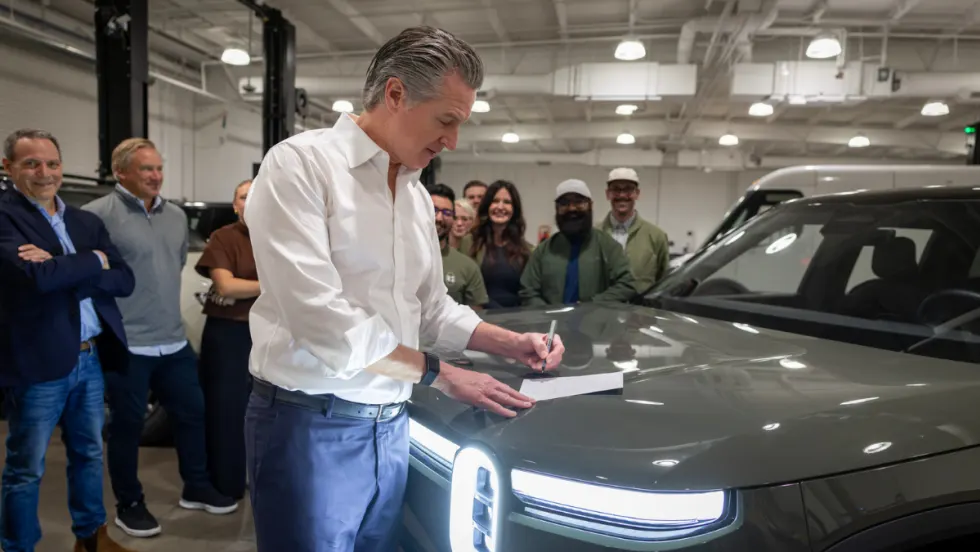
California Governor Approves Instant ZEV Rebates For First-Time Buyers
That instant rebate is the centerpiece of a broader $600 million package Governor Newsom signed into law, keeping California active in the global clean transportation race.
Read More →
Used EVs Set Wholesale Sales Record In Q1
Rising gas prices may have boosted demand last month, as dealers pursued potential opportunities with more affordable used EVs.
Read More →
OEMS Expose Overdue EV Truths
Recent announcements from two automakers underscore a significant shift in the electric vehicle market, driven by EV losses and changing strategies. [VIDEO}
Read More →
The Freedom Era For Electric Vehicles
Season 2 Episode 1 of The Off-Peak premieres as the electric vehicle market no longer benefits from federal tax credits that expired at the end of Q3 2024. What does this mean for the future appeal of EVs?
Read More →
New Research Shows Renewed Potential And Tolerance For EVs
A new EV consumer survey finds partisan resistance is easing, but concerns around cost, incentives, and charging access still shape buyer interest.
Read More →
2025 Generated Big Headlines In The EV World
The EV industry entered a new more nuanced phase defined by realities and practical outcomes after a few years of grand visions, media hype, and bold investments.
Read More →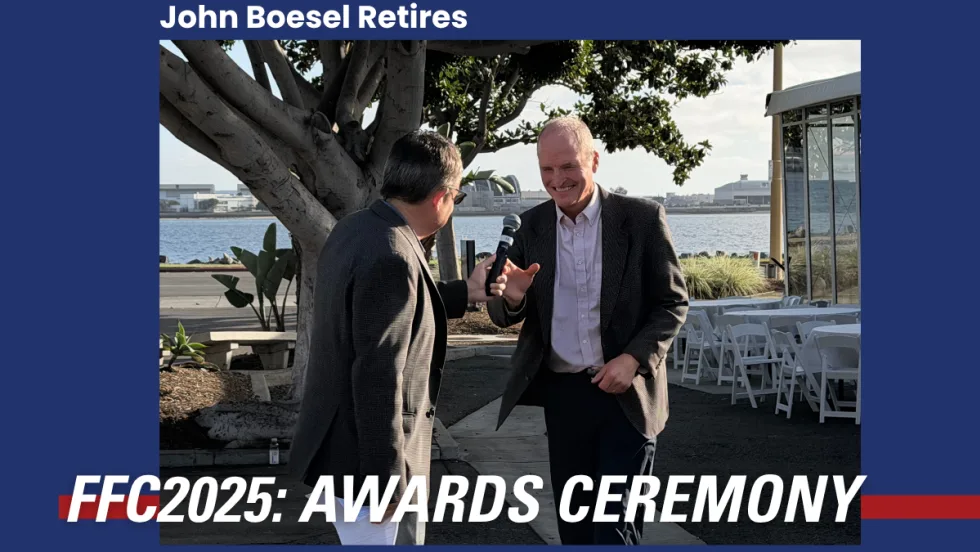
John Boesel Recognized at 2025 Fleet Forward Conference
Bobit recognized John Boesel, CEO of Calstart, who is retiring after over three decades of service.
Read More →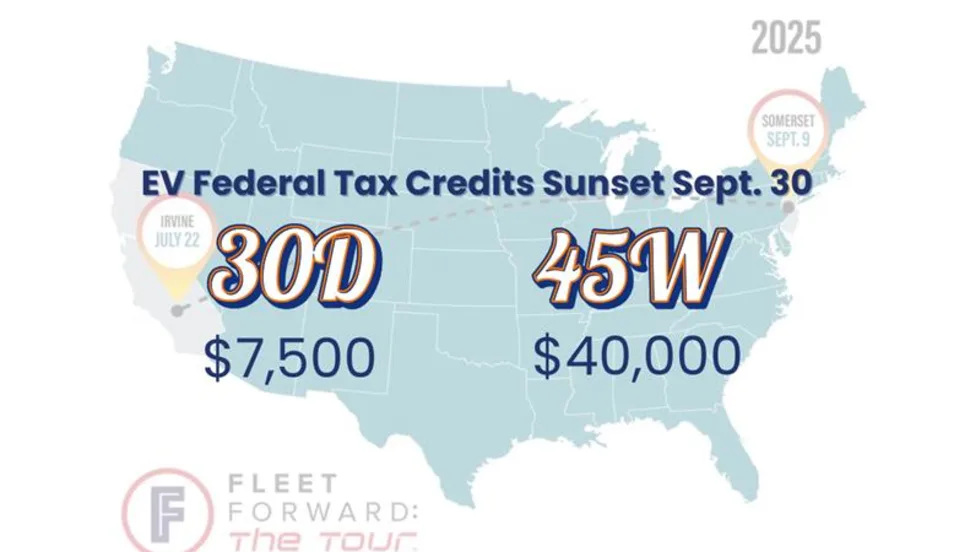
Final Push for Federal EV Incentives Highlighted at Fleet Forward Tour NJ Stop
Fleet managers in the Northeast will have a timely opportunity to take action on electric vehicle purchases at the upcoming Fleet Forward Tour stop in Somerset, NJ, on Sept. 9.
Read More →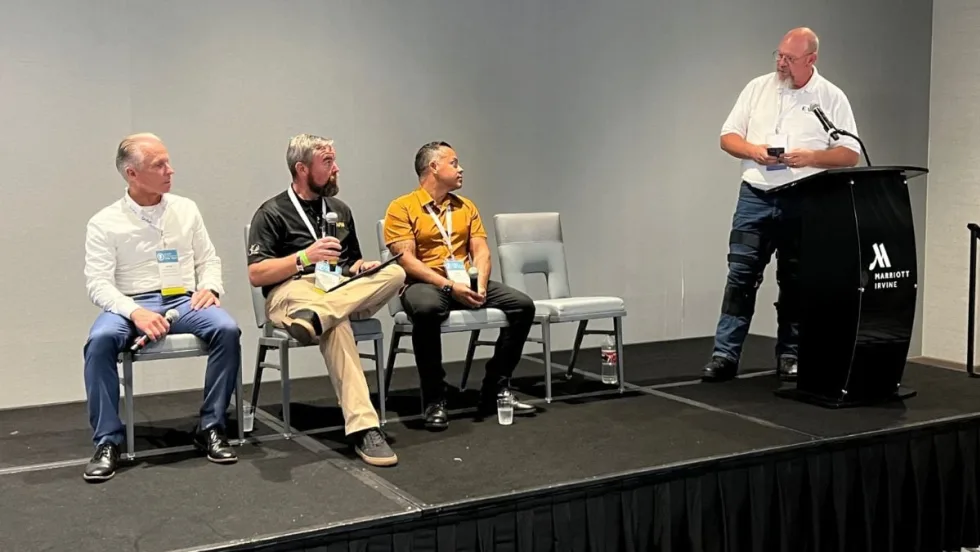
Latest Hard Realities, Top Pressures For Electric Fleets
Speakers and experts at Fleet Forward: The Tour shared hands-on, hard-won insights on how fleet operations are handling tariffs, EV charging, rules and regs, and safety issues.
Read More →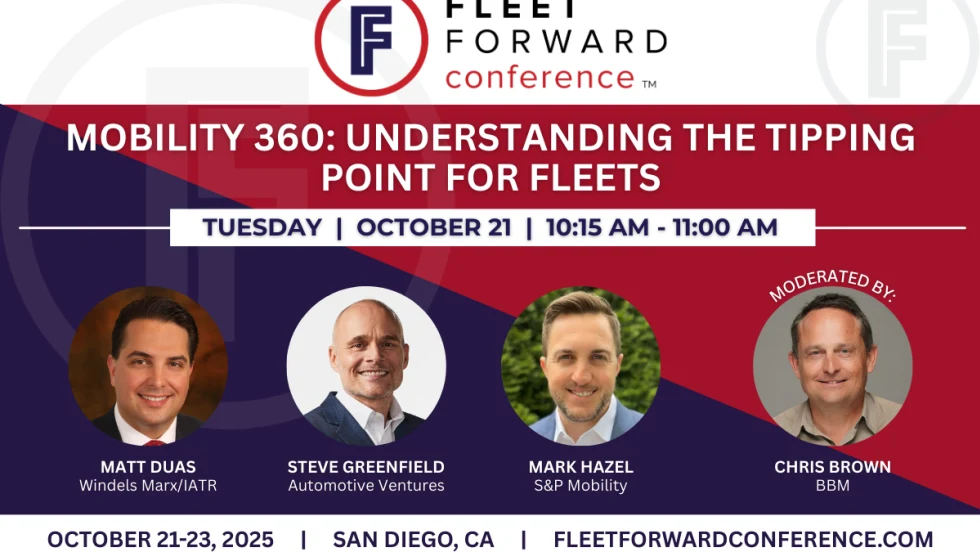
Mobility 360 Panel to Define the Fleet Industry’s Next Tipping Point
At the 2025 Fleet Forward Conference, experts in capital, policy, and data will assess which trends are transforming fleet.
Read More →